Parisa Asayesh (2023). An Emotional Bio-wearable. In: Human Factors and Wearable Technologies. AHFE Open Access, vol. 85, pp. 111–120. https://doi.org/10.54941/ahfe1003632
Touch is a powerful emotional communication tool that can reduce the stress hormone cortisol and triggers the release of oxytocin. The emotional influence of touch is rooted in human biology. Separation and losing loved ones’ touch are associated with emotional distress and impact people's mental health and daily productivity.During the pandemic, we all experienced separation from loved ones as emotionally draining. People are separated from their loved ones for a variety of reasons, such as pursuing education, a new job, getting married, or relocating. There are a few coping solutions, such as making video calls with loved ones or keeping their photos around us, reminding us of their presence. But those visual cues may not be enough for tactile individuals. This research demonstrates that people who define touch as their love language tend to keep their loved one's belongings. Touching our keepsakes is a coping strategy to enhance our feelings of connection to our loved ones. However, not all sentimental items are always carriable or available to support us when we need them emotionally. The Emotional Bio-wearable represents the integration of biology and technology, creating a meaningful wearable keepsake for those who benefit from a tactile, emotional sensation. In addition, this project developed a combination of parametric modeling, interface design, and software development to create an intuitive and interactive application.The Emotional Bio-wearable has two parts. The first part is an iOS application program, which receives data such as a heartbeat (a symbol of life) and user’s responses to questions to determine the user’s preferred style. The application generates designs and customizes the output based on the inputs. The second delivery part is the physical bio-bracelet covered with a meaningful texture, heartbeat and printed with a 3D printer. This project is an exploration of the impact of tactility, focusing on those who identify ‘touch’ as their love language. An Emotional Bio-wearable provides a new way of connecting to love ones and boosts the consumer’s mental health.
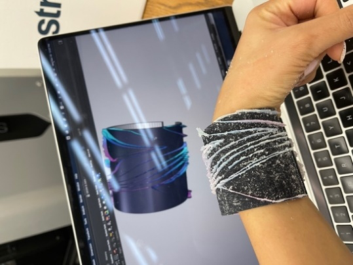
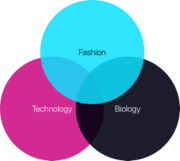
An Emotional Bio-wearable is at the intersection of biology, technology, and fashion (Figure 1, 6). In order to bring this vision to life, the project leveraged a combination of parametric modeling, interface design, and software deve- lopment to create an intuitive, interactive product. Technology has, in the best cases, humanized products and improved peoples’ well-being. Through a bio-wearable that prompts sensational touch and affection, the aim is to establish a bond between tactile individuals and their loved ones while they are apart.
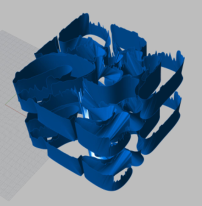
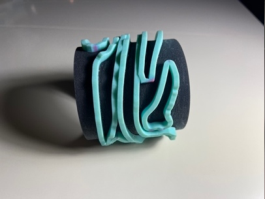
Figure 1: The image of worn bio-bracelet during wax removing, compare with the original 3D model.
OBJECTIVE To boost the mood and emotional wellness of people who benefit from tactile sensation by touching their loved ones’ heartbeats.
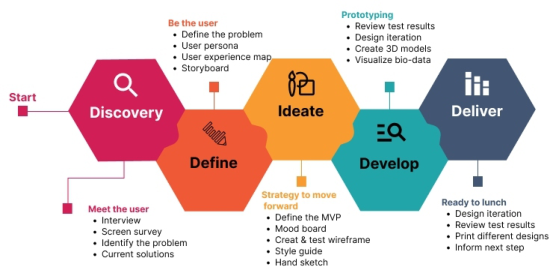
METHODS AND STRATEGY TO FIND TOUCH IMPACT AND MENTAL WELL-BEING ASSOSIATED TO SEPARATION FROM LOVED ONE During the Covid-19 pandemic, many people experienced losing a conne- ction with loved ones and faced mental challenges. In many cases, separation from a loved one causes emotional distress, loneliness, and detachment that impacts a person’s mental health. This situation becomes more challenging for individuals dependent on tactile sensations. This project was expanded by synthesizing the Design Council’s Double Diamond design process and Stan- ford Design Thinking methodology, as seen in Figure 2, focusing on those who identify ‘touch’ as their love language.
Figure 2: Design process diagram.
DISCOVERY AND OUTCOMES The Discovery phase was dedicated to gaining insight into consumers’ pres- sure points and needs through in-person interviews and collecting screen surveys.
An Emotional Bio-Wearable 113
Participants
15 participants ranging in age between 24 to 45.
19 screen surveys.
OUTCOMES From the adult separation study, the research disclosed an increased sense of anxiety and lack of concentration among those who were separated (Carmassi et al.,1) and lost the physical affection of loved ones.
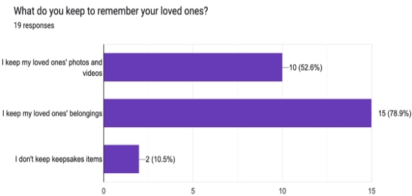
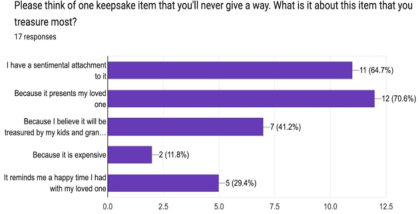
Furthermore, over 78% of responders to the project’s screen survey indi- cated that they keep their loved ones’ belongings to memorialize them (Figure 3). Object Attachment is an emotional response a person experiences toward a specific object. This is a common response to objects reminding sub- jects of their loved ones (Figure 4). The object also benefits the individual’s emotions and moods (Schechtman; Fletcher 55).
A positive emotion that we feel toward an object adds sentimental value to it. As a result, we cherish our loved ones’ belongings because they remind us of their existence. According to Cari Romm, author of ‘The Cut’, the emotions we experience by touching a surface impact our mood. Moreover, the interviewees considered touching and holding their loved one’s keepsakes a source of enhanced belonging.
The findings in this research phase led to map the tactile consumers’ frustrations and demands in the moment of need.
Figure 3: The outcome of the screening survey by 19 responders.Figure 4: The outcome of the screening survey by 17 responders.
114 Asayesh
DEFINE AND EMPATHIZE WITH THE USER The Define phase goal was to identify the target consumers who bury their emotions. Synthesizing and organizing the findings allowed us to identify and empathize with tactile people’s needs and expectations to cope with their separation and enhance their moods.
Nowadays, it is more common for people to live separately from those they love for various reasons such as work, school, and immigration. Living away from loved ones can be stressful and emotionally challenging for people, especially when experiencing emotional disconnection from a loved one.
There are a few solutions that technology has provided, such as phone calls, video calls, and text messaging. In addition, according to the finding of this research, people feel connected to their loved ones by touching their loved ones’ belongings. The interview participants asserted that their keepsakes remind them of their loved ones’ existence.
Nevertheless, taking advantage of those solutions has limitations, such as location, time, style, function, and phone or internet access.
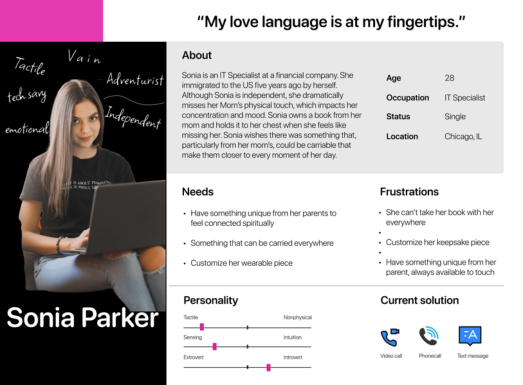
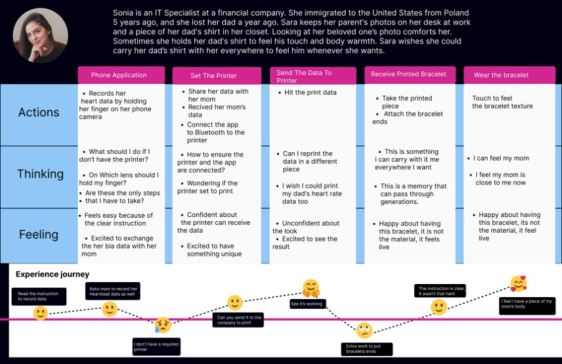
Creating a user persona, (Figure 5), leads the project to understand the consumer better and get ready for the next phase of Ideation.
Figure 5: The user persona.
IDEATE AND CREATE SOLUTION In moving towards consolidating and defining the problem, brainstorming possible solutions to strengthen people’s connection to their loved ones while they are away was the next step.
Even though the keepsakes have a positive mental impact, keeping and carr- ying them is only sometimes possible due to limited space, improper style, or occasion. Having our mementos as a wearable allows us to carry our keep- sakes anywhere and to connect with our loved ones by feeling its texture.
An Emotional Bio-Wearable 115
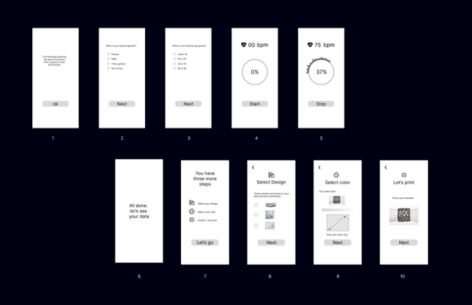
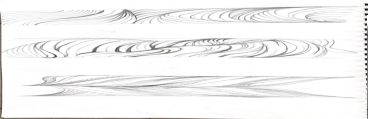
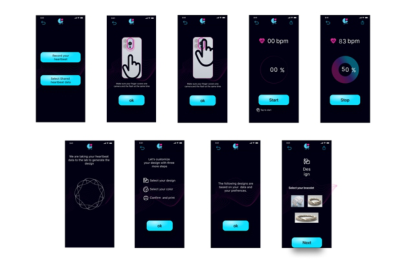
Figure 6: The project concept.Figure 7: A few wireframe screens that were created in Figma.Figure 8: Two sample of hand sketch design for testing the bracelet surface.
Feeling a texture that represents the life of our loved ones may increase brain health.
The heart is commonly known as a symbol of love, and the heartbeat displays life. In addition, the heart wave is personal data that creates a unique texture. So, what if we use a loved one’s heartbeat, which is a symbol of their life and love, and make it part of one’s daily style?
In this phase, an interactive wireframe (Figure 7) was built and tested along with hand sketch bracelets to get ready for fabrication (Figure 8). The project, through testing the wireframes, improved the application experience before moving to the delivery phase.
DEVELOP, PROTOTYPE AND TEST With this premise and definition, a generative design system was built to create wearable pieces based on the user’s input, such as Heartbeat data. The
116 Asayesh
Figure 9: User journey to map the user’s steps using the application.Figure 10: Visualizing heartbeat data.
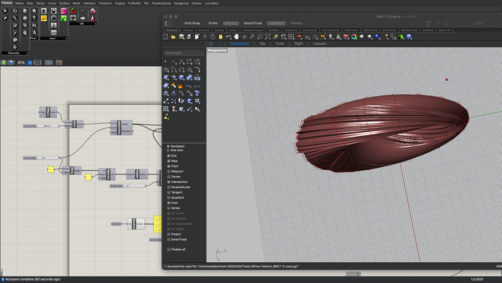
goal is to create a desirable accessory, such as a bracelet with a heartbeat as its texture. With the help of parametric modeling, the heartbeat data is visualized and shaped into a unisex bracelet (Figure 11). The bracelet is a suitable choice because it is worn and placed on the wearer’s pulse. This
Figure 11: Creating a bio-bracelet in a parametric modeling program.
An Emotional Bio-Wearable 117
position helps the wearer sense their loved one’s heartbeat and allows them to touch the bracelet, feeling closer to their beloved.
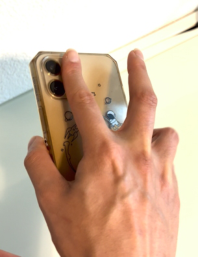
In order to enable the user to record their loved one’s heartbeat, the Heart Rate Variation sensor is used, which is located at the iPhone’s rear camera (Figure 10). In addition to that, an application was built to convert data into an object. The application is a tool to receive the data from the users and interpret it into the bracelet’s texture.
Utilizing parametric modeling, interface design, and software development empower the project to humanize the end product.
DELIVER AND TEST The deliverable product includes two parts. The first part is a program that generates designs through an iOS mobile application. The application custo- mizes the output based on the user’s loved one’s heartbeat, recorded by the phone’s rear camera (figure 12) and responds to questions to determine the preferred style (figure 13). That data is then converted into bracelet designs. Additionally, users have the opportunity to preview 360 views of the bracelet and pick a color. Finally, the result of a consumer’s input is transferred into a bio-bracelet with a sentimental texture and printed with a 3D printer.
Figure 12: Recording heartbeat with the iPhone rear camera.Figure 13: High fidelity of application’s screens.
118 Asayesh
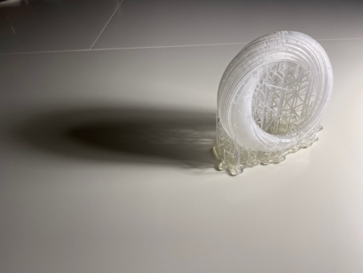
Figure 14: A different design and material from the 3D-printed bracelet. The heartbeats are shown in the thickness of the furrows. The support wasn’t removed due to display in a show.
Accessibility is a crucial factor in the entire design process as it aims to ensure that this product is usable by individuals with diverse abilities and needs. Creating a User Journey (Figure 9), allowed us to prioritize accessibi- lity. We strived to create an inclusive experience accommodating a wide range of users.
CHALLENGES This project strives to improve the consumer’s emotional well-being. There- fore, delicacy’s design process includes challenges, required design iteration, and constant research. Among all of the difficulties confronted, three of them are highlighted below
1. One of the project’s challenges was finding a suitable time frame to col- lect a correct quantity of heart rate numbers. The texture on the bracelet surface includes various line lengths, which makes it complicated for the program to create smooth wavy edges. For example, I could indicate more than 10 heart rate numbers on a long line and achieve a pleasant texture. However, if I used the same amount of numbers on a smal- ler line, it broke the line. The importance of the quantity of heart rate numbers relates directly to the time frame that the program lets the user record their loved one’s heartbeat. Therefore, this process required some
Figure 15: Experimenting with different thicknesses on bio-bracelets’ surface.
An Emotional Bio-Wearable 119
examination and playing with the recording time to achieve a proper time frame. 2. Finding an appropriate line thickness and height was another challenge during the delivery phase. Both line thickness and height impact the quality of the printing and the texture feeling (figure 15). 3. Humanizing the bracelet is an essential character that the project faced during the design. Using human biology data, which is unique to each person, could bridge human emotion and the physical product. In other words, this project leveraged human psychology and biology to create a sentimental wearable piece that benefits its wearer’s emotions.
CONCLUSION
Touch is a primary communication tool for bonding and benefits both phy- sical and mental health. For many people, touch is recognized as their love language and the way they communicate compassion. However, in our con- temporary world, we may enforce or make some decisions that result in losing our loved one’s touch. Neuroscientist Edmond Roll’s research proves the value of touch and its impact on a person’s mood by activating the brain’s orbitofrontal cortex (1). An Emotional Bio-wearable project innovates a way of connection by integrating science, technology, and fashion; their impact on our daily lives is unavoidable. An Emotional Bio-wearable application colle- cts and uses a person’s loved one’s heartbeat and shapes it into the person’s style, functioning as a symbol of bonding and a form of affection. In this project, the advantage of technology allowed the personalization texture for those who benefit from tactile as their love language.
This project is still under development to test more and receive more con- sumer feedback. Further consumer testing improves this wearable and makes it more humanized.
ACKNOWLEDGMENT
The Emotional Bio-wearable was in partial fulfillment of my master’s degree. Moreover, this project has been a beautiful amalgamation of my past expe- rience in the fashion world and my time and learning at California State University Long Beach.
Thank you to my thesis chair advisor, Professor Heather Barker, for mentoring me and supporting me in every step of this project.
Special thanks to my advisors, Professor Krai Char, Laura Civetti, and Igor Knezevic, for their guidance and support in bringing life to this project.
The impact of bringing a multi-disciplinary and multi-faceted project to life was a dream before my time in the Human Experience Design program. Fur- thermore, the unique perspective I have gained at Human Experience Design Interactions in CSULB has well-prepared me for greater problem-solving.
REFERENCES
Carmassi, C., et al. “Adult Separation Anxiety in Patients with Complicated Grief: Relationship with Post Traumatic Stress Versus Mood Spectrum Symptomato- logy.” European Psychiatry, vol. 26, no. S2, 2011, pp. 142–142, https://doi.org/ 10.1016/S0924-9338(11)71853-3
120 Asayesh
Fletcher, Guy. “Sentimental Value.” The Journal of Value Inquiry, vol. 43, no. 1, 17 Feb. 2009, pp. 55–65, 10.1007/s10790-009-9152-1. Accessed 27 Dec. 2020. Hoffman, Tiina. “What Is Heart Rate Variability (HRV) & Why Does It Matter?
| Firstbeat Blog.” Firstbeat, 2018, www.firstbeat.com/en/blog/what-is-heart-rate- variability-hrv/. Romm, Cari. “The People Who Store Their Emotions in Their Fingertips.” The Cut, The Cut, 23 May 2016, www.thecut.com/2016/05/the-people-who-store-their- emotions-in-their-fingertips.html. Rolls, Edmund T et al. “The orbitofrontal cortex: reward, emotion and depression.” Brain communications vol. 2, 2 fcaa196. 16 Nov. 2020, doi:10.1093/braincomms/fcaa196 Unsplash. “500+ Young Woman Pictures | Download Free Images on Unsplash.”
Read this individual research paper free through the original publisher, or explore the full digital proceedings book.
ISBN 978-1-958651-61-2
Explore this ISBN in the AHFE Bookstore ↗Listed in the July 2026 bookstore catalogue; search by ISBN to confirm current availability · Digital book purchase optional