Xiaodong Gong, Shihang He, Qian Gong, Yushun Liu (2023). Research on the Design of Task Planning Interaction Flow Based on Information Architecture. In: Usability and User Experience. AHFE Open Access, vol. 110, pp. 53–63. https://doi.org/10.54941/ahfe1003177
To explore the impact of information architecture design on task planning performance with the aim of improving the operational performance of task planning processes and reducing operator cognitive load. Methods: Two types of most commonly used linear and tree structures were used to design an interactive low-fidelity prototype of the two architectures based on the same planning task, 20 subjects were recruited, testers randomly selected the two scenarios, usability tests and NASA-TLX questionnaires were used to measure the differences in task planning operational performance and cognitive load of the two information architectures, and finally ANOVA methods were used to data processing and analysis. Conclusion: In the prototype design task with a tree structure, the subjects' performance was generally higher than that of the task designed with a linear structure, and the former subjects' cognitive load index values of self-performance, mental demand, time demand, frustration level, and effort level scores were lower than those of the latter, except for physical demand. After analysis, it was concluded that probably in complex task planning scenarios with many subtasks, the tree structure enables users to have a more holistic control of task branching and reduces the path return hierarchy, which in turn reduces the consumption of cognitive resources.Keywords: task planning, information architecture, interaction flow design, linear structure, tree structure
Digital interface as a bridge between users and computers. With the deve- lopment of Internet technology and computer technology, it extends from the initial computer interface to various smart terminals such as cell phones, tablets and wearable devices (Booher, 2003). The role of interactive inter- faces in life and work is increasing, and users are paying more and more attention to the interactive interface and experience of the interactive system, which puts forward higher requirements on the rationality and usability of the interactive system design.
Information architecture is the “skeleton” that supports the whole intera- ctive system, and its role is mainly to organize the information effectively. In interaction design, information architecture design analyzes, classifies, and designs the logical relationship between information, so that the many
disordered information units in the system can form a complete and logical information architecture (Booher and Minninger, 2003). Excellent informa- tion architecture can improve user experience, reduce user tension, anxiety and errors in use, and quickly understand information and access content, which is the core goal of information architecture design (Chapanis, 1996). In the task planning system, a reasonable information architecture design helps to improve the user experience due to the characteristics of many information dimensions.
Users’ perception of information architecture is much smaller than that of interactive interface and various visual elements, and users’ evaluation of interactive system depends more on the visual effect of interface and innova- tion of interaction method, and few users will notice the help of information architecture to product experience. But information architecture does play the role of organizing information units and guiding users under the pre- sentation layer. Although information architecture is not noticed by users at the presentation layer, it invariably influences users’ experience and determi- nes the lower limit of interaction design. Even for the same type of product, different information architectures can bring different user experiences and differences in use. Therefore, the study of information architecture, especi- ally the study of information architecture of interactive systems with high complexity, is important to improve the usability of the system, enhance the planning efficiency, and reduce the cognitive load of users.
Users’ perception of information architecture is much smaller than that of interaction interface and various visual elements. Users’ evaluation of intera- ction system depends more on the visual effect of interface and innovation of interaction mode, and few users notice the help of information architecture to product experience. But information architecture does play the role of organizing information units and guiding users under the presentation layer. Although information architecture is not noticed by users at the presentation layer, it invariably influences users’ experience and determines the lower limit of interaction design (Wang et al., 2021). Even for the same type of product, different information architectures can bring different user experiences and differences in use. Therefore, the study of information architecture, especi- ally the study of information architecture of interactive systems with high complexity, is important to improve the usability of the system, enhance the planning efficiency, and reduce the cognitive load of users.
DEFINITION OF INFORMATION ARCHITECTURE Information Architecture (IA) first originated in the United States and was proposed by Richard Shorro Uman, President of the National Conference of the American Institute of Architects (AIA), in 1975. In the mid-1980s, the main role of Information Architecture was to serve as a design tool for the computer base and data layer, mainly in the organization of information networks and business aspects of the role of sorting out information data (Sun et al., 2017; Zhang et al., 2021).
With the development of information technology, information architecture design has gradually become an important means of building, organizing
Research on the Design of Task Planning Interaction Flow 55
and managing information. In the book “Elements of User Experience: User-Centered Web Design”, the information architecture of a website is described as follows: Information architecture focuses on designing a stru- cture for organizing categories and navigation so that users can efficiently and effectively navigate the content of the website (Yuan et al., 2014). As mentioned in Information Architecture: Beyond Web Design, information architecture is difficult to summarize in a short sentence because it has mul- tiple meanings (Morrogh, 2002). Information architecture as mentioned in this book is not only a way about creating sitemaps, wireframes, and web- site navigation menus, but information architecture in a broader sense is the structured design of shared information environments, a synthesis of orga- nization, labeling, search, and navigation systems in digital, physical, and cross-channel ecosystems; information architecture is the art and science of creating information products and experiences to provide usability, findabi- lity, and comprehensibility, and It is also an emerging community of practical science that aims to import the principles of design and architecture into the digital realm. Zhou defines IA as “Information architecture is the organiza- tion of information and the design of information environments, information spaces, and information architectures to meet human information needs.” Yihong Rong considers IA as an activity related to information organization, structure building and system design.
In short, information architecture is the design of information and the way it is organized. In the process of user-system interaction, the way people interact with digital information systems is directly influenced by the way information is organized. Although it is difficult for users to notice the exi- stence of information architecture, it plays an important role for users to understand the information space defined by the system, in improving the readability of information, simplifying the interaction process, and improving the user experience.
INFORMATION ARCHITECTURE TYPES AND APPLICATIONS Types of Information Architecture
The linear structure (see Fig. 1) is simple and the most common type of stru- cture in interaction design. This structure emphasizes the sequential nature of different information nodes, and the user needs to complete the previous information node to move to the next step without being able to jump betw- een non-adjacent information nodes, such as account registration web pages and software installation programs are typical linear structures.
Figure 1: Linear structure.
Figure available in the original PDF paper.
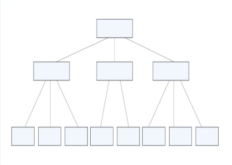
Tree structure (see Fig. 2), also called hierarchical structure, is also one of the common structures. This structure emphasizes the parent-child relation- ship between information nodes, and the nodes at the higher level are merged by the nodes at the lower level. For example, on Huawei’s official website,
the first-level navigation is divided into personal products, commercial pro- ducts, service support, partners and company introduction, and there will be different series of products under the first-level navigation, which is a typical tree-like structure.
Figure 2: Tree structure.
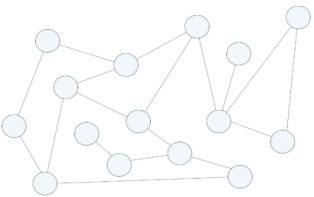
The focus of the mesh structure (see Fig. 3) is to give users multiple chan- nels to reach the target nodes, so that users can find the target information at different nodes or in different ways. This structure is mostly applicable to entertainment and social products, such as Taobao APP, where users can search directly, view the rankings, view similar products and other ways to find the products they want to buy.
Figure 3: Mesh structure.
Rectangular structure is a type of structure in which individual information nodes are interconnected, which can allow users to move between different information nodes in a multidimensional way, or connect many different information from a single information dimension. For example, takeaway products can be ranked according to price, brand or sales volume, or when making a phone call you can both search for contacts and view call history, as well as dial phone numbers directly.
The type of information structure is an important factor that affects information architecture. From the framework level, the general types of information structure in interaction design include linear structure, hiera- rchical structure (tree structure), mesh structure, faceted structure, integrated structure and self-organized structure (Brancheau and Wetherbe, 1986). Dif- ferent types of information structures have different characteristics and are suitable for different business scenarios.
Application of Information Architecture in Information System Environment In industrial scenarios, users prefer simplicity, ease of use and efficiency, so existing mission planning systems commonly adopt both linear and tree
Research on the Design of Task Planning Interaction Flow 57
structures. For example, based on the meet paradigm of multi-level cam- paign joint mission planning system design, Wang Liwen et al. used a linear information structure to decompose the mission planning process into four parts: mission pre-assignment, route pre-planning, mission re-assignment and route re-planning, which effectively improved the operational performance and accuracy (Deaton, 2003). Yanqi Zhang et al. also adopted a linear stru- cture to divide the route task planning system into accepting tasks, planning tasks and executing tasks, and explored the effects of three different layouts on task performance under this information architecture (Rosenfeldl, 2016). Yiwei Li et al. sorted out and summarized the relevant research results at home and abroad, and finally used a tree structure to design the UAV col- laborative charge interface (Xue, 2015). Li Qunzhi et al. adopted the tree structure of large patterns over small patterns, decomposing the whole task into large patterns of different stages in turn, and then refining them into small patterns composed of multiple tasks (Wang et al., 2021).
In the life scenario, Yibo Ma (2021), in the process of designing the age- appropriate app, split the interaction process of browsing news for the elderly into multiple “key frames”, and then combined the same type of “key frames” to reduce the number of “key frames” and shorten the whole task flow‘to reduce the number of “key frames” and shorten the whole task flow. At the same time, considering the decreasing comprehension and memory ability of the elderly, he uses a linear structure to connect the used “key frames” in series, and finally achieves the effect of shortening the length of the task flow and making it more friendly to the elderly. Yunshang Zheng (2020) analyzed the user profile and task scenarios of users learning to cook, constructed a flowchart of whole meal planning by analyzing the task requirements, and then built an information architecture with a tree structure, and finally veri- fied the improvement of the information architecture on task performance through usability testing. In order to better guide visitors in the digital display interaction design, Wang Xiaoyin (2015) used a linear structured interaction framework, which played a good narrative effect.
Through analysis (see Table 1), we can find that the advantage of tree stru- cture is that it is more in line with most people’s mental model and can sort out the complicated information nodes into a systematic and holistic infor- mation tree. This form is also in line with most people’s learning or thinking habits, so this structure is used most frequently. Next is the linear structure, which is characterized by its simplicity and clarity, so it is especially suitable for scenarios with mandatory requirements for information nodes, such as information registration and linear narratives. In addition, this structure is often used in age-appropriate design due to the limited cognitive ability of the elderly. Other structures such as mesh structure and matrix mechanism are more often used in app design with entertainment tendency due to their characteristics, such as short video software, shopping software or take-away software.
In general, in various application scenarios, information architecture is most basic and common with linear structure and tree structure, especially task planning emphasizes more on logic and sequence, and less on mesh stru- cture and matrix structure, so this study will build a task planning system
Table 1. Analysis of the information architecture of the mission planning system.
Table available in the original PDF paper.
Author Research Content Information Architecture Industrial scenes Wang Liwen (2021) Multi-level campaign joint mission planning system design
tree structure
Linear structure Yiwei Li (2017)
UAV collaborative charge interface design tree structure Radzki (2021) UAV-responsive joint distribution planning
Age-friendly APP does not count tree structure
life scene Ma Yibo (2021)
Whole Meal Planning APP Design tree structure Zheng Yunshuang (2020)
Wang Ceyin (2015)
Online exhibition hall interaction design
Linear structure based on two types of information architecture, linear and tree structure, and compare their effects on task performance and users through experiments.
Mission Planning System Overview The definition of mission planning is a process of thinking activities to deve- lop and optimize the operational program around the mission objectives (Ma, 2021). In simple terms mission planning is the breakdown and refinement of a superior generalized combat mission formulation into a more detailed combat mission sequence; where mission planning is divided into two phases, namely mission decomposition and mission detail formulation.
The research UAV mission planning platform is a carrier and is designed based on actual projects. The purpose of the system is to realize the terminal’s activities such as equipment management, mission layout, and information collection for multiple UAVs. Since the platform is a complex information system and was designed by non-professionals at the beginning of the design, the product design lacks consideration at the information architecture level, resulting in low usability of the system. The purpose of this study is to find an information architecture suitable for this business scenario through experiments, so as to improve the task performance and usability of the product.
EXPERIMENTAL PROGRAM Program I
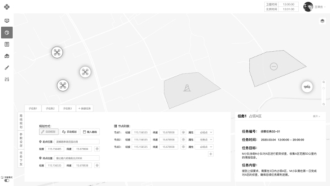
Program I adopts a linear structure (see Fig. 4), and the design divides the whole business process into three major stages: task decomposition, task for- mulation, and task issuance, and the user needs to complete the tasks in these three stages sequentially according to the order, during which it is impossi- ble to jump between adjacent information nodes. Each task is also divided into three steps: route planning, data planning, and other planning, and these three steps are also linear, allowing users to move between information nodes only linearly.
Research on the Design of Task Planning Interaction Flow 59
Figure 4: Linear structure scheme A.
The linear structure is characterized by its simplicity and effectiveness. The use of linear structure can reduce the amount of user thinking and mechani- cally complete the target task according to the preset order. In addition, the total and then divided way is convenient for the user to clarify the whole task execution idea and deepen the understanding of the task.
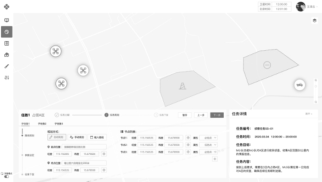
Program II Program II (see Fig. 5) uses a tree structure, which integrates the task plan- ning phase with the task formulation phase. Users perform task planning by adding tasks to the top of the operation module according to their needs, and the right side of the module allows switching between different parts of this task form. Program II allows users to flexibly decide the input order of different information nodes according to their needs.
Figure 5: Tree structure scheme B.
Operators can cross-task decomposition and task formulation according to their personal habits, and can jump between different information nodes during operation.
Experimental Subjects
1) Subjects: 16 university master’s students with normal (or corrected) vision and no cognitive impairment participated in this study, none of whom had been previously exposed to the experimental material. Their average age was 24 years old, with a male to female ratio of 1:2. The experimenters were randomly divided into two groups of 8 participants each. The task planning scenario was simulated by means of an Axure interactive prototype. 2) Experimental materials: original interface flow description and test Axure high-fidelity prototype for optimized interaction, new interface
flow description and test Axure high-fidelity prototype for optimized interface interaction and cognitive task assignment (both interface sty- les are the same), NASA-TLX scale, task success record sheet (correct sub-task operation counts as “1”and incorrect operation counts as “0”). 3) experimental apparatus: experimental equipment including test laptop resolution of 1920 px × 1080 px, 15.6 inches, data acquisition software, glasses-type eye-tracking instrument, etc. 4) Experimental environment: The environment of this experiment is a clo- sed environment without noise and other disturbances, the subject is sitting in a frontal position facing the operating interface, the subject is 50 cm away from the monitor, the room lighting conditions are normal, the illumination is 300 lx.
Experimental Design This experiment used a two-factor within-subjects design, with individual protocol experiments conducted in the same order. A randomized group experiment was also used to avoid inter-experimental protocol effects on subjects’ task performance.
The independent variable in the experiment was the type of information architecture, and the experimental design was divided into two scenarios desi- gned based on different information architecture types, in which Program I used a linear structure design and Program II used a tree structure design. The dependent variables included two types of task performance and cognitive load. Task performance was defined as the time taken by the subject from the start of the operation until the completion of the trial task. Subjective ratings of subjects were obtained by a 7-point TLX scale after the on-board trials and used to calculate cognitive load intensity.
In the experiment, two groups of subjects will manipulate linear structure scheme A and tree structure scheme B in turn to complete the task planning behavior. The experimental procedure is divided into three main parts.
In the first part, subjects were explained the task objectives, procedure, and other basic knowledge before the experiment.
In the second part, subjects perform the experiment for either scheme A or scheme B. Details of the experimental tasks include:
1. Enter the task planning interface; 2. Carry out task decomposition according to the task description; 3. Perform task detail formulation according to the task description; 4. Confirm the task planning results and execute the issuance; In the third part, TLX scales and questionnaires were completed to objectively evaluate the experience of operating the experimental scheme.
EXPERIMENTAL RESULTS Information Architecture Impact on Task Performance
In this experimental design, the task planning was divided into two stages: task decomposition and task formulation, with 20 participants and twenty
Research on the Design of Task Planning Interaction Flow 61
valid data collected. The average time spent on the task was 185.6s for Sch- eme A (linear structure) and 162.1s for Scheme B (tree structure), and the average time spent on the task for scheme A was significantly higher than the average time spent on the task for scheme B.
By phase, the average time spent in the task planning phase was 61.1 s for Scheme A and 50.4 s for Scheme B. The average time spent in the task formulation phase was 125.1 s for Scheme A and 129.7 s for Scheme B. It can be seen that Scheme A took less time in the task formulation phase and Scheme B took less time in the task planning phase (see Table 2).
Table 2. Table of mean and variance of task performance (s).
Table available in the original PDF paper.
Task performance (s) Mean and Variance Scheme A (linear structure) Scheme B (line tree structure) M±SD M±SD
task planning time 61.1±3.0 50.4±1.1 task planning time 125.1±1.8 129.7±2.6 total task time 185.6±2.6 162.1±3.0
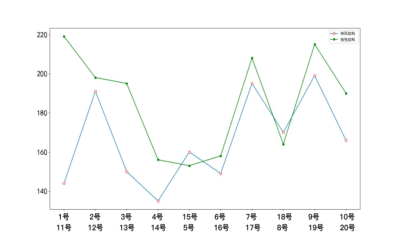
Plotting the data in the table as a line graph shows that the time spent on tasks with a linear structure (green) is generally greater than the time spent on tasks with a tree structure (blue), and the difference is more pronounced (see Fig. 6).
Figure 6: Task time line chart.
Influence of Information Architecture on Cognitive Load The questionnaire was divided into two parts using the NASA-TLX measure. The first part was a matrix scale question, where the test taker scored the six indicators in the questionnaire self-performance, mental demand, time demand, physical demand, frustration level, and effort level based on the onboard test feelings, with a score range of 1-7. The second part is a matrix of 15 single-choice questions, in which the test taker compares two factors in each question and checks the factor that is considered more important in the operation.
Analysis of the data shows that the linear structure scores higher than the linear structure in brain demand, time demand, effort level, and frustration level, indicating the mental load on users in these four items; the two pro- grams score the same in physical demand, probably due to the relatively
simple task process of this test, which does not reflect significant physical differences; the linear structure program has higher self-performance score scores than the tree structure.
Reliability analysis of the data from the second part of the NASA-TLK scale was performed using spss, and the Cronbach’s alpha coefficient was 0.885, indicating good internal consistency of the data. The NASA-TLK scale factors were correlated with the total score, and the correlation coefficients were distributed in the interval 0.742-0.901 except for physical demand (0.198), which was greater than 0.50, and the data showed that the differences were all statistically significant (p<0.001).
Structural validity analysis of the NASA-TLK scale, KMO sampling adequ- acy test and Bartjett’s spherical test showed that the overall KMO coefficient was 0.704>0.7, the sig value was 0.000<0.05, and the Bartjett’s spherical test difference was statistically significant (p<0.01).
In terms of the mean correctness of the task, the difference was not signifi- cant with 97% correctness for Scheme A and 92% correctness for Scheme B. From the perspective of cognitive load, the average cognitive load of Scheme A was significantly smaller than that of Scheme B (see Table 3).
Table 3. Experimental test data.
Table available in the original PDF paper.
Experimental program Task performance (s) Task accuracy Cognitive load scheme A 185.6 97% 26 scheme B 162.1 92% 37
CONCLUSION
The research experiments show that: 1) in the task planning scenario, the overall task performance of the tree-structured solution is significantly higher than that of the linear structure, and the gap between the two task times is more pronounced. 2) the tree-structured structure takes less time in the task planning phase and the linear structure takes less time in the task formulation phase. 3) the linear structure imposes a higher cognitive load on the user than the tree-structured structure, but the gap is relatively weak.Therefore, in the design of interactive systems, a tree structure is recommended for overall planning-type tasks and a linear structure is recommended for information input-type tasks. The design of task planning systems using a tree structure can improve overall task performance while reducing the level of cognitive load.
REFERENCES
Booher, H. R., Minninger, J. (2003) “Human systems integration in army systems acquisition”, in: Handbook of human system integration, Booher, Harold (Ed.). pp. 663–698. Brancheau J C, Wetherbe J C. Information architectures: methods and practice [J].
Information Processing & Management, 1986, 22(6): 453–463.
Research on the Design of Task Planning Interaction Flow 63
Chapanis, A. (1996). Human factors in systems engineering. Wiley Series in Systems Engineering and Management. Andrew Sage, series editor. Hoboken, NJ: Wiley. Deaton M. The elements of user experience: user-centered design for the Web [J].
interactions, 2003, 10(5): 49–51. Industrial Control Computer, 2021. Sun X., Chen X. D., Cao X. W., et al. Review and Prospect of Military Mission Planning Technology [J]. Journal of Command and Control, 2017, 3(4): 289–298. Li Q. Z., Jia Y., Peng S., et al. Top-level design and implementation of mission plan-
ning for lunar surface inspection detectors [J]. Journal of Deep Space Exploration, 2017, 4(1): 58–65. Li Y. W., Tu T. J. Terminal interface design for manned/unmanned collaborative accusation [J]. Electronic Technology and Software Engineering, 2019(05): 90–92. Ma Y. B. Research on Interaction Design of Mobile Application under the Concept
of Aging [D]. Changsha University of Science and Technology, 2021. Morrogh E. Information architecture: An emerging 21st century profession [M].
Pearson Education, 2002, 52(2) 87–87. Radzki G, Nielsen I, Goli´nska-Dawson P, et al. Reactive UAV fleet’s mission planning in highly dynamic and unpredictable environments [J]. Sustainability, 2021, 13(9): 5228. Rosenfeldl M. Information Architecture: Beyond Web Design [J]. 2016. Wang L. W., Zhou T. L., Wu Q. X. Research on Human-Machine Interaction Interface
Design of Multi-level Joint Task Planning [J]. Industrial Control Computer, 2021. Wang L. W., Zhou T. L., Wu Q. X., Research on Human-Machine Interaction Interface Design of Multi-level Joint Task Planning [J]. Wang X. Y. A Preliminary Study on the Interactive Design of Digital Display—
—Taking Changzhou Museum and Planning Museum as Examples [J]. Art Technology, 2015 (7): 40–40. Xue C. Q. Design method and application of digital interface of human-computer interaction in complex information system [M] Southeast University Press, 2015. Yuan T. Q. Talking about web information architecture design [J]. Wireless Internet
Technology, 2014 (12): 51–51. Zhang H. J., User Interface Design Retrieval Based on Information Architecture [D].
Sichuan University. 2021. Zhang Y. Q., Gong X. D., Hu J. J., et al. Layout Design of UAV Digital Interface Based on Route Planning Task [J]. Industrial Engineering Design, 2020. Zheng Y. H. Research on Meal Plan Interaction Design and User Experience of
Mercure APP [D]. Hunan University, 2020. Booher, Harold, ed. (2003). Handbook of human systems integration. New Jersey: Wiley. Wang Y., Zhang K., Sun X. Mission Planning Technology for Unmanned Aerial
Vehicles [M]. Beijing: National Defense Industry Press, 2015.
LISTED IN THE AHFE DIGITAL BOOKSTORE CATALOGUE
Explore the complete digital volume
Usability and User Experience
Read this individual research paper free through the original publisher, or explore the full digital proceedings book.
ISBN 978-1-958651-86-5
Explore this ISBN in the AHFE Bookstore ↗Listed in the July 2026 bookstore catalogue; search by ISBN to confirm current availability · Digital book purchase optional