Li Ren, Xiaodong Gong, Yushun Liu, Qian Gong (2023). Analyzing Social Presence Factors in Experience Design of Online learning. In: Usability and User Experience. AHFE Open Access, vol. 110, pp. 491–500. https://doi.org/10.54941/ahfe1003224
With the advancement of computer and Internet technology, online learning and hybrid learning have progressively become the new norm in education. The lack of interaction and communication in the experience design of online learning platforms has resulted in the forced weakening of the teacher's role, and the problem of lower student engagement and learning results has become increasingly evident which brings new requirements and obstacles to the design of online learning experiences.Since social presence has a direct impact on the effectiveness of online learning, which has been confirmed in the Col framework, this article will investigate user experience design in the context of online learning with the aim of enhancing users' social presence.User research methods, such as user interviews and questionnaires, are combined with theories associated with online learning to analyze the interaction experience design factors in the process of online learning, which are summed up as initial perception experience, learning process experience, and effect value experience. Second, the literature research technique is used to determine the formation mechanism and influencing factors of social presence: the formation of social presence depends on the triangle structure of "sociability-social presence-social space," and the mapping relationship of "social space orientation, perception of others, perception of self, evaluation of others and self, shared presence, perceived social presence" can be summed and promotes the formation of social space and social interaction in turn.The influencing factors, including control, sensory, distraction and realism, are what finally build the link between experience and design. This research constructs an experience design model for online learning from the perspective of social presence based on the aforementioned research methods, and utilizes it as a basis to guide the design process, which is verified by applying the social presence evaluation scale.Based on social presence theory, this study suggests a model for experience design for online learning to direct design procedures that can satisfy users' needs for online learning, promote social interaction in online learning, optimize the online learning experience, and enhance learners' engagement and learning motivation. It offers fresh perspectives and a framework for experience design in this situation.
The rapid development of computer and Internet technologies has reshaped the way knowledge is acquired, communicated and interacted with. Lear- ning methods and channels are no longer limited to traditional classroom venues; online classrooms, blended learning and other learning channels have become major trends in education, and many traditional classrooms are being transformed into online classrooms, with an increasingly large number of learners in online classrooms, increasingly diverse usage scenarios, and incre- asingly rich access to knowledge needs and preferences. Various emerging classroom media have made great progress in terms of interactivity, flexibility, and efficiency, and interactive activities based on computer and multimedia technologies have become more widespread and important. This also poses new requirements and challenges to the experience design of online classroom platforms.
Social presence, or the degree to which a person is viewed as “real”in medi- ated communication, is a key idea associated with the quality of the online learning experience (Gunawardena and Zittle, 1997). It has been determi- ned that social presence is essential for learner engagement and the success of online collaboration. It enables users to improve social interaction, gain
emotional support, and produce positive experiences like immediacy, inti- macy, belongingness, immersion, and efficacy, all of which will enhance users’ learning outcomes and desire to keep learning.
This article employs the methods of literature review, user research, and case study, referring to theories of social interaction, social presence, and learning experience in education, concentrating on the interactive experie- nce in online classroom, assessing the objects, contents, particular behaviors, features, and expectations of users in the online classroom, and analyzing how to help users acquire social presence and increase their social conne- ction with each other. The study also examines how users might learn from others’ experiences, co-construct knowledge, and develop a constant desire to learn through interaction.
Literature Reviews on Theory of Social Presence Social presence theory was first conceptualized by Short et al. in the field of communication and defined as the degree of salience of the other person in the interaction and the consequent salience of the interpersonal relationships (Short et al., 1976). It was later applied in different ways in the fields of distance education, marketing, etc.
Social presence theory suggests that the degree of “social presence” in a communication medium influences the nature and quality of interpersonal interactions. Social presence refers to the feeling of “being there” or “being together” that people experience in a communication medium. The theory suggests that the more social presence a medium has, the more it supports rich interpersonal communication and the more it fosters relationships and communities. Conversely, the less social presence a medium has, the more it supports functional, task-oriented communication, and the less it fosters relationships and communities.
In the field of distance education, Randy Garrison has conducted research on the Community of Inquiry (CoL), in which they argue that the establish- ment of three elements of learning communities: social presence, cognitive presence, and pedagogical presence, and that these three elements can only work together to make the learning experience truly accessible to learners, while social presence is the basis for the establishment and development of learning communities (Garrison et al., 1999). Social presence is the basis for the establishment and development of learning communities. Therefore, this paper chooses the social presence theory as the entry point and intends to propose design models and strategies to enhance the user experience.
In general, the specific manifestations of social presence can be summarized as immediacy in the temporal dimension and intimacy in the spatial dimen- sion (Gunawardena and Zittle, 1997). Intimacy depends on nonverbal factors such as physical distance, eye contact, physical proximity, smiling, facial expressions, and personal conversation topics. Immediacy is the psycholo- gical distance between the communicator and the communicative recipient and is conveyed through verbal and nonverbal cues.
For the online classroom scenario, the specific manifestations of social immediacy can be divided into five areas: social respect, social sharing, open-mindedness, social identity, and intimacy (Sung and Mayer, 2012).
Analyzing Social Presence Factors in Experience Design of Online learning 493
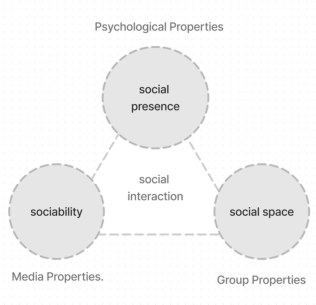
Figure 1: The social presence, sociability, and social space triangle.
Formation Mechanism of Social Presence There are many types of presence, which are classified into social prese- nce and spatial presence. It is believed that presence is a neuropsychological phenomenon that evolved from the interplay of our biological and cultural inheritance, with the goal of implementing the will: presence is the intuitive perception that successfully translates intention into action. In this vision, the ability to feel “presence” in virtual reality systems (artifacts) is essentially no different from the ability to feel “presence” in our bodies and in the physical environment around us.
There are many studies on the factors influencing social presence, and Krei- jns et al. summarized them into two important correlation structures, namely social competence and social space, based on previous studies, and constru- cted a model of the association between the three (Kreijns et al., 2022), as shown in Figure 1.
In this model, sociality is defined as the basic functional and design featu- res that online platforms provide for users’ social behavior, i.e., the mediating properties that enable users to engage in social interactions or provide gui- dance, and thus can be enhanced by design. It is a fundamental condition for users to interact socially within a community and supports the existence of social presence, social space and user experience. Social space is defined as a network of human relationships embedded in a group structure of norms and values, rules and roles, and beliefs and ideals, and is concerned with interper- sonal and emotional connections between teams. A good social space can be reflected in the sense of community, group atmosphere, mutual trust, social identity and group cohesion, and thus can be seen as a group attribute. When users perceive a good social space in the platform, they can also enhance their own social presence. Social spaces are influenced by social interactions between users, depend on sociality to exist, and can be improved by design.
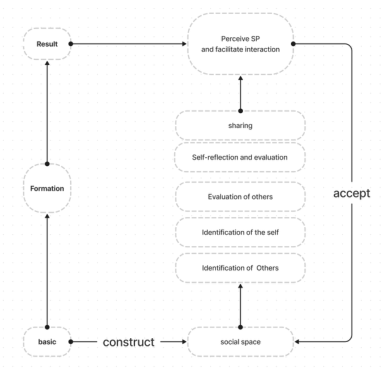
Social presence is a psychological attribute of individuals and groups, so indirectly, the social nature of the medium can be improved through design to enhance the social presence of users. The specific ways to promote the generation and sustainability of social presence need to be studied from the perspective of the individual into its formation mechanism, as shown in Figure 2.
Figure 2: The formation mechanism of social presence. (Adapted from U.S Air Force, 2005).
The first stage is the perception and orientation of social space. The second stage is the perceived recognition, reflection, and sharing of others and one- self, and finally, in turn, promotes the construction of social space and the emotional experience of social presence.
The formation of presence begins with the positioning of the user in space. The formation of physical presence can be seen as the user’s presence in his or her world is defined by the physical presence of that actor, the mental processes and frameworks that the user operates within when interacting, and other historical and social contextual factors that create a mental readiness in the user to participate in the presence (i.e., user variables). To enter the virtual world, the user must use physical communication channels (i.e., the reason for the presence).
In the second stage, he engages in activities in a shared space by recogni- zing the performance of other social actors through his avatar. As the observer develops a perception of his own embodied representation as an avatar, the recognition of his digital image follows. Collaborative engagement in shared task activities ensues as the social actor’s cognitive attention is focused on interactions with the social actor, his or her avatar, and the avatar’s embodied actions. The social actor will assess and perceive another social actor (i.e., the person behind the incarnation) by assessing and perceiving his or her beha- vior and appearance. As this process develops, the social actor will reflect on and evaluate himself or herself as he or she observes his or her avatar inte- racting with the digital body of another actor. The result is a reflection and consideration of his or her true self, including motivations, additional actions and attitudes in the context of the actions and interactions. This represents a cycle of shifting attention to the virtual and real self, the virtual and real selves of other social actors, and the context of the interaction.
Based on conceptual similarities we have grouped factors into the follow- ing major categories: Control Factors, Sensory Factors, Distraction Factors, and Realism Factors (Witmer and Singer, 1998), as shown in Table 1.
Analyzing Social Presence Factors in Experience Design of Online learning 495
Table 1. Factors contribute to a sense of social presence.
Table available in the original PDF paper.
Control factors Sensory factors Distraction factors Realism factors Degree of control Sensory modality Isolation Scene realism Immediacy of control Environmental richness Selective attention Information consistent with objective world Anticipation of events Multimodal presentation information
Interface awareness Meaningfulness of experience Mode of control Consistency of multimodal information
Definition of Elements of Online Classroom Interactive Experience Based on Social Presence First, we conducted user research. On the basis of the aforesaid understanding of the social presence generation process, a semi-structured user interview outline was constructed based on typical user scenarios. The findings were then summarized using grounded theory to refine the elements of experie- nce in online classrooms into four aspects: learning expectation experience, way-finding interaction experience, collaborative cognitive experience, and value reflection experience, which are mapped to the formation of learning expectations.
The user study uses youth as the main interview group, including high sch- ool and college students, and uses contexts such as online teaching in schools and online courses for self-empowerment. Based on the study of the forma- tion mechanism of social presence in the previous chapter, a semi-structured user interview outline was developed based on the typical scenarios, speci- fic interactive behaviors, reflective evaluations, the most and least satisfying experiences, and future expectations of the users, and the outline was adju- sted according to the user’s expressions and the actual situation in the actual interview, so that the users could express their opinions smoothly and natu- rally and obtain as comprehensive information as possible. The interview outline was adjusted according to the user’s expression and actual situation, so that the user could express his or her views smoothly and naturally, and obtain as comprehensive information as possible.
After the interviews, the effective interview texts were coded in chrono- logical order according to the user behavior, and the core keywords were extracted for the core coding by applying the rooting theory to the user’s interviewed responses in order of open coding and correlation coding, so as to construct a conceptual framework of user interaction experience in online learning This study inductively aggregated the 20 fundamental categories it had obtained through open coding into the following four key categories: A1 learning anticipation experience, A2 way-finding interaction experience, A3 collaborative cognitive experience, and A4 value reflection experience as described in Table 2.
The learning anticipation experience mainly includes two key factors, which are learning preparation and initial construction of social space. The contents of learning readiness are learning material readiness, learning state
Table 2. Coding process of user interview.
Table available in the original PDF paper.
Core coding Axial coding Open coding Original user statement Learning Preparation Learning expectation experience Goal Expectations If it is the first class, see what other students with me, or know in advance who the teacher is and some basic information, have a psychological preparation Learning Content Perception
In an offline class, the teacher will open the PPT when the teacher arrives early, so you will have a preliminary understanding of what you are going to learn today; or the WeChat group will lay out the prep content in advance Preparation of Learning Materials
Look at the teacher’s notice in WeChat, the last assignment, what needs to be prepared in advance Perception of members
Before class, we would say hello to the teacher in the discussion forum, or send an emoji, and after class, we would also send the teacher goodbye and other words, so we felt a little emotional connection State transition Sometimes we are still lying in bed, so we can’t turn on the camera.
Learning Community
Learning environment
When I arrive at the classroom, I talk to my classmates before the class starts, and I talk about a lot of things, including things that are not related to the class. Sense of belonging to a group
The classroom is the place where all students and teachers gather together, and there is a sense of community
Identity Confirmation
Way-finding interaction experience
Interaction objects are continuously perceivable
Without seeing other members’ reactions, they will speak all at once, without communication Personal identity I like to change my avatar to an animal or other cute image, it will make me feel more relaxed Interaction with learning materials will be very fatigue, and sometimes go out of focus Interaction with learning materials
Take notes efficiently
In the group, the teacher will share the study materials, and the video will also have subtitles, more convenient to take notes and review later
Interaction with others
Limitation of interaction mode
Usually a WeChat group will be created first, and the teacher’s notices, shared study materials and links to live broadcasts. Then live in Tencent conference. Low frequency of interaction
I feel that the operation is cumbersome and everyone finds it troublesome to raise their hands to speak
Collaborative cognitive experience
Lack of timely interactive feedback
Discussion list if there are too many statements, the teacher may not see completely, and also have time asynchronous
Direct interaction between members Group discussion The group discussion feature is useful and increases interaction
Continued
Analyzing Social Presence Factors in Experience Design of Online learning 497
Table 2. Continued.
Table available in the original PDF paper.
Core coding Axial coding Open coding Original user statement
Visualize the results of interaction
There are teachers who initiate online polls during their classes so that people can see the polls and have a sense of participation.
Indirect interaction mediated by learning materials Sharing Notes After class, if I left any notes behind, I would ask my classmates to borrow some and take pictures and send them to me
Value reflection experience
Perception Get Inspired When I speak, I am still encouraged if the comment section has encouraging or liking emoji feedback, can make me a little more confident Generate empathy Other people’s speech is very reasonable I will like or send other emoji to express views Reflection Boost self-efficacy It is very rewarding to get praise from the teacher or get high marks in the final course
readiness, and learning motivation, and the initial construction of social space can be understood in terms of both spatial and cultural structures. These two components motivate users to interact and learn, hastening their entry into the learning process and laying the groundwork for formal learning process.
In a traditional classroom, the user enters the classroom as a spatial place to switch from a living state to a learning state, and has the learning mate- rials and tools ready, has an initial impression of the course content, and forms learning expectations; at the same time, he or she interacts face-to- face with the teacher and classmates to acquire verbal and non-verbal cues, all of which elements provide the basis for formal learning. In contrast, in the online classroom scenario, the vast majority of information, interacti- ons, and scenarios occur on screen, and the separation of space and time means that teachers and learners must make an extra effort to communicate with each other (Wei et al., 2012). Interaction cues in traditional classro- oms are inadequate or even missing, and there are distracting elements in the real physical environment that affect the user’s learning experience. For example, learning platforms such as Microsoft Teams, students can establish class group chats before learning, and teachers can release relevant learning materials and course schedules in the group chats, and students can advance Students can view them in advance to get ready for the formal class. Social space can be initially constructed by control factors and reality factors, for example, the online activity platform gallery uses visual design methods to create a space for users to happen events, and users can control the avatar by using mouse or keyboard to realize moving freely in the space, chatting with other members by voice, viewing uploaded materials, etc.
The experience of way-finding interaction is mainly influenced by the elements of identification, interaction with learning materials, interaction between students, and interaction between students and teachers. Pathfinding interaction is a concept in connectionist theory that refers to the interaction of symbols, markers, and cues that learners interact with their environment
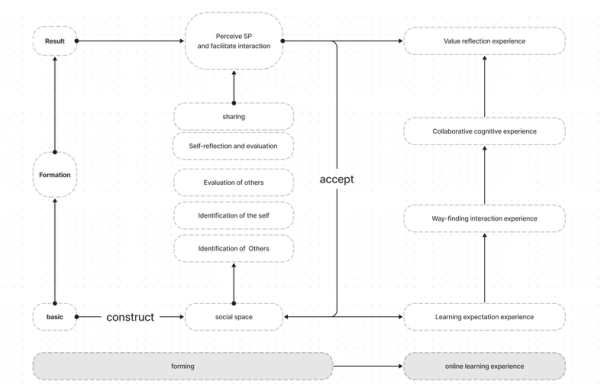
Figure 3: The formation mechanism and online learning experience.
in order to orient themselves in the learning environment (or interaction space). Interactions include interpersonal interactions (between individuals and individuals, between individuals and groups, between individuals and networks) and interactions between people and learning content, which are at a lower level, such as the simplest greetings, sending expressions, expres- sing approval or disapproval, viewing learning resources and integrating aggregated information, listening to the teacher, and listening to classma- tes. The interaction structure is basically a point-to-point interaction and does not form a social network with aggregation. In the design process, some design points can be proposed from the perspective of control factors, such as providing timely and perceptible feedback, multiple operation methods, for example, users can control the avatar by using mouse or keyboard to realize free movement in the space, automatically open voice for chatting after approaching other members, view learning materials uploaded in the space, etc.
Collaborative cognitive experience refers to the formation of social netw- orks with aggregation between users through social interactions, which refers to direct interactions between users on the one hand, and includes indirect interactions mediated by learning materials, such as shared notes, on the other hand. In WeChat reading software, the function of shared annotations allows all users who read the sentence to see the annotations. This refined and personalized function can enhance the immediacy and intimacy of users more than the global perspective of comments, collections, and likes, and thus enhance the sense of social presence. By migrating this functionality to the online classroom scenario, the platform can be designed to provide users with real-time notes, annotations on instructional videos according to a timeline, questions, etc., facilitating the construction of interactive networks between users and other students and teachers.
Analyzing Social Presence Factors in Experience Design of Online learning 499
Reflective value experience is the stage where the user develops a self- assessment of effectiveness and a value judgment of the entire experience and its results, which usually occurs after the user has been using the platform for a period of time. Effect evaluation and value judgment is the advanced stage of learning experience, which usually occurs at the end of the course learning, and is the overall comprehension and psychological feedback of learners on the learning process and results of the online course, as well as the feelings and evaluation of learners on whether the goals are achieved, learning effi- ciency and gains, which can enhance users’ self-value identity and build a social space cultural atmosphere, and eventually promote social interaction and social presence in turn interaction and social presence. These four expe- riential stages and the formation of social presence can be mapped to each other, as shown in Figure 3.
CONCLUSION
The rapid development of computer networks and mobile Internet technolo- gies has led to significant changes in the information ecology, content, and context of online learning, and has prompted a shift from traditional class- rooms to blended learning and online distance learning. In the process of this transformation, how to improve users’ knowledge acquisition effective- ness and sense of access, their willingness to continue learning and enhance the user stickiness of the platform have become the focus of design attention. Social presence is essentially a psychological phenomenon, which is the ability of users to participate in online communities and establish connections with others. Therefore, the introduction of social presence theory can provide the- oretical guidance for the design of interactive experiences in online classroom platforms. This project proposes design strategies to improve the interactive experience of online classroom from the perspective of social presence theory, and the following conclusions are obtained:
1. The appropriateness of social presence theory in the experience design of online classroom platform. This paper explores the formation mech- anism, manifestation and influencing factors of social presence, and analyses that social presence can help users generate positive experiences such as belonging, identity, immersion, efficacy and satisfaction, enha- nce users’ willingness to continue learning and self-regulation ability, and thus improve users’ learning effect and the user stickiness of the platform. 2. The experience design of online classroom platforms are evaluated from the standpoint of social presence. This study focuses on the online lear- ning experience with the aim of promoting social interactions that lead to greater online learning and improve the design of interactive experiences in online classrooms by promoting social presence. We summarize the ele- ments of online classroom interactive experience based on social presence theory including learning anticipation experience, way-finding intera- ction experience, collaborative cognitive experience, and value reflection experience. Secondly, existing cases are cited and analyzed in relation to the influencing factors of social presence (control factors, sensory factors, realism factors and distraction factors) to provide theoretical support for the design.
ACKNOWLEDGEMENT
The authors are grateful for supporting the Study on the Evaluation Index of Urban Environment Construction for Livable City for Old People in Beijing(Grant/Award number: 18YTA001).
REFERENCES
Garrison, D. R., Anderson, T., Archer, W., 1999. Critical Inquiry in a Text-Based Environment: Computer Conferencing in Higher Education. The Internet and Higher Education 2, 87–105. https://doi.org/10.1016/S1096-7516(00)00016-6 Gunawardena, C. N., Zittle, F. J., 1997. Social presence as a predictor of satisfa-
ction within a computer-mediated conferencing environment. American journal of distance education 11, 8–26. Kreijns, K., Xu, K., Weidlich, J., 2022. Social Presence: Conceptualization and Measurement. Educ Psychol Rev 34, 139–170. https://doi.org/10.1007/s10648-021- 09623-8 Short, J., Williams, E., Christie, B., 1976. The social psychology of telecommunica-
tions. Toronto; London; New York: Wiley. Sung, E., Mayer, R. E., 2012. Five facets of social presence in online distance education. Computers in Human Behavior 28, 1738–1747. https://doi.org/10.1016/j.ch b.2012.04.014 Wei, C.-W., Chen, N.-S., Kinshuk, 2012. A model for social presence in online
classrooms. Education Tech Research Dev 60, 529–545. https://doi.org/10.1007/ s11423-012-9234-9 Witmer, B. G., Singer, M. J., 1998. Measuring Presence in Virtual Environments: A Presence Questionnaire. Presence 7, 225–240. https://doi.org/10.1162/ 105474698565686
LISTED IN THE AHFE DIGITAL BOOKSTORE CATALOGUE
Explore the complete digital volume
Usability and User Experience
Read this individual research paper free through the original publisher, or explore the full digital proceedings book.
ISBN 978-1-958651-86-5
Explore this ISBN in the AHFE Bookstore ↗Listed in the July 2026 bookstore catalogue; search by ISBN to confirm current availability · Digital book purchase optional