Weijie Jiang, Xin Chen (2025). Product Design of Parent-Child Interaction Based on Intergenerational Integration Theory. In: Affective and Pleasurable Design. AHFE Open Access, vol. 164, pp. 210–220. https://doi.org/10.54941/ahfe1006077
The widespread use of electronic entertainment products has led to a decline in communication and outdoor activities between grandparents and grandchildren, thereby deepening the generational gap. Existing design studies frequently rely on subjective judgment alone and lack a systematic, quantitative analysis of user needs. To enhance intergenerational integration and improve interactions between grandparents and grandchildren, this study focuses on outdoor natural environments as the primary application scenario. User requirements were collected through interviews, then categorized according to intergenerational integration theory, and analyzed using the Analytic Hierarchy Process (AHP) to assess the relative importance of each requirement. The Quality Function Deployment (QFD) method was subsequently applied to prioritize these needs, thereby reducing subjective bias in the design process.As a result, the study identifies five core user needs: the emotional attribute of positive empathy, the connection attribute of tolerance and stimulation, the functional attribute of natural interaction, the consensus attribute of flexible feedback, and the normative attribute of clear rules. Therefore, based on these needs, the study proposes an outdoor exploration product that integrates the elderly's rich natural experience with advanced interactive technology. This product aims to foster intergenerational knowledge transfer and communication, to stimulate shared interests and topics, and mitigate intergenerational communication barriers.The study demonstrates the feasibility of applying intergenerational integration theory and quantitative analysis methods in product design, offering practical and scientifically grounded insights for developing intergenerational interactive products.
As urbanization accelerates and the aging population in China grows, many young people face challenges in caring for their families due to demanding work schedules. Consequently, older adults are increasingly tasked with raising and caring for their grandchildren. Intergenerational care not only enables older adults to engage in family activities but also provides new social roles, enhances their social involvement, and positively impacts both their families and personal well-being.
Product Design of Parent-Child Interaction Based on Intergenerational Integration Theory 211
However, communication barriers between generations, driven by age differences, are becoming increasingly evident. A lack of common interests and interactions can result in estrangement and conflicts. Scholars have explored various application scenarios to promote communication and integration between grandchildren and grandparents, focusing on either children or older adults (Geng et al., 2024), These scenarios include indoor collaborative gardening (Peçaibes et al., 2024), technology-based games for grandchildren and grandparents (Cerezo and Blasco, 2019) and virtual toys (Peçaibes et al., 2024). Research indicates that enhancing interactive experiences through innovative products and systems improves cognitive function in older adults and fosters intergenerational integration, often by overcoming communication barriers through affective and interactive design. However, the mechanisms for encouraging active participation in intergenerational interactions remain unclear. Moreover, there is a lack of a systematic theoretical foundation for promoting intergenerational integration, with most designs relying on subjective judgment, making it difficult to address user needs comprehensively.
Outdoor games in the grandparent-grandchild relationship remain largely overlooked. The widespread use of mobile devices has led to electronic entertainment products appealing to all age groups, with many relying on them to pass time, even during outdoor activities. This trend erodes intergenerational emotional bonds. Research has shown that outdoor activities enhance energy, engagement, and positive emotions (Coon et al., 2011). Intergenerational outdoor play in early childhood can strengthen relationships between grandparents and grandchildren by facilitating emotional sharing and the creation of positive memories (Duflos et al., 2024). This paper introduces the AHP-QFD quantitative analysis method to enhance the scientific rigor and innovation of the design process (Lin et al., 2015).
RESEARCH THEORIES Intergenerational Integration Theory
Intergenerational integration is a sociological concept that describes the cohesive state of positive reciprocity between generations, encompassing resource sharing, life interactions, and interdependence (Roberts et al., 1991; Cruz-Saco, 2010). The concept comprises six primary dimensions: (1) structure (factors such as geographic distance that limit or enhance family interactions), (2) association (frequency of social contact and joint activities), (3) affect (emotional closeness, affirmation, and intimacy), (4) consensus (actual or perceived agreement on perspectives, values, and lifestyles), (5) function (exchange of instrumental and economic support), and (6) norms (the strength of a sense of obligation among family members) (Silverstein and Bengtson, 1997). As global interest in intergenerational integration increases, scholars from diverse fields, including architecture, have increasingly recognized and applied this concept.
212 Jiang and Chen
Analytic Hierarchy Process With Quality Function Deployment Research Methodology The Analytic Hierarchy Process (AHP) is a decision-aiding method (Saaty, 1980) that addresses multi-criteria decision problems by quantifying the relative priority of alternatives, thereby providing a scientific foundation for decision-making. The method emphasizes the decision maker’s intuitive judgment and consistency when comparing alternatives.
The Quality Function Deployment (QFD) methodology, introduced by Japanese scholars Mizuno and Akao in the late 1960s (Chan and Wu, 2002), is market-oriented and translates user requirements into technical objectives at each stage. Its core tool, the “Quality House,” constructs the user requirements matrix and the engineering characteristics matrix. Its core tool “Quality House”effectively linking requirements and design goals (Sireli et al., 2007).
The combination of AHP and QFD leverages their complementary advantages. AHP quantitatively evaluates the importance of requirements, providing a weighting basis for QFD and ensuring a more scientific and rigorous analysis of user needs. QFD then translates these requirements into specific technical objectives and design solutions, ensuring that the requirements are implemented effectively. This approach enhances the systematic and logical nature of the design process, minimizing subjective judgment.
RESEARCH METHODOLOGY Establishment of the AHP Model
The AHP methodology constructs a hierarchical framework based on user needs, analyzes assessment indicators, and ranks them according to the importance of design factors (Xue and Huang, 2024). User needs were refined through interviews with five older adults and five parents. In conjunction with generational integration theory, the study concentrated on intergenerational outdoor activities, narrowing the scope of structural attributes in terms of content and extensibility. The design guidelines for intergenerational interactive products were organized into five dimensions: Function (B1), Affect (B2), Consensus (B3), Norms (B4), and Association (B5). These dimensions were further elaborated into 26 specific sub-criteria, resulting in the development of a design hierarchy model for intergenerational interactive products (see Table 1).
Table 1: Hierarchical model of grandparent-grandchild intergenerational interaction product design.
Table available in the original PDF paper.
Objective Level Guideline Level Program Level Hierarchical Modeling of Function B1 Socialization and Interactivity C1
Adaptability C2 Ease of Use C3 Natural Experiential C4 Educational C5 SustainabilityC6
Product Design of Parent-Child Interaction Based on Intergenerational Integration Theory 213
Table 1: Continued Objective Level Guideline Level Program Level
Table available in the original PDF paper.
Affect B2 Emotional resonance C7 Emotional Expression and Communication C8 Passing on and Learning C9 Creating Memories C10 Positive Emotional StimulationC11 Consensus B3 Cooperation and TeamworkC12
Common Goals C13 Flexibility and IndividualizationC14 Balancing Participation C15 Feedback and Adjustment Mechanisms C16 Norms B4 Caretaking, Educational C17 Clear rule setting C18 Responsibility Sharing C19 Conflict resolution mechanismsC20 Clear boundaries C21 Association B5 Common Interests Discovered C22
Reflection and feedbackC23 Continuous Learning OpportunitiesC24 Emphasizing commonalities rather than differencesC25 Modeling and ImitationC26
Judgment Matrix Construction and Initial Weight Calculation The study invited 10 designers with over five years of experience, along with 6 representatives from age-appropriate intergenerational families, to form an expert panel. The panel discussed the relative importance of design elements for intergenerational interactions between grandchildren and grandparents, and developed a judgment matrix to quantitatively assess user preferences. A 1–5 point scale was employed, where 5 represented “very important,” 3 indicated “more important,” and 1 signified “equally important.” The data were then transformed into the target judgment matrix A and processed using Equation (1).
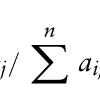
A = (aij)nm (1) aij represents the importance of element i relative to element j in relation to the objective. According to equation (2), the sum and product method is used to calculate the weights W1, and the results of the hierarchical analysis are obtained (see Table 2).
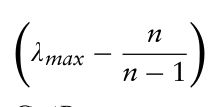
Consistency Test To ensure the credibility of the weights derived from the judgment matrix, a consistency test is conducted after determining the judgment matrix and the weights of the evaluation indicators. The matrix consistency index (CI) and consistency ratio (CR) are calculated, as shown in Equations (3) and (4). After calculating the results of each test, the validity of the hierarchical analysis results is confirmed (see Table 3).
(3)
C1 =
Equation reproduced from the original PDF.Table 3: Summary of results of consistency tests.
Table available in the original PDF paper.
Maximum Eigenroot CI RI CR Consistency Test Results B1 6.479 0.096 1.260 0.076 Pass B2 5.170 0.042 1.120 0.038 Pass B3 5.103 0.026 1.120 0.023 Pass
Continued
Product Design of Parent-Child Interaction Based on Intergenerational Integration Theory 215
Table 3: Continued Maximum Eigenroot CI RI CR Consistency Test Results
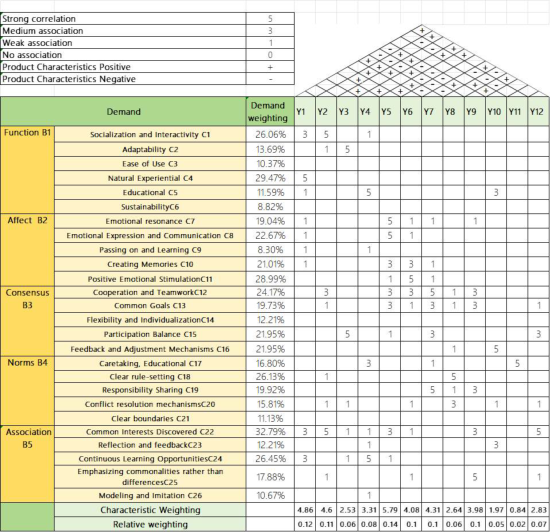
QFD Construction Based on the results of the weighting analysis, lower-ranked items were eliminated. For example, in the function module B1, “Ease of use” (C3) and “Sustainability” (C6) were excluded. The remaining requirements were categorized and integrated through the QFD process, simplifying the structure and aligning appropriate design features. This led to the identification of 11 core design features and established the correspondence between design features and requirements (see Figure 1). The product features were then ranked by importance, with the most important features placed at the top (ceiling) of the quality house, the requirements and their weights on the left (wall), and the feature weights calculated in the matrix diagram. After normalization, the weights were filled in at the bottom (basement), resulting in the quality house model (see Figure 2). Based on the descending order of weights, the product characteristics are as follows: Y5, Y1, Y2, Y7, Y6, Y9, Y4, Y12, Y8, Y3, Y10, Y11.
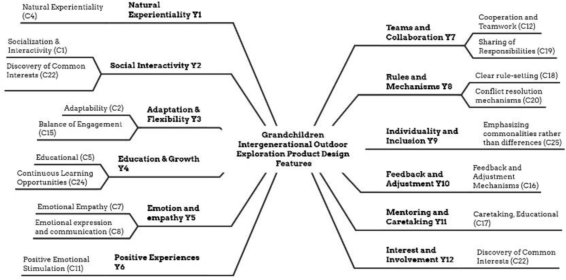
Figure 1: Design features and requirements mapping.
DESIGN RESEARCH Product Design Feature Mapping Generational Integration Theory
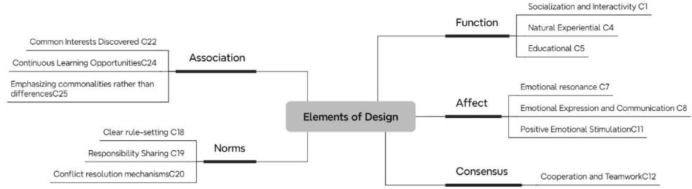
Based on the AHP-QFD quantitative results, the design features were ranked and organized, with the bottom 25% of requirements eliminated (though not entirely excluded, as they were considered discretionary). The remaining product features were mapped to the five dimensions of intergenerational integration theory, identifying the corresponding design elements (see Figure 3). By analyzing these elements, we aligned the product features with the design requirements, clarified the functional mapping of
216 Jiang and Chen
each feature, and identified five core attributes: the emotional attribute of positive resonance, the connective attribute of tolerance and stimulation, the functional attribute of natural interaction, the consensus attribute of flexible feedback, and the normative attribute of clear rules. Finally, these requirements were analyzed in detail to provide guidance for the product’s functional design.
Figure 2: QFD model.Figure 3: Design element mapping.
Emotional Attributes for Positive Resonance: Enhance the emotional connection between grandchildren by encouraging joint participation in tasks and activities. The design should improve interaction frequency and quality through mechanisms such as virtual rewards and achievement badges, ensuring both generations feel engaged and accomplished, thus deepening their emotional bond.
Product Design of Parent-Child Interaction Based on Intergenerational Integration Theory 217
Inclusive Connection Attributes: Promote cross-generational communication and value sharing through tasks that foster mutual understanding of each other’s lifestyles and perspectives. The design should ensure simplicity and clarity, meeting the needs of both generations while strengthening their emotional connection and sense of identity.
Functional Attributes for Natural Interaction: Design personalized nature exploration tasks that incorporate modern technologies, such as AR and smart devices, to encourage joint engagement between grandchildren and grandparents. These tasks should facilitate knowledge transfer across generations while enhancing the fun and quality of their interactions.
Consensus Attributes for Collaborative Motivation: Help grandchildren and grandparents understand task goals and progress through real-time feedback, promoting mutual communication and understanding. The design should include guidance and appropriate reward or punishment mechanisms to ensure smooth task completion and enhance intimacy through affirmation and rewards.
Normative Attributes With Clear Rules: A clear rule system helps grandchildren understand behavioral norms, ensuring smooth interactions. The design should provide straightforward guidelines, avoid complexity, and incorporate health and safety features to guarantee safe and comfortable activities.
Design Practice Building on the five core product attributes, we propose the “Nature Explorer Buddy”, an innovative solution designed to enhance intergenerational integration between grandparents and grandchildren. The product features an outdoor intelligent exploration backpack as its core, fostering intergenerational communication and cooperation through a variety of interactive functions. By encouraging shared exploration, it strengthens emotional connections and enriches the interactive experience.
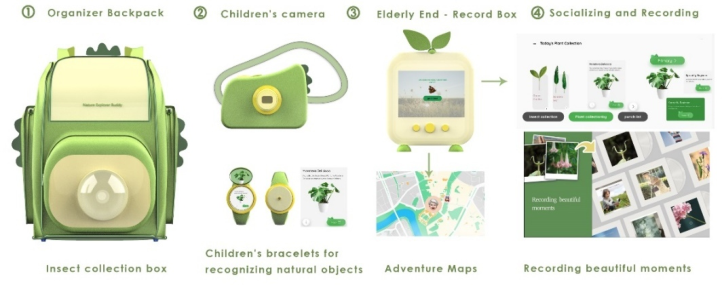
Figure 4: “Nature Explorer Buddy” product design.
218 Jiang and Chen
Nature Explorer Buddy offers a range of engaging scenarios that promote intergenerational interaction, guiding grandparents and grandchildren through activities such as identifying tree species and observing birds in parks, sparking their interest in nature. The product also supports forest explorations in nature reserves, where children develop their skills through plant and animal identification tasks while elders share their knowledge and experiences. Additionally, it leverages community resources to organize parent-child nature exploration days, fostering communication and interaction between neighbors and promoting intergenerational integration. These activities not only create more opportunities for grandparents and grandchildren to participate together but also provide rich emotional and educational value, enhancing the overall exploration experience.
The product consists of four core components (see Figure 4). The first is the smart exploration backpack, which features a lightweight and portable design with built-in electronic modules, sensors, and exploration tools, such as a magnifying glass, an insect observation box, and a small microscope. It is easy to carry outdoors and meets the diverse needs of exploration. The second component is the smartwatch device, which guides users through tasks via voice prompts and touch operations. It also supports AR scanning, unlocking knowledge and interesting stories about plants and animals in real time to enhance the interactive experience. The third component is the interactive map and task card, which provides an electronic nature exploration map and establishes task points according to different environments (e.g., parks, forests, or wetlands), helping grandchildren complete exploration challenges together in gamified tasks. Finally, the product includes a socialization and recording module, accompanied by an app for recording exploration results, such as photos taken or plants and animals identified. This module automatically generates an exclusive “Nature Exploration Journal” to preserve precious memories and further strengthen the family emotional bond.
DISCUSSION
The study identifies emotional and functional attributes as pivotal for interaction quality, with a particular focus on emotional design to facilitate relationship-building and maintenance. Given the lower priority of the consensus dimension, resources should be directed toward optimizing natural interaction experiences rather than developing intricate cooperative features. The five key product attributes identified are: positive emotional resonance, inclusive connection stimulation, natural interaction functionality, flexible feedback for consensus, and clear operational rules. These attributes serve as essential guides for designing intergenerational interactive products, enhancing both user experience and market competitiveness.
Compared to existing literature, this study further validates the significance of emotional and connection dimensions within generational integration theory and provides concrete references for the development of intergenerational products. Unlike traditional approaches, this study employs the AHP-QFD methodology to quantify design priorities, systematically
Product Design of Parent-Child Interaction Based on Intergenerational Integration Theory 219
identifying the most critical features for improving intergenerational relationships.
However, the study has limitations. The small sample size may not fully represent all user groups, and the reliance on subjective judgments in the AHP-QFD methodology may introduce bias. Future research should validate these findings across a broader demographic, including diverse cultural and geographical contexts. Additionally, with the advancement of artificial intelligence and virtual reality technologies, their integration into intergenerational product design should be explored to further enhance interaction effectiveness and user experience.
This study expands the application of generational integration theory and introduces a novel methodological approach to product design. By leveraging the AHP-QFD method, designers can systematically identify and meet the diverse needs of generational users, ultimately developing intergenerational interactive products with greater market potential.
CONCLUSION
This study integrates intergenerational integration theory with the AHP- QFD methodology to quantitatively assess the weight relationships of various design elements. An expert panel conducted a value assessment, and through weight calculations, user needs for intergenerational interaction products were ranked according to their importance. This process prioritized key requirements and mapped the results to intergenerational integration theory to define the product’s functional attributes.
Five core attributes were identified and used to guide the design of the “Nature Explorer Buddy,” a product that offers an innovative approach to intergenerational interaction. By encouraging grandparents and grandchildren to explore nature together, the product fosters emotional connections through interactive design, thereby enhancing both their experience and relationship quality.
The application of the AHP-QFD methodology enhances design accuracy, scientific rigor, and logical coherence, thereby facilitating the development of a product that effectively meets both user needs and market expectations. This systematic approach strengthens the product’s market competitiveness.
Future research will validate this methodology through real-world applications and explore the integration of artificial intelligence and virtual reality to further enhance intergenerational interaction. Through interdisciplinary innovation and continuous iteration, richer and more immersive experiences can be created for diverse generational groups, fostering greater understanding and integration.
ACKNOWLEDGMENT
This study was supported by the Ministry of Education of the People’s Republic of China Humanities and Social Sciences Youth Foundation (Grant number 24YJC760014).
220 Jiang and Chen
REFERENCES
Cerezo, E. and A. C. Blasco (2019). The space journey game: An intergenerational pervasive experience. Extended Abstracts of the 2019 CHI Conference on Human Factors in Computing Systems. Chan, L.-K. and M.-L. J. E. j. o. o. r. Wu (2002). “Quality function deployment: A
literature review.” 143(3): 463–497. Coon, J. T., K. Boddy, K. Stein, R. Whear and J. J. A. s. r. Barton (2011). “MH Depledge Does participating in physical activity in outdoor natural environments have a greater effect on physical and mental wellbeing than physical activity indoors.” 45: 1761–1772. Cruz-Saco, M. A. (2010). Intergenerational solidarity. Intergenerational solidarity:
Strengthening economic and social ties, Springer: 9–34. Duflos, M., J. Lane and M. J. F. R. Brussoni (2024). “Motivations and challenges for grandparent–grandchild outdoor play in early childhood: Perception of Canadian grandparents.” 73(2): 1107–1120. Geng, S., L. Gai and W. Bu (2024). Interactive Product Design from the Perspective
of Intergenerational Integration. Proceedings of the 3rd International Conference on Art Design and Digital Technology, ADDT 2024, May 24–26, 2024, Luoyang, China. Lin, C.-T., Y.-S. J. G. D. Yang and Negotiation (2015). “A linguistic approach to measuring the attractiveness of new products in portfolio selection.” 24(1): 145–169. Peçaibes, V., A. Pinto de Sousa and R. M. João (2024). Poptoys: Playing and Tradition
to Promote Intergenerational Experiences Through a Digital App. International Conference on Human-Computer Interaction, Springer. Roberts, R. E., L. N. Richards, V. J. M. Bengtson and F. Review (1991). “Intergenerational solidarity in families: Untangling the ties that bind.” 16(1-2): 11–46. Saaty, T. L. J. T. J. o. t. O. R. S. (1980). “The analytic hierarchy process (AHP).”
41(11): 1073–1076. Silverstein, M. and V. L. J. A. j. o. S. Bengtson (1997). “Intergenerational solidarity and the structure of adult child-parent relationships in American families.” 103(2): 429–460. Sireli, Y., P. Kauffmann and E. J. I. T. o. E. M. Ozan (2007). “Integration of Kano’s
model into QFD for multiple product design.” 54(2): 380–390. Xue, Y. and S. Huang (2024). Household Dehumidifier Based on AHP and QFD.
International Conference on Human-Computer Interaction, Springer.
LISTED IN THE AHFE DIGITAL BOOKSTORE CATALOGUE
Explore the complete digital volume
Affective and Pleasurable Design
Read this individual research paper free through the original publisher, or explore the full digital proceedings book.
ISBN 978-1-964867-40-3
Explore this ISBN in the AHFE Bookstore ↗Listed in the July 2026 bookstore catalogue; search by ISBN to confirm current availability · Digital book purchase optional