Qianxiang Zhou, Ke Yang, Zhongqi Liu (2025). The Psychological State Evaluation Method of a Main Control Room Operator Based on Physiological Signals. In: Neuroergonomics and Cognitive Engineering. AHFE Open Access, vol. 167, pp. 11–19. https://doi.org/10.54941/ahfe1006123
Mental state refers to the comprehensive state of mental activities and mental characteristics such as emotion, perception, thinking, will, fatigue, etc., which has a great impact on human operation performance. The main control room of nuclear power plant is the key link to the safety and efficiency of nuclear power system, and the operator is the main part of it. Therefore, the analysis and evaluation of the operator's psychological state has become the main technical means to improve the operation safety of the main control room. Brain fatigue is a psychological phenomenon that operators in the main control room of nuclear power plants often face. Workload is the most important cause of mental fatigue. Therefore, this paper takes workload and mental fatigue as research objects, and studies the evaluation methods of operators' mental states under accident conditions based on EEG and ECG physiological signals. Fatigue induced experiment and workload evaluation experiment were designed respectively, and EEG and ECG signals were collected before and after the experimental task. Fifteen operators were selected as volunteers to participate in the fatigue induction experiment, and the independent variable was task duration. The operators were required to continuously handle one Steam Generator Tube Ruptures (SGTR) accident with a duration of approximately 40 minutes and one SGTR accident with an additional minor accident inserted with a duration of approximately 60 minutes. Another 14 operators were selected as volunteers to participate in the workload evaluation experiment. The independent variable was tasks with different workloads, that is, different workloads in the same time were used to represent different levels of workload. In order to avoid the interference of mental fatigue on workload evaluation caused by too long task duration, the operator should not handle tasks for too long. In the workload assessment experiment, the operators were required to deal with a small Loss of Coolant Accident (LOCA) task that lasted about 20 minutes, and then to deal with a large LOCA task that also lasted about 20 minutes after adequate rest. The workload of LOCA big break task was much higher than that of LOCA small break task. The results showed that RMSSD, SDSD, pNN50, pNN20 and HF power of heart rate variability were significantly different after pre-measured rest and 100-minute long task. There were significant differences of EEG characteristics in (α+θ)/(α+β), Beta average power, Beta total power, θ/β, Delta average power, Delta total power, etc. These characteristics could indicate mental fatigue. After different workload tasks, 31 EEG features showed significant differences, including total Theta power, average Theta power, average Delta power, total Delta power, (α+θ)/(α+β), θ/(α+ θ)/β, θ/(α+ θ)/β, θ/(α+ θ)/β, and θ/(α+β) in Fp1 channel. (α+θ)/(α+β), total Theta power of Fp2 channel, etc. Mental fatigue (mental state) was divided into two levels, wakefulness and fatigue, and a mental fatigue classification model was established by Gauss naive Bayes algorithm with an accuracy of 80.0%. The workload was divided into two levels: low workload and high workload. The precision tree algorithm was used to establish the workload classification model, and the classification accuracy is 89.3%.
The main control room of nuclear power plant is the key link of the safety and efficiency of nuclear power system, and the operator is one of the key factors, which makes the human factors issue more prominent. Many nuclear power accidents were caused by human factors, such as the explosion at the Three Mile Island nuclear power plant in the United States in 1979, the Chernobyl nuclear power plant accident in the former Soviet Union in 1986, and the Fukushima nuclear power plant accident in Japan
in 2011 (Wu et al., 2012). Therefore, in order to ensure the safety of nuclear operation, the behaviour of manipulators needs to be focused on, especially their psychological state. Psychological state refers to the integrated state of mental activities and psychological characteristics such as emotion, perception, thinking, will, fatigue, etc. (Feng et al., 2015). Mental fatigue is a very common psychological state, and it is also a psychological phenomenon that the operators of the main control room of nuclear power plant often face, and the workload of operators is the most important cause of mental fatigue. Conducting research on the operator’s psychological state during accidents has important theoretical significance and application value for the design and planning of operation tasks.
Currently, the research focused on control room operators is mainly conducted from the perspectives of situational awareness, human error and human reliability.
In terms of situational awareness research of operators, Li established a Bayesian network model through interviews with nuclear power plant operators, which can provide data support and standardized analysis procedures for the reliability evaluation of situational awareness of nuclear power plant operators (Li et al., 2016). Yang evaluated the impact of computerized operational procedures in nuclear power plants on the operators’ situational awareness through experimental research (Yang et al., 2012). Hsieh identified the effects of computerized procedures on team performance, communication and situational awareness through experiments (Hsieh et al., 2016).
In terms of human error study in operators, Ma analysed a safety incident in a nuclear power plant and concluded that the rises of the incident were insufficient supervision of the effectiveness of work plans or processes and imperfect emergency operation procedures (Ma et al., 2020). Chen studied the relevant human errors and their characteristics through the analysis and comparison of differences between digital control rooms and traditional control rooms, and discussed the methods of preventing human errors in the digital control systems of nuclear power plants(Chen et al., 2017). Based on the research of the cognitive function of the operator, Chen identified 13 kinds of human error modes, and obtained the main causes of human error based on fault tree analysis (Chen et al., 2020).
In terms of operator reliability researches, in the study of operator reliability, Yang found that after the digitization of human-machine interface, the contradiction between massive information and limited display was very prominent, which has a significant impact on human factor reliability and leading to new source of human factor error (Yang et al., 2010). Qingqing et al. defined, collected and analysed the operational behaviours of the operators in the digital main control room, and found that the probability of operation error of the operators in the digital main control room was basically normal, but with the increased in the category two operation tasks, the probability of error was increased (Chen et al., 2019).
It can be observed that there is a lack of literature on the psychological state of operators in the main control room of nuclear power plants, and further research is needed.
The Psychological State Evaluation Method of a Main Control Room Operator 13
EXPERIMENTAL DESIGN Loss of Coolant Accident (LOCA) and Steam Generator Tube Ruptures (SGTR) are two typical accidents in the operation of nuclear power plants. Among them, LOCA accident refers to the accident of coolant loss caused by a breach in the pressure boundary of the reactor circuit. According to the size of the water pipe breach, it can be divided into small breach accident and large breach accident, and the treatment time is generally about 20 minutes. The workload of large breach LOCA accidents is more than that of small breach LOCA accidents. SGTR steam generator heat transfer pipe rupture refers to the rupture of one or more steam generator heat transfer pipes resulting in the leakage of primary circuit coolant into the secondary circuit system. The handling time is generally between 40 minutes and 60 minutes, depending on whether there are any secondary incidents associated with it.
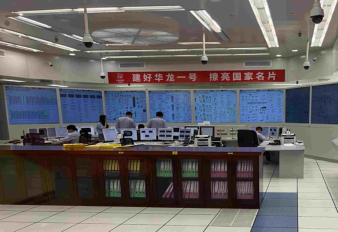
Thirty-four male operators participated in the experiment. They had more than 2 years of operational experience and their ages were in the range of 25 to 35 years. All participants were healthy, had normal vision or corrected vision, and were right-handed. Seventeen participants participated in the mental fatigue induced experiment. After excluding abnormal data, 15 people’s valid data were finally obtained. The other 17 people participated in the workload assessment experiment. After excluding abnormal data, 14 people’s valid data were finally obtained. The experiment was conducted in a simulation room of a nuclear power plant in China (Figure 1). The experimental platform was set up according to the layout and space size consistent with the real main control room. The site maintains a constant temperature of 23
C and relative humidity of 33%. The lighting meets the relevant requirements. In the front of the main control room, there are 8 large screens, displaying the operating status of the nuclear power plant and the changes in operating parameters. In front of the operator, there are 6 computer monitor screens, which display the key equipment parameters of the primary or secondary loop system, as well as the alarm information of the nuclear power plant etc.
Figure 1: Nuclear power plant simulation room scenario.
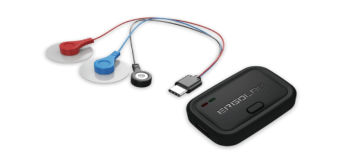
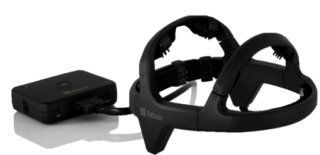
This experiment mainly included ECG signal measuring equipment and EEG signal measuring equipment. The ECG signal measuring equipment used ErgoLab ECG Acquisition instrument (Figure 2), which is designed by Beijing
Jinfa Technology Co., LTD. The EEG signal measuring equipment used the Bitbrain 12-channel wireless portable dry electrode electroencephalograph (Figure 3), designed by the Italian company Bitbrain.
In the mental fatigue induced experiment, the operator had to deal with a SGTR incident of about 40 minutes and another SGTR incident of about 60 minutes with additional minor incidents inserted. In the workload evaluation experiment, the operator had to deal with a small LOCA break incident for about 20 minutes. Take a sufficient rest, deal with a large breach accident of LOCA for about 20 minutes. The workload of the LOCA small breach task was significantly lower than that of the LOCA large breach task.
Experimental procedure of Mental fatigue induced experiment was as follows:
1. The experimenter wearied and adjusted EEG and ECG measuring equipment for participants. 2. Participants filled out the fatigue Scale using the Stanford Sleepiness Scale (SSS), as shown in Table 1. 3. Participants’ physiological data was measured during a 5-minute resting period with eyes closed. 4. According to the operating procedures, the operator completed the operation task. Operations ceased once the incident was effectively controlled, with the operational task lasting approximately 40 minutes. 5. Five minutes EEG and ECG data of eyes-closed resting was measured. 6. The participants filled out the fatigue scale. 7. The participants performed the second task and repeat the steps (4), (5), and (6) above. Task 2 lasts about 60 minutes.
The Psychological State Evaluation Method of a Main Control Room Operator 15
Table 1: Stanford sleepiness scale.
Table available in the original PDF paper.
No Options 1 Energetic, clear-headed, and untired 2 More energetic, but not at his best, able to concentrate 3 Awake but somewhat loose, responsive to external stimuli but not
sufficiently alert 4 There’s a certain amount of grogginess, lethargy 5 Groggy; little interest in surroundings when awake; slow 6 Sleepy; I want to lie down; But try to keep your head; giddy 7 No longer trying to stay awake; Soon fell asleep; It feels like a dream Experimental procedure of Workload evaluation was as follows:
1. The experimenter wearied and adjusted EEG and ECG measuring equipment for participants. 2. The pparticipants’ physiological signal data was measured during a 5-minute resting period with eyes closed. 3. According to the operating procedures, the participants completed the task 1 operation, and the operations ceased when the incident state was effectively controlled. 4. Participants filled out the NASA-TLX scale. 5. The participants took a 30-minute break. 6. Participants’ physiological data was measured during a 5-minute resting period with eyes closed. 7. The participants performed the second task and repeat the above steps (4), (5), and (6).
EXPERIMENTAL RESULT Fatigue Questionnaire Data
The results of the in descriptive statistics of the fatigue scale data were shown in Table 2. The results of one-way ANOVA showed that the scores of different stages of the experiment had significant differences (p<0.05). There was no significant difference between resting state and fatigue after 40-minute task (p>0.05), but there was a significant difference between resting state and fatigue data after 100-minute task (p<0.05).
Table 2: Descriptive statistical table of scores in each stage of fatigue questionnaire.
Table available in the original PDF paper.
Stage Resting State 40 Minutes Task Later
100 Minutes Task Later
Sample size 15 15 15 Minimum value 1 1 3 Maximum value 2 3 5 Median 1 2 4 Average 1.3 1.7 3.9 Standard deviation 0.6 0.7 0.9
Workload Questionnaire Data According to the statistical calculation of the NASA-TLX scale data of the participants, the average workload score of simple tasks was 41.3 and that of complex tasks was 60.4. The paired T-test results showed that the scores of the two groups reached a significant difference (p<0.05), indicating that the two groups were at different levels of workload, which was in line with expectations.
Physiological Signal Data of Mental Fatigue Statistical calculations using paired t-tests were conducted for heart rate variability at rest versus after a short-duration task and at rest versus after a long-duration task, respectively, and the results were shown in Table 3 below. As could be seen from Table 3, there was no significant difference between the various characteristics of heart rate variability after resting and short- term tasks (p>0.05), which probably because short-term tasks of 40 minutes could not induce mental fatigue. Five features of heart rate variability were significantly different (p<0.05) between resting and after the 100-minute long-duration task, including RMSSD, SDSD, pNN50, pNN20, and HF power.
Table 3: Paired t-test results for heart rate variability indexes.
Table available in the original PDF paper.
Index p(Comparison of Rest and
p(Comparison of Rest and
Short Task)
Long Task) RMSSD 0.054 0.041* SDSD 0.054 0.028* pNN50 0.301 0.032* pNN20 0.050 0.016* HF power 0.112 0.037*
Note: *p<0.05 Statistical calculations of EEG data after resting and short tasks using paired t-tests did not reveal a significant difference (p>0.05), probably because a 40-minute short task could not induce brain fatigue. The EEG data were compared between resting and long post-task, and the results were shown in Table 4. It could be seen that there are 15 EEG indexes with significant differences (p<0.05), including Fp1 channel (α+θ)/(α+β), Beta average power, Beta total power, θ/β, Delta average power, Delta total power, θ/(α+β); The total Beta power of Fp2 channel, (α+θ)/(α+β); Gamma total power, Gamma average power, Beta total power, Beta average power, Delta total power, Delta average power of the O2 channel.
Table 4: Paired-sample t-test results for fatigue inducing experimental before test resting and post-tested resting EEG features after a long-term task.
Table available in the original PDF paper.
Indexes Fp1-p Fp2-p O1-p O2-p Delta gross power 0.035* 0.799 0.221 0.041* Delta average power 0.021* 0.710 0.201 0.048*
Continued
The Psychological State Evaluation Method of a Main Control Room Operator 17
Table 4: Continued Indexes Fp1-p Fp2-p O1-p O2-p
Table available in the original PDF paper.
Beta gross power 0.028* 0.039* 0.495 0.045* Beta average power 0.016* 0.391 0.495 0.015* Gamma gross power 0.703 0.843 0.517 0.037* Gamma average power 0.703 0.843 0.517 0.016* θ/β 0.025* 0.649 0.197 0.743 (α+θ)/(α+β) 0.029* 0.049* 0.163 0.414 θ/(α+β) 0.031* 0.781 0.165 0.203 Note: *p<0.05 **p<0.01
Workload Evaluation of Physiological Data Paired t-tests were performed on heart rate variability in different task difficulty levels and no significant differences were found (p>0.05). Eli studied the effects of different weather conditions on driver workload on a plateau highway and found significant variability in RMSSD and pNN50 for heart rate variability characteristics (Eli et al., 2020). It might be that heart rate variability is task-specific, with different heart rate variability for different task types.
The workloads for the different tasks were compared by using independent samples t-tests and 31 EEG indexes were found to have significant differences (Table 5).
Table 5: ANOVA test results for different task workloads.
Table available in the original PDF paper.
indexes Fp1-p Fp2-p O1-p O2-p Delta gross power 0.036* 0.023* 0.023* 0.765 Delta average power 0.031* 0.024* 0.023* 0.765 Theta gross power 0.019* 0.023* 0.011* 0.792 Theta average power 0.019* 0.033* 0.010* 0.791 Alpha gross power 0.419 0.520 0.028* 0.945 Alpha average power 0.420 0.519 0.028* 0.945 Beta gross power 0.901 0.927 0.043* 0.014* Beta average power 0.901 0.927 0.037* 0.015* Gamma gross power 0.404 0.446 0.015* 0.404 Gamma average power 0.404 0.447 0.014* 0.405 θ/β 0.041* 0.016* 0.027* 0.606 (α+θ)/β 0.019* 0.015* 0.327 0.549 (α+θ)/(α+β) 0.049* 0.018* 0.033* 0.841 θ/(α+β) 0.027* 0.031* 0.010* 0.981
Note: *p<0.05
MENTAL STATE EVALUATION MODEL Mental Fatigue Classification Model
Based on the previous 5 ECG variability indexes and 15 EEG indexes that have obvious differences in mental fatigue, the brain’s wakefulness and fatigue dichotomous modelling of mental fatigue was carried out by
using 5 commonly used machine learning algorithms such as decision tree, discriminant analysis, naive Bayes classifier, support vector machine and nearest neighbour classifier. The model performance of the five machine learning algorithms was compared using four evaluation indexes: accuracy rate, precision rate, recall rate and F1 score, and the results were shown in Table 6. It could be seen that Gauss naive Bayes method has the best effect for binary classification of mental fatigue.
Table 6: Performance of five machine-learning models of mental fatigue classification.
Workload Classification Model Based on the 31 EEG indexes that have obvious differences in workload, the binary classification modelling of low and high workload is carried out by using 5 commonly used machine learning algorithms, such as decision tree, discriminant analysis, naive Bayes classifier, support vector machine and nearest neighbour classifier. The model performance of the five machine learning algorithms was compared using four evaluation metrics: accuracy, precision, recall and F1 score, and the results are shown in Table 6. It could be seen that the decision tree method is the most effective for workload classification.
CONCLUSION
The following conclusions could be drawn from this study: Some indexes of ECG signal and EEG signal had obvious difference on the changes of mental fatigue of nuclear power plant operators.
Possibly due to the task-specific characteristics of ECG signals, ECG data did not show variability with the change of operator’s workload. Some indexes of EEG signal showed obvious difference with the change of operator’s workload.
Gauss naive Bayes method had the best effect on the classification of mental fatigue. Decision tree method had the best effect on workload classification.
REFERENCES
Chen, Jie., Feng, Yan., Gao, Yuan., Li, Jing. (2017). The Analysis and Prevention Countermeasures of Human Errors in Digital Control System (DCS) of Nuclear Power Plant, Instrumentation, Volume 24 No. 5.
The Psychological State Evaluation Method of a Main Control Room Operator 19
Chen, Qingqing., Hu, Hong., Zhang, Li. et al. (2019). Study on Human Reliability of Operator in Digital Main Control Room, Nuclear Power Engineering, Volume 40 No. 4. Chen, Shuai., Qing, Tao., Zhang, Li. et al. (2020). Analysis of Human Errors in
Severe Accident of Nuclear Power Plant Based on Cognitive Model and Fault Tree, Nuclear Power Engineering, Volume 41 No. 3. Eli, Smutula., Gao, Chao., Zhu, Xinglin. (2020). The Influence of Different Weather Conditions on Driver’s Workload on Plateau Road. Science Technology and Engineering, Volume 20 No. 20. Feng, Zhengzhi., Zu, Xia. (2015). Mental health Assessment for Military Men:
Theories and Model, Journal of Army Medical University, Volume 37 No. 22. Hsieh, TL., Lin, CJ. (2016). The Impact of Computer-based Procedures on Team Performance, Communication, and Situation Awareness[J], International Journal of Industrial Ergonomics, Volume 51. Li, Pengcheng., Zhang, Li. et al. (2016). Operator’s Situation Awareness Reliability
Model in Digital Main Control Rooms of Nuclear Power Plants, Systems Engineering Theory and Practice, Volume 36 No. 1. Ma, Guoqiang., Wu, Yannong., Zhang, Hao. et al. (2020). The Root Cause Analysis of the Operator’s Human Error after Reactor Manual Shutdown Due to Loss of the Main Feed-water, Nuclear Science and Engineering, Volume 40 No. 6. Wu, Hongbo., Wang, Zhidong., Xiang Bing. (2012). Development Situation Analysis
of Nuclear Power Abroad and at Home, Energy Technology and Economics, Volume 24 No. 3. Yang, CW., Yang, LC. et al. (2012). Assessing Mental Workload and Situation Awareness in the Evaluation of Computerized Procedures in the Main Control Room, Nuclear Engineering and Design, Volume 250 No. 9. Yang, Daxin, Wang, Yiqun, Zhang, Li. (2010). The influence of digital control room
information display on human factor reliability, Chinese Journal of Safety Science, Volume 20 No. 9.
LISTED IN THE AHFE DIGITAL BOOKSTORE CATALOGUE
Explore the complete digital volume
Neuroergonomics and Cognitive Engineering
Read this individual research paper free through the original publisher, or explore the full digital proceedings book.
ISBN 978-1-964867-43-4
Explore this ISBN in the AHFE Bookstore ↗Listed in the July 2026 bookstore catalogue; search by ISBN to confirm current availability · Digital book purchase optional