Redha Taïar (2018). Ergonomics of the Standing Smart: Increasing the Comfort of Standing Workers. In: Advances in Physical Ergonomics and Human Factors: Part II. AHFE Open Access, vol. 2. https://doi.org/10.54941/ahfe100063
The aim of our study is to increase the comfort of users at work by studying the balance and by minimizing the joint stresses. Studying the upright position, the adjusting of his segments to maintain the good balance and decreasing muscular problems are the main elements to highlight in order to improve the everyday (working) life of users. Based on the optimization of new materials, the project consists in validating prototypes destined to improve ergonomics at work and to optimize the comfort of users (new anti-fatigue mats Notrax®). Without mats our results showed a dysfunction balance of the worker which can cause pathologies or repetitiveness and other work constraining factors which can accelerate the process. The distribution of foot pressure obtained (30% and 70%) of the weight of the body is mainly on the right side. This imbalance is very harmful for the human body. With Mats we observed in working situations where people make small movements constantly, the anti-fatigue mats that we tested good properties that give a muscular-skeletal comfort in upright working positions. This can be verified by the constancy of the force evolution curve during the movement.
Different researches articles of ergonomics are using a variety of definitions to describe the theory. An applied science that co-ordinates the design of devices, systems and physical working conditions with the capacities and requirements of the workers (Te-Hsin and Kleiner, 2001). Whereas for (Bongers et al., 2002) stress that by addressing traditional and environmental risk factors, it can keep workers injury free. For the both definition the mechanical human behavior at work take the central position. The concepts, methods as well as the analysis techniques that we are using to characterize the human mechanics represent the major economic challenges. Their development has to be described in a vision of interaction between physical sciences (metrology, systems mechanics and electronic complexes), information technologies and life science (materials, tissue, organs and parts) and represent the interface between biomechanics and medicine. Each day I realize more and more the impact of work on people’s lives. For these people, the quality of their work condition determines the quality of their life. There are many factors which affect the person at work especially someone who is standing for prolonged periods of time or someone with a disability. It is sometimes hard for an able bodied person to understand what it feels like to be standing for long periods of time and how your life is affected if you are not standing in the right position with a good balance. This is because the able bodied person can re-adjust and change their position before getting too uncomfortable which is often an unconscious movement. That is why getting the right position by increasing the knowledge for the right person is so important. Today workers have problems relating to their feet, legs and back. The impact of the different years’ work may possibly develop to musculosketal disorders (MSDs). For (Yelin et al. 1999), 90% of disabled older workers had MSDs. The treatment of the problem cost tens of billions of dollars as showed by (Praemer et al., 1999). Also, Worker injuries could result in (long term) absenteeism, decreased productivity or even liability claims. These factors have a negative impact on costs and results. Based on the optimization of new materials (anti-fatigue mat), the present study consists in the optimization and the validation prototypes destined to improve ergonomics at work and to improve the comfort of the walking users. Mats cushion the fall of fragile products, tools and other objects. Mats also protect the floor from these falling objects. Less damage reduces costs. Cold feet contribute to fatigue; mats serve as an insulating barrier between workers’ feet and cold factory floors. Mats reduce transmission of noise and help neutralize machine vibrations.
EXPERIMENTS: ANALYSIS OF FOOT PRESSURE General Description
The framework of the research which consists of studying the stability of the body and his ergonomics on the job, we have made an analysis using a pressure platform. The goal was to show the benefits of the Notrax® anti-fatigue mats of the company Superior Manufacturing Group and to make the necessary comparisons. Studying the upright position of the human body, the adjusting of its segments to maintain its balance and diminishing muscular problems are the main elements to highlight in order to improve the everyday (working) life of users. The new materials developed by Superior Manufacturing Group can contribute significantly to these improvements. The difficulties accentuated by the users are significant to companies looking to attain the highest productivity.
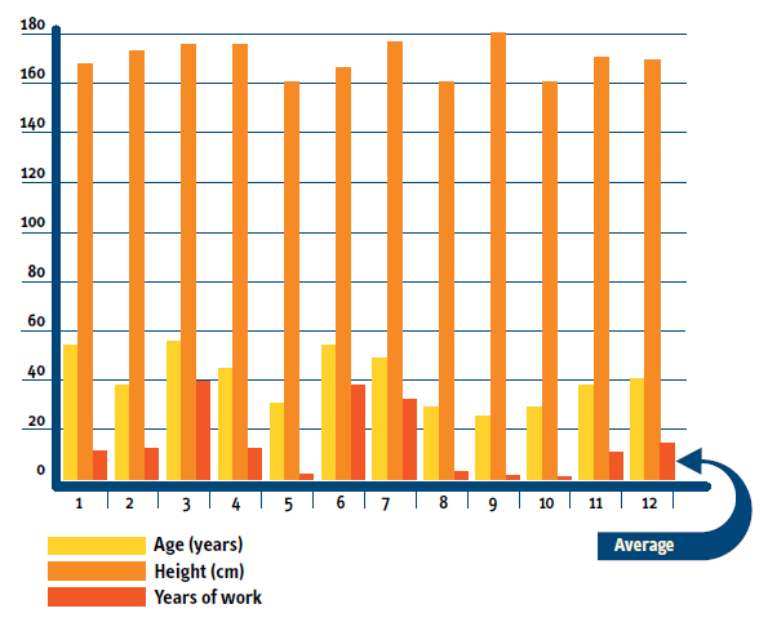
Population The population of the study counts 10 male and 10 female subjects. Their main characteristics are summarized (see Figure 1).
Figure 1. principal characteristics of the population studied
For this study we have conducted a qualitative survey to quantify the impact of mats on the human body in working conditions. An appropriate survey gives us information about the perception of discomfort or pain localized in several parts of the body (see Figure 2).
Figure 2. quantification pain observed beginning, during and at the end of work
Figure available in the original PDF paper.
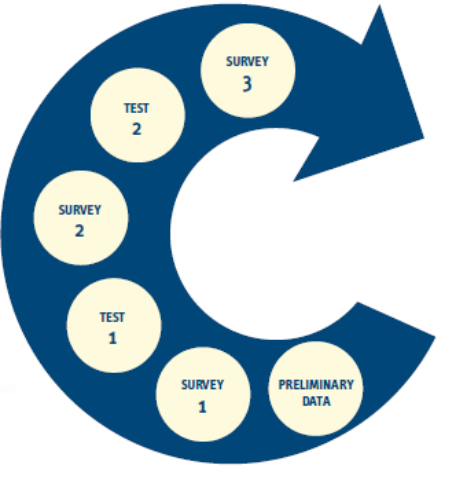
The figure 3 shows the protocol of different experimentations given at work and with workers. We compared the influence and contribution of three types of antifatigue mats on the mechanical body balance. Measuring the foot pressure, explain the consequences on a muscular-skeletal level, Correction suggestions on a postural and gestural level, Classification of the mats in function of the activity where the different steps of the study (see Figure3).
Figure 3. principal steps of the study
Material and Method For this test we used a ‘Zebris’ foot pressure platform (Choukou et al., 2013). This platform which contains a large number of sensors will enable us to quantify the dynamic and static pressure executed by the feet. This pad is equipped with 32 x 47 sensors which total 1504. One sensor is 1 cm², has a precision of 0,5 N/cm² and an acquisition frequency of 60Hz (Perrin et al., 2006). This experimentation allowed us to observe the evolution of the foot pressure after a defined movement. The subject will keep an upright position on the ‘Zebris’ platform. We observe simultaneously through a color gradient (see Figure 4) the evolution of the pressure made by the foot surface in contact with the sensors (from blue to red the pressure is increasing). The results obtained in a static position represent the keeping of an upright position and the resulting position characterized by the actual working situation in front of the workstation. During this experiment the platform was positioned on three different anti-fatigue mats (see Figure 4). The test was to stand upright for 3 minutes. We record the evolution of foot pressure and any signs of fatigue and we quantify the impact of 7 working hours on the mechanical behavior of the user. To increase reliability of the results, multiple tests were done with different mat for the better adaptation (see Figure 4). The same experimental procedure was used for the dynamic analysis.
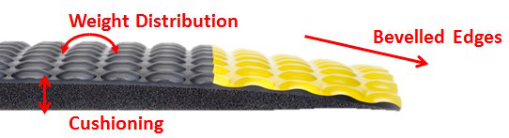
Figure 4. mats characteristics, body position of worker and the force plate used for the pressure measure with Zebris.
We tested the impact of specifically materials mats for this experimentation (see Figure 4). This concern ERI C 479 Cushion Trax®, ATIA A 450 Skywalker™ II PUR and ERI B 556 Cushion Ease Solid™
RESULTS
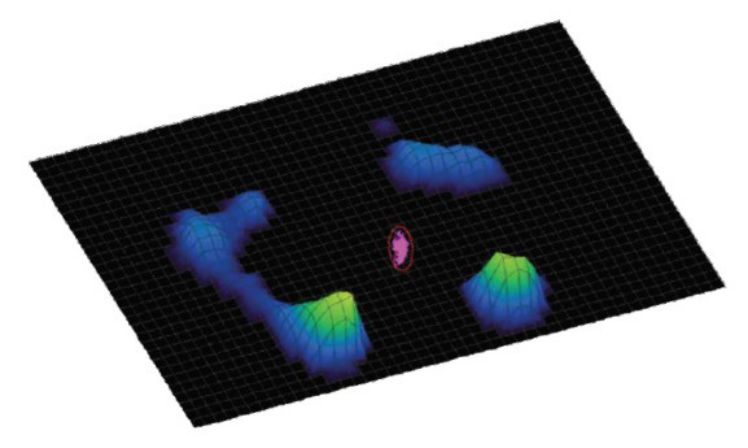
The obtained results show that in any test duration the feet and therefore also the body moves to keep its balance necessary to maintain upright position. The figure below showed the distribution of pressure underneath the foot in an upright position. We have made a recording of one minute to determine the evolution of the pressure center. The red circle shows how the latter has evolved. We notice that the pink colored points are distributed inside of this circle. This illustrates that the body moves to maintain its balance (see Figure 5).
Figure 5: repartition of the foot pressure and the evolution of the center of pressure for the worker during balance
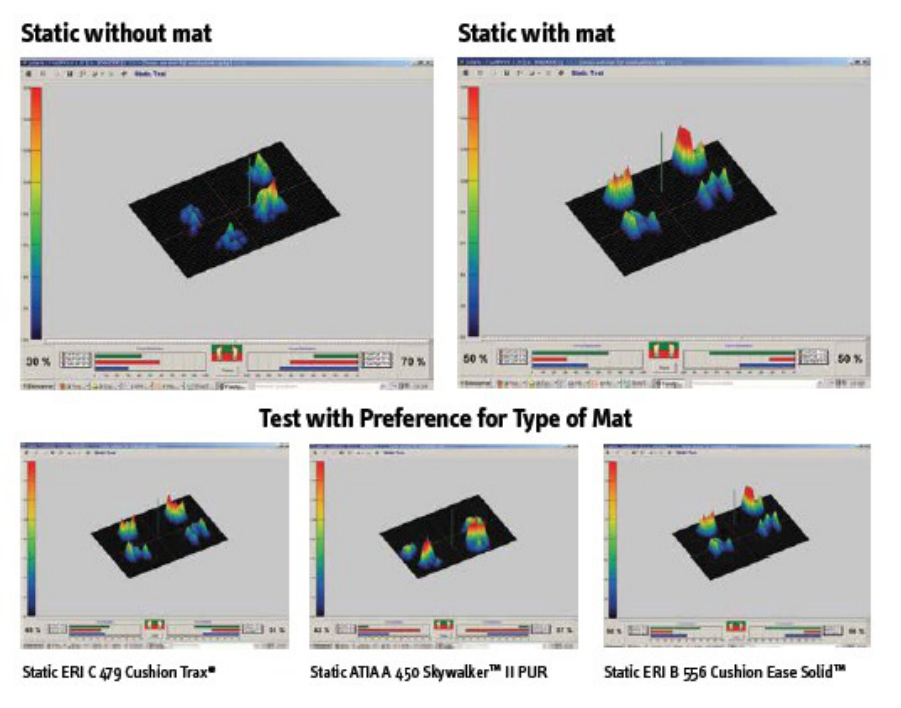
The figure 6 showed pictures taken at different moments (different periods) of the experimentation. I have taken in this case several images to illustrate the difference in posture stability with and without the use of mats. We remark that without a mat there is a dysfunction in the balance of the person which can cause pathologies or repetitiveness and other work constraining factors which can accelerate the process. We observe here that with a distribution of foot pressure (30% and 70%) the weight of the body is mainly on the right side. This imbalance is very harmful to the human body (see Figure6). The use of anti-fatigue mats enables correct balancing and a uniform distribution between the right and the left leg. This observation was made on all the mats. It should be noted that this balance will improve depending on the adaptation of the mat used. The Notrax® Cushion Ease™ mat tested at ‘ERI B’ showed best results for the test subjects. It seems that this mat is the best solution for the application at the company workers tested. The Notrax® Cushion Trax® mat tested at ‘ERI C’ also showed interesting results but slightly less. We observe that in working situations where people make small movements constantly, the anti-fatigue mats that we tested show properties that give a muscular-skeletal comfort in upright working positions. This can be verified by the constancy of the force evolution curve during the movement.
Figure 6. pressure distribution using different mats for the better adaptation
CONCLUSIONS
We have illustrated in this study that in a static position the body of the subject moves in order to maintain its balance. This first real life experiment ‘variations in foot pressure’ has made it possible to highlight the body’s movements in a static position. To maintain an upright position, it is necessary to have a well-adapted postural balance to decrease pathologies and their consequences in the everyday work of the users. Recommendations should be made to every user to benefit from the results of this experiment. The use of anti-fatigue mats has helped to highlight the benefits of new materials on the optimization of human mechanics. By retaking control of the muscle commands in the brain. The learning of a new gestural or postural model requires special attention and concentration during several weeks. Every gestural or postural system is controlled by the brain; this allows a compromise between quick execution and saving energy. When the system is out of balance, the quick reaction speed is maintained at the cost of energy spending (fatigue). That’s the start of muscular-skeletal troubles (pain, contractures, tendinitis …). In a nutshell, to regain balance ‘quick reaction /energy saving/effectiveness’, it is necessary to become aware of the different foot pressures on the ground and the most proper muscle action (from feet to head). This can be done easily by changing the foot pressure on the floor : by forcing oneself from time to time to move the pressure to the front of the foot or towards the back of the feet; or from the inside to the outside of the foot or more to the right and after that more to the left. Decreasing risk factors consists on having knowledge base of ergonomics and how to apply it in the work environment. Organizing training programs in firms and enterprises will help employees fit in their environment in a healthy and safe way, in return optimal employee’s performance can be achieved.
REFERENCES
Bongers P.M.,Kremer A.M.,Ter Laak J.(2002). “Are psycosocial factors risk factors for symtoms and signs of the shoulder, elbow or hand /wrist?A reviewof the epidemiological literature”. American Journal of Industrial Medicine .41(5),315-342. Choukou, M.A, Jarlot, B, Arfaoui, A, Bourelle, S and Taiar, R (2013). “Infrared thermograms: Orthopedic
diagnostics support”. Annals of Physical and Rehabilitation Medicine, Volume 56, Supplement 1, Page e285 Perin, J, Agnesina, G, Taiar, R, Toshev, Y (2006). “Analysis of the plantar foot pressure during walking: VFE position and VRI position”. Journal of Biomechanics, Vol. 39 (supp1) pp S552-553. Praemer,A.,Furner,S.,and Rice,D.P. (1999). “Musculosketal Conditions in the United States”. Rosemont,IL,
american Academy of Orthopaedic Surgeons. Te-Hsin,P & Kleiner,B.H. (2001). “New developments concerning the occupational safety and health act”. Journal of Managerial Law.Volume 43,No.1/2,138-146. Yelin,E.H.,Trupin, L.S, and Sebesta, D.S.,(1999). “Transitions in employment, morbidity and
disable among persons aged 51 to 61 with musculosketal and non-musculosketal conditions in U.S., 1992-1994”. Arthitis and Rheumatism, 42, 769-779.
LISTED IN THE AHFE DIGITAL BOOKSTORE CATALOGUE
Explore the complete digital volume
Advances in Physical Ergonomics and Human Factors: Part II
Read this individual research paper free through the original publisher, or explore the full digital proceedings book.
ISBN 978-1-4951-2105-0
Explore this ISBN in the AHFE Bookstore ↗Listed in the July 2026 bookstore catalogue; search by ISBN to confirm current availability · Digital book purchase optional