Mohamed El Amrousi, Mohamed Elhakeem, Evan Paleologos (2021). Mangrove Parks as Alternative Urbanscapes in Desert Environments: Abu Dhabi as a Case Study. In: Human Systems Engineering and Design (IHSED2021): Future Trends and Applications. AHFE Open Access, vol. 21. https://doi.org/10.54941/ahfe1001174
Mangroves in Abu Dhabi have allowed the creation of green coastlines and the development of bare land intrusions into appealing environments in desert landscapes. The Abu Dhabi coastline is currently being connected at the Eastern Mangroves on the main island of Abu Dhabi to newly urbanized islands such as Al Jubail Island via an extensive bridge that will cross Umm Lafina Island and vast mangrove landscapes. This is part of a broader plan to create connections to new urban islands to mainland Abu Dhabi such as Al Reem and Al Maryah islands through a series of bridges, roads, and related infrastructure. The most challenging aspect in Gulf state cities is creating green open spaces and parks due to the scarcity of water and extreme heat. Mangroves offer Abu Dhabi an alternative venue to connect urbanism and the environment because mangrove landscapes can be developed without the need for fresh water. Mangrove habitations are shaped by leisure and urban clusters, and have become destinations for expatriate communities to enjoy the view and watersports such as Kayaking. This research studies Mangrove waterfront landscapes in Abu Dhabi and new urban developments created in the Eastern Mangroves and Al-Jubail Island.
Human Systems Engineering and Design (IHSED 2021) https://openaccess.cms-conferences.org/#/publications/book/978-1-7923-8987-0
INTRODUCTION
The Abu Dhabi coastline is currently being connected at the Eastern Mangroves on the main island of Abu Dhabi to newly urbanized islands such as Al-Jubail Island via a bridge that will cross Umm Lafina Island and the Eastern mangroves. This is part of a broader plan to create connections from newly urbanized islands to the main-land archipelago of Abu Dhabi. One of the most recent urban developments announced is in Al-Jubail Island that is located between Yas and Saadiyat Islands. Al-Jubail Island masterplan manifests a new form of low density urbanism overviewing mangrove habitations in Abu Dhabi. This is much needed in the post COVID 19 pandemic as cities plan to revive themselves from job losses and adversity, rethinking the urban fabrics of the living city such as downtown Abu Dhabi that has little public/green space to offer amidst its high-rise buildings. Downtown Abu Dhabi was designed in the 1970’s based on a grid street pattern with high-rise towers reflecting the pragmatic ideologies of Modernism and International Style architecture. The new 1.3 billion Dollar project advocates sustainable architecture, via its development of 5000 villas in Jubail Island overseeing mangrove habitations The new low-density masterplan adopts a contemporary idea of merging town and country under the penumbra of ‘villages’, reviving principles of the Garden City movement by Ebenezer Howard. This development is currently being connected to the main island of Abu Dhabi through a series of bridges.
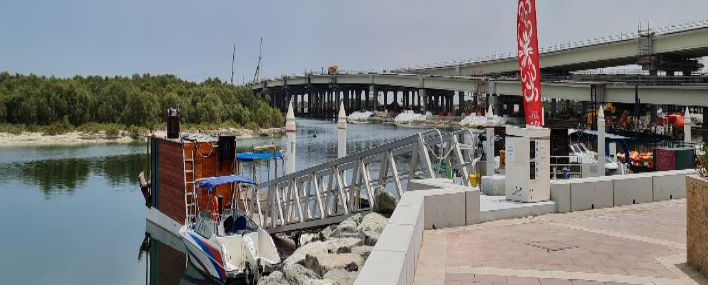
Figure 1. Construction of the new bridge crossing the Eastern Mangroves to Umm Lafina and
Al-Jubail Islands.
LITERATURE REVIEW
In the past decade, the many Gulf cities have emerged as important destinations through branding themselves as smart cities with good infrastructure that caters to multi-ethnic communities and the needs of global markets. Abu Dhabi and Dubai evolved during the past
Human Systems Engineering and Design (IHSED 2021) https://openaccess.cms-conferences.org/#/publications/book/978-1-7923-8987-0 decades as cities with significant investment in technology, examples are Dubai Expo 2020 which focuses on sustainability, Masdar City and Louvre Abu Dhabi, all of which manifest contemporary ways of addressing culture and environmental context (Panda 2020). City branding relates to a communication system that connects the overall image and identity of a city that are essential in making it unique among various alternatives urban enclaves. To address such issues Abu Dhabi, formulated policies with regard to post-oil economy characterized by a diversification of its GDP, and sustainable urbanization advocated via well known projects like Masdar City (De Jong 2019). Gulf State cities clearly understood the importance of city branding to support in networking in the wake of global competition to attract businesses and investors, in a more globalized world where strong competition among cities exists, predominantly in terms of attracting investors, and talented young people. Abu Dhabi, has taken to the task of branding itself as an urban center that respects, the environment sustainability and diverse cultures. Aiming to gain prominence on the global map Abu Dhabi invested in a large program of for Mangrove plantation. Advocating itself as a multi-cultural destination, that presents itself beyond classical branding in terms of a product-place relationship (Bani Hashim 2012). The word “green city” is no longer enough for city marketing, rather has become part of a long term strategy that highlights the importance of urban greening and developing public spaces to improve the standard of living of multi ethnic communities (Lőrincz et al. 2021).
In Abu Dhabi there has been a growing awareness of the importance of man-groves because they do not require fresh water which is scarce in desert environments, and they aid in protecting the coastline. Mangroves also prevent erosion and providing habitat for a wide variety of species. Mangroves are bushes and trees that grow at the intersection of land and sea, at the mouth and surrounding areas of tidal lagoons, estuaries, and rivers, and they are partially emerged under the high-water tide. Mangrove plantations are found as isolated units of varying length and width along the western coastline of the Arabian Gulf. Mangroves are very important breeding, feeding and nursery grounds for several types of birds and aquatic animals such as fish, shellfish, prawns, and crabs etc. Without healthy mangroves, populations of these animals would decline and eventually be lost from the region (Khan & Kumar 2009). The race for “socio-economic development” among the Arabian Gulf countries has primarily focused on vast development of coastal infrastructure projects however, in the past decade mangroves have become a new focal point for developers as the highly-salt tolerant mangrove species of Avicennia marina covers about 155 km2 of the Abu Dhabi shoreline (Paleologos et al. 2019).
JUBAIL ISLAND DEVELOPMENT Natural environments are especially important in the post COVID 19 era for metropolitan areas to support ecosystems, public health, social interactions, aesthetic needs, and to mitigate urban heat-island effects. Mangrove landscapes and parks encourage confidence in preexisting cities with their aging urban fabrics and their ability to focus on better
Human Systems Engineering and Design (IHSED 2021) https://openaccess.cms-conferences.org/#/publications/book/978-1-7923-8987-0 connections between city residents and nature. Therefore, urban developments that are responsive to site context and the environment are especially important to retain mangrove environments and their natural habitats. Mangrove Parks emerging in Abu Dhabi such as Jubail Mangrove Park (Figure 2) offer the oil rich State an opportunity to create green coastlines and the development of bare land intrusions into appealing environments. Mangrove plantations can offer a solution for ‘greening’ the rapidly urbanizing city since they do not consume fresh water that is scarce in desert environments. Therefore, the construction industry must take in consideration sustainable landscaping that can contribute to reviving local economies and social well-being, in order to contribute to urban resilience in light of rapid urban sprawl (Lee 2017).
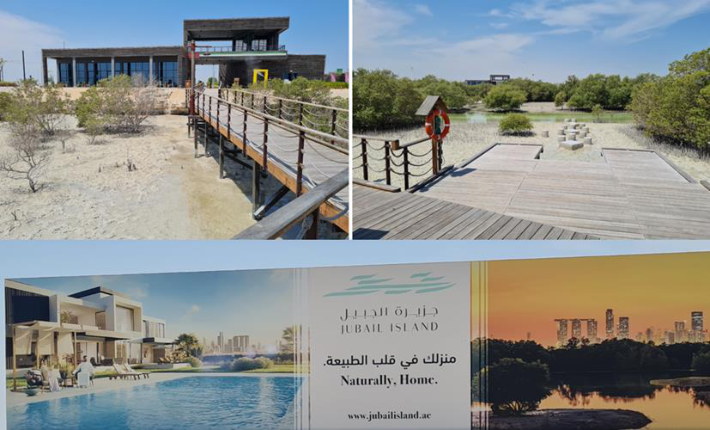
Figure 2. Jubail Island mangrove park visitor center and visitor path Public spaces and open landscapes, including waterfront natural environments such as Mangrove habitations have not yet been fully explored as venues for recreation especially in Abu Dhabi. They great potential improve quality of living, stimulate local economies, contributing significantly to urban and economic revitalization of cities. Designing waterfront environments is are important however, the challenge for planners and architects is to work with nature while creating mega projects that adhere to clientele tastes from the broader spectrum of cultural and multi-ethnic backgrounds. The Australian based architects GHD and Modon Properties set a good precedent through the design of Jubail Mangrove Park (Figure 2) that has become a new leisure destination, and raises awareness to the importance of natural environments in the city. The Jubail Mangrove Park project
Human Systems Engineering and Design (IHSED 2021) https://openaccess.cms-conferences.org/#/publications/book/978-1-7923-8987-0 demonstrates the power of innovative design and construction to provide public access for sensitive environments with minimal disturbance of its surroundings. A series of pedestrian boardwalk routes take visitors into the mangrove forests and tidal lagoons of Jubail Island.
Mangrove habitats offer a new form of ecologically based urban design especially visible in Jubail Visitor Center, visitor path and observation tower that manifest sustainable strategies and utilize the latest technologies. The Mangrove Park offers its visitors an educational experience through signage, an observation tower and plat-forms that allow connectivity to water in many parts of the trail. Marshlands and mangrove plantation challenge future architects to produce creative ideas and architecture that is resilient, sustainable and more inclusive/responsive to nature. Careful consideration of site-specific characteristics and integration between the environment and shorelines especially with respect to shoreline modifications create a balance between architecture and the environment and rebrand the image of City (Chee et al. 2017). The shift from automobile oil rich state to healthy city is especially visible in the newly emerging walking and cycling tracks along Abu Dhabi’s mangrove coastline, this entails more connectivity, land-use patterns, safety, and quality of the paths (Speck 2013). Al-Jubail Island reflects on the importance of creating paths along and intertwined with mangroves, in addition the use of sustainable materials is evident; wood, and stone are well integrated within the surrounding environment. Sustainable materials, open spaces and walking trails, raise awareness to moderate income expatriate communities to the importance of public space and interaction with nature (Banerjee 2001).
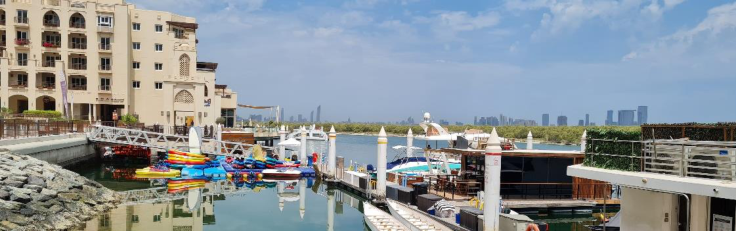
AL-QURM - EASTERN MANGROVES The Eastern Mangroves (Figure 3) sets a precedent for Jubail Island development manifesting how increasing mangrove habitations within an urban context can improve the image of the city. In the Eastern mangroves integration of cultural and environmental perception combines neo-Islamic forms and architecture with watersports centers and Kayaking, creating a cultural cluster that offers a new venue for local and expatriate residents of the city to enjoy nature. Here the promenade and water-sports center, offers jogging trails, within natural reserves, which contribute to sustainability, much highlighted in the Abu Dhabi 2030 Plan that aims to accommodate new communities of diverse backgrounds in newly built cities. Abu Dhabi’s Urban Planning Council (UPC), Interim Coastal Guidelines have identified four land use zones in the Abu Dhabi coast, which are protected areas and national parks, coastal parks and ecological hotspots, coastal conservation zones, and coastal stewardship zones. Creating these natural environments are an important step for a metropolitan city that was primarily designed with very little public space to rebrand its image (Bani Hashim 2019). The waterfront leisure complex manifests an architectural style that merges local and Islamic motifs adopted from a broad range of architectural vocabularies and caters to Arab and expat communities residing in Abu Dhabi. The transformation of traditional values went beyond post-modern attempts to recreate the past to incorporate the
Human Systems Engineering and Design (IHSED 2021) https://openaccess.cms-conferences.org/#/publications/book/978-1-7923-8987-0 principles of sustainable traditional values while changing the code and incorporating functional adjustments and the context of space and time (Nursaniah et al. 2019). The waterfront regeneration project resulted in the creating of leisure spaces shaped by cultural clusters that have become destinations for expatriate communities, especially due to its association with mangroves and water because they contribute to sense of a healthy community (Ellin 2010). Pointed arches, projecting porticos and colonnades that offer shade, reflect on the role of architecture in weaving forms and fragments from a wide spectrum of Islamic architecture to highlight the amalgamation of multi-ethnic communities within the city.
Figure 3. Eastern Mangroves-Abu Dhabi
While the Eastern Mangroves offers somewhat a sanitized experience it still encourages the belief that the city has the ability to rejuvenate its urban fabric. The waterfront development profoundly assures the community of their sense of belonging in the modern city through a combination of cultural resonance and familiar activities. It suggests an alternative model for supporting environmental awareness within the context of the abstract qualities of architecture, exhibited through massing, solids and voids, sense of space, and structural principles in their reinterpreted forms, that are recognizably cultural assemblages coupled with its wide range of shared imagery (Amrousi & Biln 2011). Creating urban islands with mangroves habitations hinging on specific scenery has a downside that is the need to engineered landscapes including the construction of bridges that may exacerbate pressures on the mangrove areas. Figure 1 shows the positioning of the new bridge that will connect the Eastern Mangroves to several small islands. It is clear that this bridge will further modify the hydrodynamic circulation around the lagoon that hosts the mangrove area. The necessity to create several coastal roads and highways in Abu Dhabi connected through multiple bridges to the main island introduces substantial quantities of zinc and micro-plastic to the waters from the wear of rubber tires and brake pads. Coupled with the heavy engineering and dredging operations to build seawalls, and engineered walkways and entertainment areas, as well as provide motor boat access can created escarpments that damage in some cases mangrove roots (Paleologos et al. 2019). Developing urban complexes within mangrove habitations offer new scenarios for the living city, however, the
Human Systems Engineering and Design (IHSED 2021) https://openaccess.cms-conferences.org/#/publications/book/978-1-7923-8987-0 increase in residential and construction activities may have substantial effects on the marshlands water quality resulting in increased sediment, organic and inorganic materials that may have a substantial effect on the health risk for marine life (Cavalcante et al. 2011). Serving the broader public interest by holistically harmonizing growth, preservation, sustainable architecture remains a challenge for planners as the reality of practice restricts planners to serving the narrower interests of their clients (Campbell 1996).
CONCLUSIONS
In Abu Dhabi mangroves as alternative greenery on the coastlines offer the city a new form of urban expansion with more connectivity to waterfronts and raised awareness to the importance of nature in otherwise aging urban centers. Waterfront revitalization has significant impacts on the physical, social and economic structures of cities. Mangroves as waterfront landscapes allow the creation of green coastlines and the development of bare land intrusions into appealing environments in desert landscapes. Al-Jubail Park and forthcoming urban development offer a promising venue for low density housing to be created amidst nature and mangrove landscapes to offer jogging trails, watersports centers and natural reserves. Such developments contribute to sustainable urbanism much warranted in the oil rich city of Abu Dhabi, and support city branding in the wake of global city …competition to attract investors and young talents. Public spaces created by waterfronts and mangrove habitations encourage the belief that the city has the ability to revitalize its urban fabric and to focus more on Sustainable urbanism. The most challenging aspect in greening Gulf state cities remains the scarcity of water and despite environmental regulations man-groves’ existence in Abu Dhabi may be at a precarious position as a result of the in- tense coastal development and engineered shoreline modifications.
ACKNOWLEDGMENTS
The authors would like to acknowledge the University of Abu Dhabi, Office of Research, for supporting this research study.
REFERENCES
Amrousi, M.E., and Biln, J. (2011). Sharjah’s Islamic urban identity and the living city, Journal of Islamic Architecture, 1(4), 190-198. Banerjee, T. (2001). Public space, beyond invented streets and reinvented places, APA
Journal, 67(1). Bani Hashim, A.R. (2012). Branding the brand new city: Abu Dhabi, travelers welcome, Place Branding and Public Diplomacy, 8, 72–82.
Human Systems Engineering and Design (IHSED 2021) https://openaccess.cms-conferences.org/#/publications/book/978-1-7923-8987-0
Bani Hashim. A.R. (2019). Planning Abu Dhabi: an urban history. Taylor & Francis Group, Routledge. Campbell, S. (1996). Green cities, growing cities, just cities? urban planning and the
contradictions of sustainable development, Journal of the American Planning Association, 62(3), 296-312. Cavalcante, G.H., Kjerfve, B., Feary, D.A., Bauman, A.G., and Usseglio, P. (2011). Water currents and water budget in a coastal megastructure, Palm Jumeirah lagoon, Dubai, UAE. Journal of Coastal Research, 27(2), 384–393. Chee, S. Y., Othman, A., Sim, Y. K., Amni, N., Mat, A., and Firth, L. B. (2017). Land
reclamation and artificial islands: walking the tightrope between development and conservation, Global Ecology and Conservation, 12, 80-95. De Jong, M., Hoppe, T., Noori, N. (2019). City branding, sustainable urban development and the rentier state: how do Qatar, Abu Dhabi and Dubai present themselves in the age of post oil and global warming?, Energies, 12(1657). Ellin, N. (2010). Canal scape: practicing integral urbanism in metropolitan Phoenix, Journal
of Urban Design, 15(4), 599–610. Khan, M.A., and Kumar, A. (2019). Impact of “urban development” on mangrove forests along the west coast of the Arabian Gulf, Earth Science India, 2 (III), 159 – 173. Lee, Y-J. (2017). Building resilient cities through community empowerment: principles and
strategies for Taiwan, International Review for Spatial Planning and Sustainable Development, 5 (2), 35-46. Lőrincz, K., Kruppa-Jakab, E., Szabó, R., and Csapó. J. (2021). Green branding as a tool and future potential for destination marketing: implications from a case study in Veszprém, Hungary, Society and Economy, 43(3), 253–269. Nursaniah, C. Machdar, I., Azmeri, Munir, A. Irwansyah, M. and Sawab, H. (2019).
Transformation of stilt houses: a way to respond to the environment to be sustainable, IOP Conference Series: Earth and Environmental Science, 365(1). Paleologos, E.K, Welling, B.A, Amrousi, M.E., and Masalmeh, H.A. (2019). Coastal development and mangroves in Abu Dhabi, UAE, IOP Conference Series: Earth and Environmental Science, 344 (1). Panda. I. (2020). Destination marketing: what is best for Abu Dhabi? Retrieved from
https://ivypanda.com/essays/destination-marketing-what-is-best-for-abu-dhabi/ (2020). Speck, J. (2013). Walkable city: how downtown can save America, one step at a time, Lectures on IQC Placemaking Conference.
Human Systems Engineering and Design (IHSED 2021) https://openaccess.cms-conferences.org/#/publications/book/978-1-7923-8987-0
LISTED IN THE AHFE DIGITAL BOOKSTORE CATALOGUE
Explore the complete digital volume
Human Systems Engineering and Design (IHSED2021): Future Trends and Applications
Read this individual research paper free through the original publisher, or explore the full digital proceedings book.
ISBN 978-1-7923-8987-0
Explore this ISBN in the AHFE Bookstore ↗Listed in the July 2026 bookstore catalogue; search by ISBN to confirm current availability · Digital book purchase optional