This paper proposed the embodied recognition mode (ERM.) and defined 18 stance feature indexes of automotive styling stance to established a morphological representation framework from two aspects. The feature and semantic relationship between the feature combination ("front mask incl.-rear mask incl.") and the styling stance ("offensive-defensive") were studied to further investigate the cognition mechanism of the CSS. The differences between cognition and semantics of the styling stance in the four states of feature groups were found,and there are differences in the cognitive effects of attitude between single features and feature groups.
Car styling stance (CSS.), originating from the development of automotive engineering and car styling, has a unique context in styling design that differs from the engineering vehicle attitude. Car styling stance is the momentum and posture of car styling, a sense of form presented by car styling. Among them, the “shape” of car styling stance is the underlying perception level, a visible and tangible object, with contour and boundary, which is physical and normative. While “State” and “potential” are the upper perceptual level, a sense of form, which is a combination of spirituality and emotion. It can be considered that the cognition of car styling stance is a process of cognitive interpretation and meaning given from styling entity to psychological image.
Although “car styling stance” is widely used in the design and review pro- cess of car styling schemes, however, it is still in an “unsolved” state as a professional concept and knowledge in the field of design. Therefore, this study attempts to focus on the following issues: 1) To establish a morph- ological representation framework for car styling stance; 2) To obtain the feature structure, semantic structure of car styling stance and relationship among them, and to study the feature cognition mechanism of car styling stance.
Based on discussions on two levels of abstraction (Hoover S,1991) (Miguel P et al, 2006), we propose two levels of morphological representation fra- mework of car styling stance. “Configuration mode”, that emphasizes the generality of the entirety, and “feature extraction”, that emphasizes the descriptiveness of parts and details.
It should be noted that the car styling stance is not only a visual relationship but also depends on the human perception of the car body features. There- fore, it is necessary to seek the support of the scientific cognitive theory in order to study the morphological representation and cognitive mechanism of car styling stance. In the research of car styling stance perception, the psycho- logical mechanism of “Unity of form and spirit” can be regarded as a kind of “Embodied cognition”. “Embodied cognition” focuses on the so-called “the embodiment of mind”, which actually emphasizes the dependence of cogni- tion on body structure and physical activity mode, and believes that mind exists in body structure and the interaction between body and the world (Ye Haosheng, 2013) (Zhang Bo et al. 2017). “Embodied cognition” is mainly related to two concepts in the field of industrial design, one is anthropomor- phism (Van Rompay T et al. 2015), and the other is the bio-inspired design (Antonelli P et al. 2004) (Kim J et al. 2010) (Demirbilek O et al. 2003). Rese- arch shows that designers are often inspired by animal images. In addition, as a way of thinking for designers to understand forms, embodied cognition can also facilitate designers to understand forms and express information (Bur- gess S C et al. 2004) (Abidin et al. 2014). On the other hand, animal shapes are deliberately used in car styling to enhance the attractiveness of products, and users do have a more positive emotional response to designs with evolu- tionary and anthropomorphic features (Miesler L et al. 2011) (Wu T Y et al. 2007). In addition, manufacturers are also encouraging the public to establish a connection between cars and animals (Coss R G et al. 2003). In conclusion, both the designer’s way of thinking to understand shape and the user’s emo- tional response to evolutionary characteristics and anthropomorphic shape reflect the dependence of cognition on body structure and physical activity. The above findings have positive significance for the construction of the mor- phological representation framework of car styling stance and the in-depth exploration of the cognitive mechanism.
CSS. REPRESENTATION BASED ON STRUCTURE RECOGNITION The Configuration Mode of Car Styling Stance
The cognitive model of car styling is essentially an exploration of the “con- figuration mode” of car styling stance. On the one hand, it is based on the morphological characteristics of the car styling itself, and on the other hand, “embodied cognition” is used as an important psychological basis for car styling stance cognition. In terms of the morphological characteristics of the car styling itself. This paper proposes three main research approaches for the cognitive object of car styling stance. Which is 1) The tree-like relationship of “car body, top-level components, feature category” (Zhang Ping et al. 2011), the car styling relationship of the front-end, cabin, and rear-body are divided horizontally. 2) The vertical division car styling relationship of greenhouse,
Morphological Representation Framework and Feature Cognitive Mechanism 205
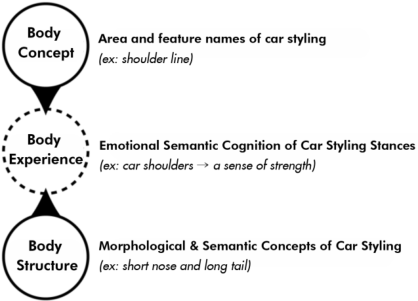
Figure 1: The manifestation of embodied cognition in car styling stance.
lower body, and wheels. 3) Car styling relationship divided by one, two, and three boxes (Wikipedia). Among them, the first two relationship have the consistency of engineering layout, and the box-shaped relationship belongs to the cognitive basis of the styling proportional relationship.
In terms of “embodied cognition” as the psychological basis of stance cognition. Barsalou pointed out that the concept of language is rooted in the system of action and perception (Barsalou, L. W, 1999). Through a large number of literature research and semantic research, it is believed that the manifestation of embodied cognition in car styling stance is mainly concen- trated in three aspects. The area and feature names (shoulder line, etc.) of the car styling reflect the mapping of the body concept on the car styling. The morphological and semantic concepts of car styling (short nose and long tail, etc.) reflect the projection of the body concept and its underlying body stru- cture to the car styling. Emotional semantic cognition of car styling stance (convey a sense of strength through shoulder width of the car) shows that physical experience plays a part in the generation of emotional cognition of the CSS. (Figure 1).
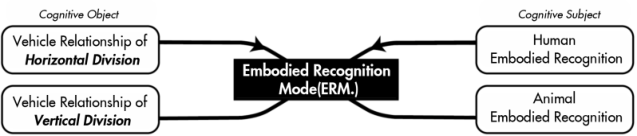
The Embodied Recognition Mode of Car Styling Stance The ERM. of car styling in this paper, on the one hand, is based on the mor- phological characteristics and engineering layout of car styling, and on the other hand, reflects the cognitive law of “embodied cognition” (Figure 2). Therefore, it provides a “structural” morphological cognition basis for the research on car styling stance and a more universal and general perspective for the identification and design (Demirbilek O et al. 2003) (Burgess S C et al. 2004) (Abidin et al. 2014). The ERM. also makes a relatively clear induction and expression of cognitive mapping, which is the basis for the further for- mation of conceptual judgment and cognition of car styling stance. It can be considered that “car styling stance” is a concept formed by establishing the morphological association between human body (or animal body) and veh- icle body, taking human body (or animal body) as the “source” of mapping
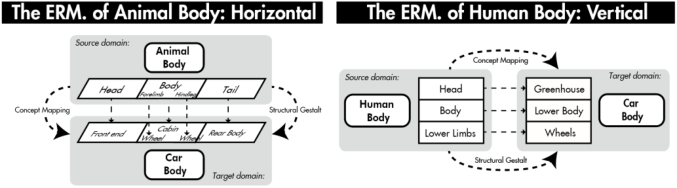
Figure 2: The embodied recognition mode of car styling stance.Figure 3: Two embodied recognition mode in car styling stance.
and automobile styling as the “target” (Goldschmidt G, 2001). The study proposes two modes of embodied recognition of car styling stances (Fig. 3).
The ERM. takes the human body (animal body) as the source domain and car body as the target domain, which is the psychological basis for the ver- tical division (horizontal division) of the vehicle relationship. As shown in Figure 3, in the process of mapping, a one-to-one correspondence is establi- shed between each part of the human body (animal body) and each part of the car body. Among them, “Concept Mapping” refers to the establishment of an analogy between the concept of the human body (animal body) and the shape of the car. “Structural Gestalt” refers to borrowing the body structure of an upright human body (or animal body) to understand the structure of car styling entity.
CSS. REPRESENTATION BASED ON FEATURE EXTRACTION Feature Simplification and Ontology Knowledge of Car Styling Stance
The feature simplification of car styling stance is to eliminate redundant infor- mation of styling as much as possible and generalize and refine the stance features of styling. Human vision tends to decompose contours with the shortest path (Singh M et al. 1999), and to perceive them as basic shapes (Biederman I, 1987). Consumers do have a greater pleasurable response to products with less abstract forms (Wu T Y et al. 2007). It should be noted that feature simplification is not only the basic content of human visual processing, but also has important value in the study of morphological repre- sentation and embodied cognition of the CSS. The feature simplification and extraction of car styling is firstly the classification problem related to the ontology knowledge of car styling. The hierarchical division of car sty- ling features is investigated and summarized into three aspects, which are
Morphological Representation Framework and Feature Cognitive Mechanism 207
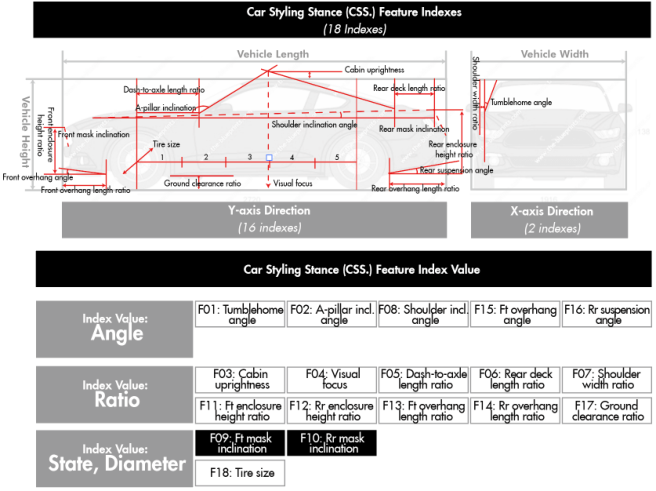
Figure 4: Definitions of CSS. feature: 18 indexes (Top); Index Value (Bottom).
morphological cognition (Catalano C E et al. 2007) (Zhao Danhua, 2013) (Ranscombe C et al.) (Laseau, P, 2001) (Warell, A, 2001), characteristic line (Zhao Danhua et al. 2007) (Cheutet V et al. 2008) (Lin Minghuang et al. 2009), and characteristic surface (Kara L B et al. 2008) (Liang Qiao, 2015) (Zhu Dan-mo et al. 2013).
Feature Extraction and Feature Index of Car Styling Stance Based on the ontology knowledge and related methods of the hierarchical division of car styling features, this paper proposes the method of “enclo- sed surface”, that is, the feature simplification of car styling stance can be encircled by a series of stance feature surfaces to form a generalized low- dimensional representation, which provides a feasible method for feature simplification. On the basis of the 14 enclosed surfaces, 18 feature indexes are further defined and established to achieve the purpose of expressing the car styling stance information in the most cost-effective way, which is conducive to the pertinence of the research (Figure 4).
RESEARCH ON THE COGNITIVE MECHANISM OF CAR STYLING STANCE “The whole is greater than the sum of its parts”: Feature Integration and Cognitive Effects of Car Styling Stance
The representation framework based on structure cognition and feature extraction provide an important basis for further research on the morpho- logical cognitive mechanism of car styling stance. The car styling features
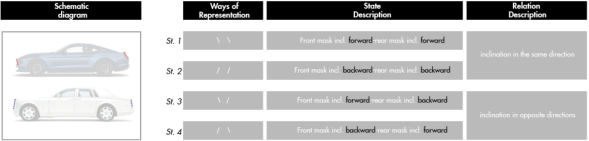
Figure 5: Schematic diagram of the feature group of “Front mask incl. forward-rear mask incl.” and the four states of the group.
are related to each other, and there is no completely independent feature. Each feature without exception integrates with other features, and with the area and the car body, showing different spatial relationships and combi- nations, and constitute “higher level” visual entities (Monö, R., 1997). On the other hand, the sense of harmony, balance, and attitude of the car sty- ling is part of the derived meaning of the styling (Lu Zhaolin et al. 2016) (Zhou Aimin et al. 2018), and the styling recognition must be all-around and multi-characteristic (Zhang Wenquan, 2012). It can be seen that feature inte- gration is the basis of attitude perception, and it is indispensable to study the recognition mechanism of car styling stance.
Image Pairing of Car Styling Stance The perception process of car styling stance is the perceptual process of “visual analogy”or “image pairing”between stance features and images. This is also consistent with the theory of “embodied cognition” that advocates the relationship between the body and the brain. Humans have internal psych- ological mechanisms of isomorphism (Lu Zhaolin et al. 2015), and visual analogy can promote cognition through image manipulation (Chang H C et al. 2006) (Goldschmidt G, 2001). Therefore, image pairing can be used to study product morphological features and product emotional semantics (M. Jamaludin et al. 2013) and to study the process of semantic acquisition, word clustering, expression, semantic cognition, as well as visual analogy, and to further explore the process of feature integrating with styling stance cogni- tion, conducting in-depth study of the cognitive mechanism of car styling stance group.
In this experiment, “Front mask inclination” (F09) and Rear Mask incli- nation (F10)” are selected to form a feature group, and “offensive stance, defensive stance” are mainly selected to study the relationship between the feature group and the styling stance (Fig. 5). This is because, firstly, “Front mask incl.-rear mask incl.”is considered to contain the geometric information of “offensive stance and defensive stance” (Wang Zhen1 et al. 2013), which is typical. Secondly, feature groups of “front mask incl.-rear mask incl.” con- stitute more complete morphologies, while multiple feature combinations are considered to be more cognitively efficient than single features (Zhang Wen- quan, 2012). Thirdly, only a set of feature groups are selected for the research to focus on discussing the characteristics and semantic relations of car styling stance, and deeply understand the meaning of styling stance.
Morphological Representation Framework and Feature Cognitive Mechanism 209
Image Pairing Experiment of CSS. Feature Group Research Purpose 1) To obtain the cognitive description of the “front mask incl.-rear mask incl.” group through the image matching experiment, and cluster their stance words. 2) To investigate the cognitive differences of “offensive and defensive” stance of car styling combined with the perspective of embodied cognition.
Experimental Methods 1) Experimental materials. Imagery: According to the sports category of Wikipedia, pictures of 14 specific sports types (I1, I2, I3...I14) were selected from 7 sports categories, including sports types: shooting, fencing, walking, rock climbing, skiing, ice hockey, sumo, martial arts, swimming, kayaking, high ropes, vertical wind tunnel, volleyball and basketball (Figure 6). Sedan Model Picture: we extract the silhouette in side view from sedan model pro- totype (W Geoff, 2009), erase its front and rear face outlines, and use dashes for the remaining outlines. 2) Experimental process: For the sports types pictures, the subjects first filled in the four states of the “ front mask incl.-rear mask incl.” feature group into the sedan model with missing front and rear face contours by visual analogy to achieve image matching. Then, according to the result of image matching, the subjects are asked to use 1-2 adjectives to describe the corresponding stance feature groups. At the same time, they are asked to judge whether the model is an offensive stance or a defensive stance. 3) Subjects: 21 designers with automotive styling design experience participated in the survey, 20 valid questionnaires obtained.
Experimental Data and Data Processing Through image matching and semantic research, 435 adjectives were obtai- ned, which belonged to 4 states of the stance feature group. Through the three steps of filtering, correction, word clustering, and semantic interpretation, the link relationship of semantic words was completed, and 272 semantic words were obtained. Combined with expert opinions, through word clustering and semantic interpretation, the link relationship between semantic words is formed (Zhao Dan-hua et al. 2013), and 20 semantic words are obtai- ned, namely: strong, vigorous, stocky, bursting, dynamic, stable, steadfast, floating, offensive, sprinting, dynamic, passionate, confident, domineering, cautious, thrilling, stable, strenuous, smooth, dexterous.
Experimental Results The frequency data show that the cognitive intensity of offensive stance decre- ased from state 1 (\ \’) to state 4 (/ \’), and the cognitive intensity of defensive stance was opposite. That is, state 1 of the feature group “ front mask incl.- rear mask incl.” has the strongest sense of offensiveness (85% Off.), and state 4 has the strongest sense of defensiveness (79% Def.). Among them, when the “front mask incl.-rear mask incl.” are in the same direction, it is an offensive stance, and when the “front mask incl.-rear mask incl.” are in opposite directions, it turns to a defensive stance.
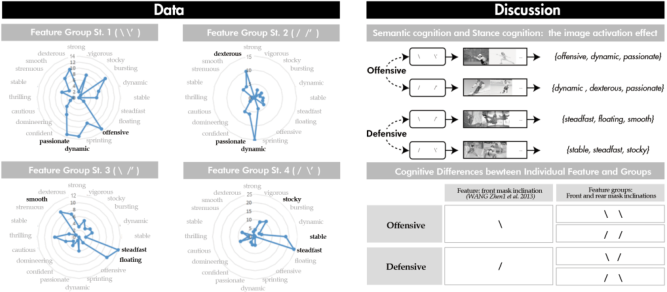
Figure 6: Semantic radar charts in four states of feature groups (left), the image acti- vation effect (top right), Cognitive differences between feature and group (bottom right).
The radar chart of the semantic survey data of the feature group indicates the degree of correlation between the feature group and the semantics: State 1 is the strongest offensive sense (85% Off.), with multiple high-frequency semantics, and the top three semantics words are offensive, dynamic and passionate, and the semantic concentration is SD 4.13. State 2 is an offensive stance (68% Off.), and the first three semantic words are dynamic, dexterous, and passionate. State 4 is of the strongest defensive situation (79% Def.), of which stable and steadfast are two prominent high-frequency semantic words, in which the semantic words of the first three are stable, steadfast, and stocky, semantic concentration degree is SD 6.21. State 3 is a sense of balance (53% Def.), in which the semantic words of the first three are: sta- ble, floating, and smooth. The semantics of “floating” only occurs in state 3 with a significant frequency, which is a unique semantics of this state.
Discussions In the figure 6, the same-direction states of “front mask incl.-rear mask incl.” are all offensive, but the frequency of offensive cognition in state 1 and state 2 is respectively 83% and 69%, and the sense of offensiveness of the two states is different. The offensive stance of Front mask incl. forward-rear mask incl. forward (state 1, \ \’) has the semantics of {offensive, dynamic, passionate}, which conforms to the general cognition of car design and is in an offensive stance (Wang Zhen1 et al. 2013). While the Front mask incl. backward-rear mask incl. backward (state 2, //’) is also recognized as offensive. This disco- very has special significance, for the result is contradictory to the general cognition of car styling (Wang Zhen1 et al. 2013). Its offensive stance may be due to the imagery generated by the semantics of {dynamic, dexterous, pas- sionate} with Front mask incl. backward-rear mask incl. backward (/ /’), or quite probably generated by the visual analogy of sports such as skiing, and more likely to be caused by the effect of “front mask incl.-rear mask incl.”fea- ture combination, indicating that there are differences in the cognitive effects of stance between individual features and feature groups.
Morphological Representation Framework and Feature Cognitive Mechanism 211
Compared with a single feature, the feature group constitutes a more complete stance feature, resulting in different stance cognition from a sin- gle feature. This issue needs further experimental confirmation. In addition, the different states of “front mask incl.-rear mask incl.” are all defensive- ness. State 4 is a sense of strong defensive stance, with {stable, stable, stocky} semantics, state 3 is a sense of weak defensive stance, with {stable, floating, fluent} semantics.
The results of experiments also show that there is a strong visual analogy and image projection effect between the sporty pictures and the car styling stance, and the image activation effect of the sporty pictures on the semantic generation of the subjects can be clearly seen. In a certain sense, the research affirms that sporty pictures have important image activation and analogical reasoning functions in the design of car styling stance. Medeni believes that knowledge visualization is a series of psychological images with simplified concrete forms and abstract concepts (Ünsal S et al. 2006). Therefore, the feature group is the carrier of meaning transmission, and after matching the specific pattern, the feature group also acquires the meaning behind.
CONCLUSION
In this study, a morphological representation framework of car styling sta- nce is established, and the feature cognition mechanism of car styling stance is studied. First, in the morphological representation part, the methods of literature research and experiments are used to develop from two aspects of structure recognition and feature extraction. In the part of structure reco- gnition, by combining the research on the cognitive object and the cognitive subject of the car styling stance, the embodied recognition mode of the car styling stance is proposed, which provides a “structural” basis for the resea- rch on the car styling stance. In the aspect of feature extraction, the so-called enclosing surface method is used to simplify and extract the physical featu- res of the styling stance, calibrate the features and propose the characteristic indicators of the car styling stance. Second, in the part of feature cognition mechanism, the influence of the integration of features on stance cognition is emphasized. The feature and semantic relationship between feature com- binations (“front mask incl.-rear mask incl.”) and styling stances (offensive stance, defensive stance) were studied, and the differences between styling stance cognition and semantic cognition of four feature combinations were found, and there are differences in the cognitive effects of attitude between single features and feature groups. It is believed that pictures with a sense of sporty have an image activation effect on car styling stance design, and visual analogy has a reasoning effect in the process of stance recognition.
ACKNOWLEDGMENT
This research is funded by the Collaborative Education Project of Industry- University Cooperation of the Chinese Ministry of Education, grant number 202102100014, and by the General Project of Zhejiang Provincial Depar- tment of Education, grant number 21086103-F, and by the research startup fund for Zhejiang Sci-Tech University, grant number 20082337-Y.
(2014). “The Challenges of Developing Styling DNA Design Methodologies for Car Design”, 6. Antonelli P, Lovegrove R. (2004). Supernatural: the work of Ross Lovegrove [M].
Phaidon. Barsalou, L. W. (1999). Perceptual symbol systems. Behavioral and Brain Sciences, 22, 577–660. Biederman I. (1987). Recognition-by-components: a theory of human image under-
standing [J]. Psychological Review, 94(2): 115–47. Burgess S C, King A M. (2004). The application of animal forms in automotive styling [J]. The Design Journal, 7(3): 41–52. Catalano C E, Franca G, Marina M, et al. (2007). A framework for the automa-
tic annotation of car aesthetics [J]. Artificial Intelligence for Engineering Design Analysis & Manufacturing, 21(1): 73–90. Chang H C, Lai H H, Chang Y M (2006). Expression modes used by consumers in conveying desire for product form: A case study of a car [J]. International Journal of Industrial Ergonomics, 36(1): 3–10. Cheutet V, Jean-Claude Léon, Catalano C E, et al. (2008). Preserving car stylists’
design intent through an ontology [J]. International Journal on Interactive Design & Manufacturing, 2(1): 9–16. Coss R G. (2003). The role of evolved perceptual biases in art and design [M]//Evolutionary aesthetics. Springer, Berlin, Heidelberg, 69–130. Demirbilek O, Sener B. (2003). Product design, semantics and emotional response [J].
Ergonomics, 46(13-14): 1346–1360. Glossary of automotive design (https://en.wikipedia.org/wiki/Glossary_of_ automotive_design) Goldschmidt G (2001). Chapter 9 - Visual Analogy - a Strategy for Design Reasoning and Learning [J]. Design Knowing & Learning Cognition in Design Education, 199–219. Hoover S, Hoover S (1991). Models and abstractions in design [J]. Design Studies,
12(4): 237–245. Kara L B, Shimada K. (2008). Supporting Early Styling Design of Cars Using Sketchbased 3D Shape Construction [J]. Computer-Aided Design and Applications, 5(6): 867-876. Laseau, P. (2001). Graphic thinking for architects and designers [M]. New York: John
Wiley and Sons. Liang Qiao. (2015). Cognition and Deconstruction of Car Styling Surface [D]. Lin Minghuang, Huang Bosong, Chen Zhengqi. (2009). The Retro-Expressions of the Classic Car Styling [J]. Journal of Design, 14(3): 31–49. Lu Zhaolin, Li Shengbo, Xu Shaobing. (2015). Comparative research on user’s
visual pattern recognition oriented to automotive styling features [J]. Computer Integrated Manufacturing Systems, 21(7): 1711–1718 Lu Zhaolin, Zhang Yue, Cheng Bo, et al. (2016). A Study on the Cognitive Mechanism of Car Styling Based on Style Feature [J]. Automotive Engineering, (3): 280–287. Miesler L, Leder H, Herrmann A. (2011). Isn’t it cute: An evolutionary perspective of
baby-schema effects in visual product designs [J] International Journal of Design, 5(3): 17–30.
Morphological Representation Framework and Feature Cognitive Mechanism 213
Miguel P, Serena S, Stefania T, et al. (2006). Shape exploration of designs in a style: Toward generation of product designs [J]. Artificial Intelligence for Engineering Design Analysis & Manufacturing, 20(3): 201–215. Monö, R., (1997). “Design for Product Understanding”, Liber AB, Stockholm. Ranscombe C, Hicks B, Mullineux G, et al. (2012). Visually decomposing vehi-
cle images: Exploring the influence of different aesthetic features on consumer perception of brand [J]. Design Studies, 33(4): 319–341. Singh M, Seyranian G D, Hoffman D D. (1999). Parsing silhouettes: The short-cut rule [J]. Perception & Psychophysics, 61(4): 636–660. Ünsal S, Ayas M, Medeni T D. (2006). TACIT Knowledge Extraction for Software
Requirement Specification [J]. Sobiad Org. Van Rompay T, Ludden G. (2015). Types of embodiment in design: The embodied foundations of meaning and affect in product design [J]. International journal of design, 9(1). Wang Zhen1, Tan Zhengyu. (2013). Research on Vehicle Modeling Features Based
on Holistic Cognition [J]. Packaging Engineering, 34(24): 51–54. Warell, A. (2001). Design Syntactics: A Functional Approach to Visual Product Form, (Göteborg: Chalmers University of Technology). W Geoff. (2009). H-point: the fundamentals of car design & packaging / 1st ed [M]. Wu T Y, Chang W. (2007). The study of products with bios forms in conveying
pleasure [J]. Int. Assoc. Soc. Des. Res. The Hong Kong Polytech. Univ, 1–14. Ye Haosheng (2013). The Embodiment of Mind: Evidences from Multiple Disciplines [J]. The social sciences, (5): 117–128. Zhang Bo, Ge Lujia. (2017). The Moderate Embodied Cognition: A New Program
of Cognitive Science [J]. Journal of Huaqiao University (Philosophy & Social Sciences), (1). Zhang Ping Xue Chengqi. (2011). A Style-innovation-oriented Automobile Feature Recognition Method [J]. Journal of Mechanical Engineering, 47(10): 157–163. Zhang Wenquan. (2012). A Car Styling-based Study: The Design Methodology Based
on Brand DNA [D]. Hunan University. zhao Danhua. (2013). A Car Styling-based Study: The Designer’s Intension and User’s Interpretation [D]. Hunan University. Zhao Dan-hua, He Ren-ke, Tan Hao, et al. (2013). Research on Semantic Acquisition
and Expression of Car Brand Styling [J]. Packaging Engineering, (10): 27–30. Zhao Danhua, Zhao Jianghong. (2007). Automobile Form Feature and Feature Line [J]. Packaging Engineering, 28(3): 115–117. Zhou Aimin, Su Jianning, Yan Shutian, et al. (2018). Nonlinear Information Dyna-
mics Model of Synthetic Evaluation on Product Form Aesthetic [J]. Journal of Mechanical Engineering, 54(15). Zhu Dan-mo, Lu Yang, Xu Xin, et al. (2013). Rapid Car-Body Prototype Generation Method Based on Feature Semantics [J]. Journal of System Simulation, 25(9).
LISTED IN THE AHFE DIGITAL BOOKSTORE CATALOGUE
Explore the complete digital volume
Ergonomics In Design
Read this individual research paper free through the original publisher, or explore the full digital proceedings book.
ISBN 978-1-958651-23-0
Explore this ISBN in the AHFE Bookstore ↗Listed in the July 2026 bookstore catalogue; search by ISBN to confirm current availability · Digital book purchase optional