Juliana Cardoso Braga, Maria Fernanda Salamanca Carvalho, Frederico Sousa Santos, Gabriel Henrique Cruz Bonfim, Diego Augusto Costa Alves, Cleudmar Amaral De Araújo (2022). Low-fidelity model as a redesign tool for frame running. In: Ergonomics In Design. AHFE Open Access, vol. 47, pp. 660–666. https://doi.org/10.54941/ahfe1001995
1 CIAUD, Research Centre for Architecture, Urbanism and Design, Lisbon, 1349-063 Portugal; CINTESP.Br, Brazilian Reference Center on Technological Innovations for Paralympic Sports, Uberlândia, MG 38408-157, Brazil ↗
2 CINTESP.Br, Brazilian Reference Center on Technological Innovations for Paralympic Sports, Uberlândia, MG 38408-157, Brazil ↗
The conception stage of the design project aims to help the comprehension of the problem to be worked on, seeking to provide the best possible experience for the users. Prototyping stage is essential to make the ideas tangible for the validation of usability, functionality, ergonomics, aesthetics, among others. However, this whole process can take a lot of time and rework. This article presents a case study of the application of the Design Thinking methodology for the redesign of an Assistive Technology - the bike for Frame Running - with the objective of demonstrating the benefits of using a low-fidelity model as a tool for generating insights and optimizing the time required for digital testing in 3D software and design conception. The development of this project sought to integrate theory and practice through a mixed non-interventionist and interventionist methodology with a qualitative basis, acting in a cyclical and non-linear way, through bibliographic and documentary research, use of low-fidelity models, case study, direct observation, structural simulation, ergonomic study and prototyping. The results obtained, using alternative low-cost materials, favored the reduction of the time of the design process, allowing the interaction and agile identification of critical points of performance, ergonomics, aesthetics, functionality, strength and analysis of the appropriate construction processes, contributing to the redesign of the Frame Running bike, the dissemination of the sport, the quality of life and inclusion of disabled people.
Low-Fidelity Model as a Redesign Tool for Frame Running 661
with cerebral palsy. Since then, this modality has expanded and its inclusion in the 2024 Paralympics in Paris is currently being analyzed.
The assistive technology used to practice Frame Running is similar to a bike or tricycle with the difference that there are no pedals connected to the frame, so the impulse is carried out by the user when the feet come in contact with the ground. A trunk support sustains the user leaning forward and assists in reaching the steering via handlebars. The arch-shaped tubular structure, made of steel or aluminum, has an opening at the back for free movement of the lower limbs (Calve et al. 2018). The design for the equipment must meet the shape and dimensions of the category regulation and also balance stability and reduced weight so that higher speeds can be safely reached (Domínguez, 2017). The Frame Running bike improves the physical and emotional conditi- oning of the practitioner. The equipment also allows more autonomy for disabled people, favors inclusion and socialization, and provides a sense of speed for those who cannot run functionally.
One of the main problems faced in Brazil is the difficulty of access to equi- pment. Imported models are economically inaccessible to a large part of the Latin American population (Domínguez et al. 2017), and it is essential that the bike is designed according to the dimensions and characteristics of each athlete for better performance (Hutzler, 2007).
Currently, the customized manufacture of Frame Running in Brazil has been a reality. However, inadequate solutions are common and, therefore, create a safety risk and compromise the athletes’ performance. Brazilian ath- letes and coaches report constant breaks in the structure and instability of the bike during races. As the appearance of cracks or the deflection of the tubes is perceived, new reinforcements are subjectively added to the existing structure.
In view of the problems presented, the Brazilian Paralympic Committee (CPB) requested a bike project for Frame Running for the Brazilian Reference Center on Technological Innovations for Paralympic Sports (CINTESP.Br) and provided a reference bike for study, used in the sport initiation program. CINTESP.Br is a research and extension center at the Federal University of Uberlândia (UFU) focused on science, technology, and innovation in assistive technology, composed of a multidisciplinary team of engineers, designers and physical educators.
This article presents a case study of the Design Thinking methodology (inspiration, ideation and implementation) applied in a non-linear way for the redesign of an Assistive Technology - the bike for Frame Running. The redesign process integrated the ideation and implementation stages through prototyping with low-fidelity materials in order to optimize the project development phases and costs.
THE DESIGN PROJECT CONCEPTION PROCESS The field of design has mastered a set of knowledge and tools favorable to the resolution of a wide spectrum of complex issues and challenges. Design, in addition to creating new products, also develops new types of processes,
services, interactions, among others, often involving social issues (Brown and Katz, 2011).
Innovations in assistive technology tend to occur incrementally, that is, improvements are gradual in relation to existing technology with specific enh- ancements in mechanisms and interfaces, to adapt to the user’s capabilities. The development of a technology that raises the performance and mobility of disabled people to the same level of their non-disabled peers is rarely seen (Brüggemann et al. 2008; Kram et al. 2009).
According to Brown and Katz (2011) incremental innovation is stimulated by user-centered design, also known as Design Thinking, as it allows trans- lating customer needs into insights that will improve products, processes, or services, promoting a significant difference.
Design thinking has as its purpose the search for solutions focused on empathy, improving the comprehension of processes and products (Vianna et al. 2012). Brown (2008) understands that design thinking is a discipline that uses human sensibility and design methods to match people’s needs with what is technologically feasible.
The application of ergonomics must be part of this process, focusing on the creation of products adapted coherently to the behaviors and positions of individuals in the interaction with machines in their work or living space. In this way, ergonomics helps to solve the latent needs of those who have unusual characteristics (Rosa and Moraes, 2012). Karwowski, Soares and Stanton (2011) state that the application of ergonomics is essential to faci- litate use and learning, increase efficiency, comfort, safety, adaptability, and user satisfaction.
Given the above, it can be said that the essence of the approach of Design Thinking, ergonomics and assistive technology meet the principles of user-centered design. Therefore, they become suitable for the develo- pment or improvement of existing technologies, aiming at innovation, better interaction, and empathy with users.
METHODOLOGY APPLIED FOR THE FRAME RUNNING BIKE REDESIGN Design Thinking is characterized by an iterative investigation cycle involving three fundamental stages: inspiration, ideation, and implementation (Brown, 2008; Brown and Wyatt, 2010). During these stages, which can occur non- linearly, problems are questioned in an attempt to generate new ideas and verify feasibility. The implementation stage involves prototyping. However, when prototyping is applied only in the final stage of the design process, that is, after the inspiration and ideation stages, the design process tends to demand more time, rework and higher costs. In view of the above, this article presents a case study of the application of the Design Thinking methodology for the redesign of an Assistive Technology - the bike for Frame Running. The objective is to demonstrate the benefits obtained through prototyping with low-fidelity materials still in the ideation stage. Therefore, the stages and methodological procedures used for the development of the project are presented below.
Low-Fidelity Model as a Redesign Tool for Frame Running 663
Inspiration The inspiration stage requires empathic comprehension of the problem through a combination of several research methods on the issue to be solved. For this comprehension, a mixed non-interventionist and interventionist methodology of qualitative and quantitative basis was applied. Bibliogra- phic research, documentary analysis (search for national and international patents) and similar products analysis were essential for understanding the Frame Running sport and existing technologies. From this, interviews with users and meetings with the team of designers and engineers allowed to trace the needs of users - Paralympic athletes and disabled people who practice Frame Running - who helped in the process of problem comprehension. Direct observation, with mechanical support, was also carried out. For Brown (2008) observation allows capturing unexpected insights into what users really want or need, generating innovation.
From the research, interviews and observations, ergonomic problems were identified caused by the absence of an anthropometric study that considered the percentile of Brazilians and appropriate postures as a parameter for pro- duction. In this sense, postural problems were identified due to the inadequate position of the trunk support and due to the body instability generated during the running movements. It can be considered that these issues are aggravating in view of the users’ need to feel stable, safe, and comfortable.
The research was completed through the structural evaluation of the refe- rence bike using the ANSYS® finite element analysis software that simulates the efforts on a three-dimensional model with the appropriate boundary con- ditions. With this study, the material strength calculations were carried out to identify the critical points of higher tension and deflection. For equipment design approval, the results of this stage must satisfy the required strength and deformation limits of the project.
The analysis identified critical points in the structure above the strength limit of the tubes. These points coincided with the most common areas of breakage pointed out by the athletes. As a result, extra locks were incorpo- rated by users into the structure to support the applied weight and force, increasing the cost of production. It was observed that the breaks are mainly due to the inadequate position in which the tubes were welded, reducing the distribution of tension along the structure (Santos et al. 2021).
Ideation and Implementation After data collection, a mental map was applied as a strategy for visualization, data analysis and ideation. The map systematized the various elements that make up the problem, with their ramifications and relationships, and gene- rated the first insights. Sketches, technical drawings, and 3D modeling of the old version (reference model) were made to, from there, propose alternatives for redesign.
However, at this stage, the team found that experimenting with digi- tally simulated ideas would require a lot of time and rework, since several digital modeling tests should be carried out to identify and solve possi- ble failures that would interfere with durability, usability, comfort, safety,
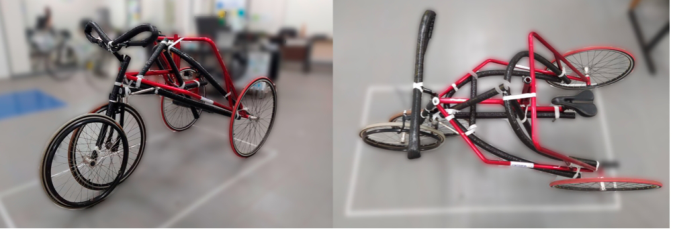
Figure 1: Prototyping with low-fidelity material – polyethylene tubes (Authors).
and performance of product. This process would also require testing with prototypes with each re-adaptation of the project, compromising delivery time and increasing costs. Considering the issues raised, the team decided to carry out the ideation stage together with the implementation stage through prototyping with low-fidelity materials.
According to Brown and Wyatt (2010, p. 35) “(...) a vibrant design thin- king culture will encourage prototyping - quick, cheap, and dirty - as part of the creative process and not just as a way of validating finished ideas”. From this perspective, flexible black polyethylene tubes were fixed with adhesive tape on the bike provided by CPB with the aim of making the initial ideas tan- gible. In addition, a new wheel was added to the front of the bike to simulate the increase in the angle of the front suspension to provide more stability (see Figure 1). The dimensions of the bike’s occupancy limit were also marked on the floor with masking tape.
Tests carried out on the reference bike using the low-fidelity material were photographed for analysis. For Martin (2012), prototyping is the ideation in tangible form, for carrying out tests that guarantee a better development and improvement of the idea. Its role in Design Thinking is to conduct real- world experimentation in the service of learning to identify opportunities for improvement and create new solutions (Liedtka, 2018).
From the selection of ideas, a new digital model was developed for the Frame Running bike. Ergonomic 3D simulations were performed digitally using the anthropometric profile of Brazilian users. New structural analyzes with ANSYS® software were also carried out, which allowed the refine- ment of the proposal. Conceptually, the redesign of the equipment sought to convey, from an emotional and functional point of view, the sensation of speed and the perception of high performance through more rounded and aerodynamic shapes.
Parcial Results The integration between the ideation and implementation stages, through prototyping using low-fidelity materials (polyethylene tubes) fostered cre- ative stimuli due to the continuous generation of insights. It was possible to visualize, establish relationships and verify in advance possible implicati- ons of the tested shapes to solve structural (such as critical points of contact
Low-Fidelity Model as a Redesign Tool for Frame Running 665
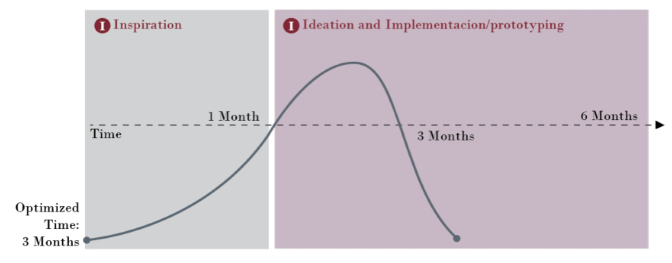
Figure 2: Toolkit IDEO adapted for frame running redesign project with reduced development time from 6 to 3 months (Authors).
between the parts), manufacturing (such as welding points and bending of the tubes) and functionality issues for the users simultaneously, enabling the test of design alternatives. The low-fidelity model allowed users to interact with the prototype and, thus, enabled qualitative ergonomic analyses in a fast, interactive, and real-time way. Therefore, the process applied for the redesign of the bike generated the agile perception of integrated design solutions that could not be identified before, reducing production costs arising from the ela- boration of several prototypes and optimizing the project development time. Figure 2, adapted from IDEO (2011), demonstrates that the initial prediction of project development in a period of 6 months was reduced to 3 months after the integration of the ideation and implementation/prototyping stages.
Through the graph presented, it is possible to verify the temporal result of the experiments carried out with the integration of the ideation and pro- totyping phases with the use of alternative materials. Therefore, the results demonstrate the potential of this methodological strategy to reduce the pro- ject development time. The methodology also has the potential to reduce prototyping costs, thus favoring the rapid improvement of the product before its final execution with high-fidelity materials.
CONCLUSION
The main issue demonstrated through the case study is that the ideation and prototyping stages with the use of low-fidelity materials, when applied in a non-linear and conjoint way, have the potential to: quickly test design alternatives; generate a large number of insights; enable quick and efficient interaction and identification of critical points of performance, ergonomics, safety, aesthetics, functionality and resistance; favor the analysis of the appro- priate constructive processes; reduce rework; meet user needs; reduce costs with prototyping; and reduce the design process time.
In addition, the results obtained during the redesign of the bike for Frame Running contribute to social design and highlight the need for improve- ment, through user-centered design, of equipment for rehabilitation, daily life, leisure or sport aimed at disabled people.
The limitations of this research mainly referred to the difficulties in carr- ying out tests with users in the laboratory due to the Covid 19 pandemic period. Future paths for research should involve new tests with the elabora- tion of a prototype with high-fidelity materials and tested by different types of users and high performance athletes in real conditions of use.
ACKNOWLEDGMENT
The authors would like to acknowledge the Research Centre for Archite- cture, Urbanism and Design -CIAUD, Brazilian Paralympic Committee, CIN- TESP.Br, and National Council for Scientific and Technological Development -CNPq.
REFERENCES
Bersch, R. de. C. R., et al. (2018). Fatores humanos em TA: uma análise de fatores críticos nos sistemas de prestação de serviços. Plurais Revista Multidisciplinar, 1(2), pp. 132–152. Brown, T. (2009). Change by design: how Design Thinking transforms organizations
and inspires innovation. New York: Harper Collins. Brown, T. (2008). Design thinking. Harvard Business Review, 86(6), pp. 84–92. Brown, T., and Wyatt, J. (2010). Design thinking for social innovation. Stanford Social Innovation Review, (Winter), pp. 30–35. Brüggemann, G. P., et al. (2008). Biomechanics of double transtibial amputee sprin-
ting using dedicated sprinting prostheses. Sports Technology, 1(4-5), pp. 220–227. Burkett, B. (2010). Technology in Paralympic sport: performance enhancement or essential for performance?. British Journal of Sports Medicine, 44(3), pp. 215– 220. Calve, T., Júnior, D. V. R., and Barela, A. M. F. (2018). Strategies adopted by younger
and older adults while operating a non-pedal tricycle. Brazilian Journal of Physical Therapy, 22(1), pp. 64–69. Domínguez, B. M. S. (2017) Papalani, tricycle for sport and rehabilitation development of people with cerebral palsy. In: RESNA Annual Conference June 28-30, New Orleans. Arlington, RESNA, pp. 1–4. Hutzler, Y. (2007). A systematic ecological model for adapting physical activi-
ties: Theoretical foundations and practical examples. Adapted Physical Activity Quarterly, 24(4), pp. 287–304. IDEO. (2011). Human centered design: toolkit. 2nd ed. Palo Alto: Authorhouse. Karwowski, W., Stanton, N., and Soares, M. (2011). Human factors in consumer product design: methods and techniques. Boca Raton, FL: CRC Press. Kram, R., et al. (2010). Counterpoint: artificial legs do not make artificially fast
running speeds possible. Journal of Applied Physiology, 108(4), pp. 1012–1014. Liedtka, J. (2018). Why design thinking works. Harvard Business Review, 96(5), pp. 72–79. Martin, B., Hanington, B. (2012). Universal Methods of Design. Beverly: Rockport. Rosa, J. G. S., and Moraes, A. D. (2012). Design Participativo. Rio de Janeiro: Rio
Books. Santos, F. S., et al. (2021). Structural analysis of a three wheeled frame for Race Running (PETRA) using finite element method. In: Proceedings of the 26th Inter- national Congress of Mechanical Engineering Nov. 22–26, Virtual Conference. Florianópolis: COBEM, pp. 1–8. Vianna, M., et al. (2012). Design thinking: bussiness inovation. Rio de Janeiro: MJV
Press.
LISTED IN THE AHFE DIGITAL BOOKSTORE CATALOGUE
Explore the complete digital volume
Ergonomics In Design
Read this individual research paper free through the original publisher, or explore the full digital proceedings book.
ISBN 978-1-958651-23-0
Explore this ISBN in the AHFE Bookstore ↗Listed in the July 2026 bookstore catalogue; search by ISBN to confirm current availability · Digital book purchase optional