Kaimin Guo, Shuai Sun, Yuanbo Sun (2022). User experience of spatial immersive interactive systems in autonomous vehicles: A case study of HUD mixed reality. In: Ergonomics In Design. AHFE Open Access, vol. 47, pp. 690–697. https://doi.org/10.54941/ahfe1001999
It is a sense of social responsibility for designers to meet the physiological and psychological needs of users in daily life by designing the interior space of cars. Based on the concept of immersive interaction, existing and conceptualized automotive interior samples are analyzed. Through literature research and big data collection, the perceptual needs of users are analyzed, as well as the specific functional requirements and modeling requirements of target users for automotive interiors. Finally, with the support of the existing interaction technology, HUD is taken as the main development point and the design points summarized in the previous stage are combined to carry out the automobile immersive interaction design practice. This paper aims to discuss the design status and development trend of intelligent vehicle interior design based on immersive interaction, and help realize human-centered design.
Among automotive interior design, automotive space immersive interaction design, as a hot spot in recent years, has gradually entered people’s life. Take HUD technology as an example, the panoramic mixed reality display turns the whole front windshield into a huge transparent display, and displays a huge image fused with the real world outside the car in front of the car through the windshield, presenting a new world combining the virtual and the real to the user. Due to the improvement of people’s material living stan- dards, consumers’ requirements for automotive interior design have changed from functional demands to emotional demands. Perceptual design plays an important role in the interior design of autonomous vehicles, and the resea- rch on the interior design of autonomous vehicles based on user experience will be a topic of great significance for discussion.
Research on the Emotion of Automobile Interior Users Instinct Level What exists in the mind itself is called the visceral plane, which is the sensory experience. The design elements of instinct level mainly include the following
User Experience of Spatial Immersive Interactive Systems in Autonomous Vehicles 691
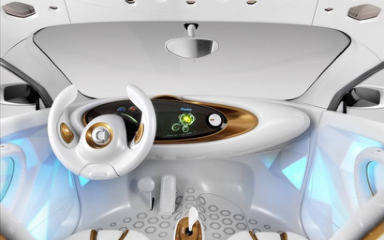
Figure 1: Demonstration of A00 car. (Adapted from Baidu search, 2021).
aspects: vision, hearing, smell, touch and taste. Usually, a product’s vision has the greatest impact on people’s emotions (Deng Chunhong, 2017). The sensory experience of car interior is mainly expressed by color and shape. Car color can give consumers the largest visual impact feeling, now tend to be more sentimental color, different color combinations can give consumers different feelings, make people in the process of cognition of color produce different psychological implication, young people like lively colour, bursting with its own vitality and fight, The elderly are more inclined to calm color, so in order to achieve the automotive interior functionality and ease of use, the pursuit of color has become a higher level of goal (Cao Juntao, SHA Qiang, 2013). The interior design should also adapt to the body shape, with a unified design language, to achieve a perfect unity in the look and feel. Color and modeling are important factors in the level of instinct and key means to express the concept of design, which need to be combined to play a role together to express the charm of automotive interior design (Yuan Dan, 2018). Here, Smart Forvision concept is used to illustrate. Since Smart is a class A00 car with small model, it needs to give users a sense of visual impact from color, so as to bring a greater sense of space. The overall interior is based on white, while matching with the internal components of brass liquid metal paint. Green indicating light source and blue background light source are used in the instrument panel. The simple color matching is rich in rich changes, full of sense of science and technology, in line with the aesthetic tendency of young people.
Behavioral Level The behavior level mainly refers to the function of the product, and has no direct correlation with the appearance design. In the process of using the product, users will have an internal perception of the product’s performance. Behavioral design factors lie in functionality, understandability, availability and physical feeling, and the application of behavioral design factors to the interior design of autonomous vehicles will focus on the functional zoning of the interior (Liu Lu, 2015). Good behavioral emotion is the positive emotion that makes users feel happy in the process of using. The functional layout of automotive interior design is most closely related to the emotional changes
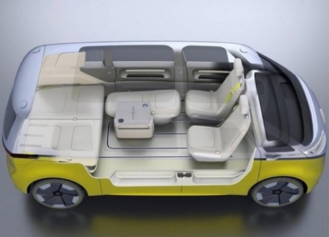
Figure 2: Demonstration of I.D.Buzz. (Adapted from Baidu search, 2021).
of drivers. Volkswagen’s I.D.Buzz is taken as an example to illustrate that the interior decoration of this car is not as rigid as that of traditional cars. The passenger seat can rotate backwards to facilitate communication between users, which changes the traditional functional layout.
Reflection Reflective design is related to the meaning of the product. It is affected by various factors, such as environment, culture and identity. It is no longer a physical attribute of the thing itself, but often carries social and cultural cha- racteristics, which is the guarantee of high added value. Reflective emotional design involves the realization of self-worth of consumers, who are not only satisfied with the product simply to achieve the purpose of usability, but more importantly to reflect their own status (Li Yan, Wang Xin, Pang Yanshuang, 2019). In the automotive interior design interpretation of this point is brand heritage, brand will give enterprises and users to the image. Different car companies have different brand tonality and pay attention to inheritance. In the car interior design, we should also pay attention to the inheritance of style.
Development and Application of HUD Technology in Interior Design of Autonomous Vehicles HUD Technology Concept The HUD, or Head Up Display, was first used on military aircraft to reduce the frequency with which pilots had to look down at their instruments. The HUD applied to the car requires the projection image to be displayed on the road, rather than focusing on the car or windshield, thus eliminating the focus adjustment of the human eye.
Application of HUD Technology in Automotive Interior Design Mercedes has been using HUD technology in mid-range models since 2014, and has gradually improved its functionality until it is fully developed in the latest S-Class. From a variety of presentation as you can see, the Mercedes called AR - HUD system open, after driving related important information is projected to the distance of the driver in front of the vehicle front sight glass, driving the line of sight without leaving the road ahead, you can see
User Experience of Spatial Immersive Interactive Systems in Autonomous Vehicles 693
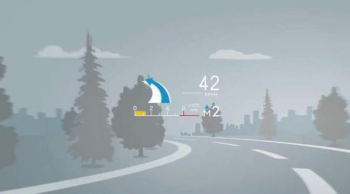
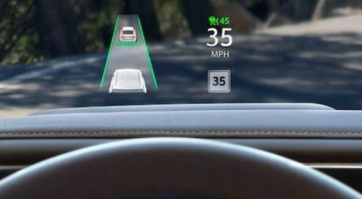
Figure 3: Interior design of Lexus LS. (Adapted from Baidu search, 2021).Figure 4: Interior design of Gm SUV. (Adapted from Baidu search, 2021).
the driving related important information, so as to effectively avoid scattered on the road ahead, greatly improve the driving safety factor. In addition to Mercedes S-Class, the HUD of Lexus LS can project driving speed, navigation path and broadcast FM information to the front windshield through the full- color TFT LCD display, so that the driving information can be easily seen at a glance without frequent movement of sight.
Gm has previously announced that it will ship all new full-size SUVs to North America in 2021 with compatible head-up displays from Japanese company NSG. NSG’s front windshield incorporates unique high-precision pressing technology that combines HUD display technology with the front windshield. A 15-inch color display area will be incorporated into the front windshield.
Design Principles of Autonomous Vehicle Interior Design Based on Emotion Interior Design Should Consider the Analysis of Users’ Emotional Needs Functionality and ease of use play an important role in automotive inte- rior design. Cars are not only transportation tools, but also the second identity symbol of consumers, reflecting consumers’ emotional experience. Consumers of different groups and different ages have different motives and purposes for choosing interior decorations, and their use experience in the process of driving is also different (Pang Lanqin, 2018).
Interior Design Should Provide Personalized Customization Requirements Personalized customization demand is not only to change the interior color, add interior accessories and other simple needs, more important is to
integrate the user’s personal information, record the use of habits, and on the basis of personal habits, automatically adjust the car facilities to meet the user operation. When users use cars, perception technology can also be combined to monitor users’ driving status in real time, so as to improve users’ emotional experience at the behavioral level. Secondly, personalized customi- zation is also reflected in different scene collocation. Immersive scene design concept is an inevitable trend of the development of interior design of autono- mous vehicles. Different scene style personality collocation reflects the unique habits and travel needs of users (Huang Jing,2014).
Interior Design Should Show Human-Centered Human-Computer Interaction Human-computer interaction mainly includes two aspects: functionality and usability. Users can judge whether they like the interaction design of automo- bile interface through sensory, behavioral and emotional interaction, which complement each other in the design. Among them, emotional interaction is the most important, but with the continuous breakthrough of artificial intelligence technology, driving assistance technology is becoming more and more perfect, and autonomous vehicles are future-oriented products, their interior will inevitably have a large number of intelligent assistance systems (Yu Guangxu,2011).
Autonomous Vehicle Interior Design Practice In China, the sharing economy is growing rapidly and has penetrated into transportation, housing, food, education, medical treatment and other fields. This paper takes sharing economy as the starting point to explore users’ emotional needs and summarize guiding design practices.
Analysis of Users’ Basic Emotional Needs Safety is the most basic factor of travel. In the era of driverless driving, users expect not only safer driving, but also safe connection and disconnection with the outside world during travel, so as to obtain both physical and psycholo- gical security. Privacy is very important in the sharing economy. Users who carpool in enclosed space need not only certain interaction, but also privacy. From efficient movement to full time in the car. In the driverless era, people expect not only to shorten the time to the destination, but also the motion time spent in the car, emphasizing the sense of fullness gained by expanding the travel time. The current entertainment and leisure functions of cars are not satisfactory. The main problem is the low dimension and lack of connecti- vity. Future on-board entertainment needs to be based on the advantages of endurance and immersion, while improving network quality, entertainment functions and IP resource reserves.
Analysis of Current Travel Situation With the rapid development of automobiles, license plate issuance has chan- ged from the initial application to the current situation of queuing to get the license plate, and the scarcity of license plate resources has gradually emerged,
User Experience of Spatial Immersive Interactive Systems in Autonomous Vehicles 695
Figure 5: Demonstration of cooperation mode. (Adapted from the author, 2021).Figure 6: Demonstration of entertainment mode. (Adapted from the author, 2021).
which will seriously restrict the scale expansion of time-sharing leasing enter- prises. China’s public charging facilities are still unable to meet the charging demand of vehicles. Although time-sharing leasing mainly focuses on centra- lized charging in parking lots, the incompleteness of public charging facilities will cause inconvenience in the process of car use and reduce user experience. In the process of vehicle use, problems such as not dealing with violation of regulations in time and affecting the use of interior sanitation often occur. Although the corresponding risk control mechanism has been set up, it still affects the use of vehicles and increases the burden on vehicle management. Users in the process of the current use of public transportation, commuting time is too long, waiting time not sure, take a taxi cost is too big, poor public traffic environment problems are bothering the user’s weaknesses, so a new way to travel to meet user a variety of physiological needs, and the need to consider the resources rationalization and cost minimization.
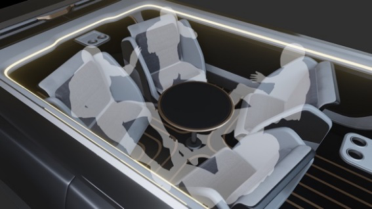
Design Output The final design, through multi-terminal interconnection, shared traffic, multi-mode Settings and other ways, enables passengers to do various acti- vities freely in the process of travel, making the car truly become the third living space of passengers. Different people share the same space in the car, and when passengers want to have their own space, the space is divided into four equal parts. When cooperation is needed, everyone’s space can commu- nicate with each other and form a large intercommunication space. Based on the support of HUD technology, the car can set a variety of modes and scenes,
Figure 7: Demonstration of rest mode. (Adapted from the author, 2021).
mainly including: work mode, conference mode, entertainment mode and do not disturb mode.
Enter the meeting (cooperation) mode, chair change mode, hidden desktop lift, in the working mode, you can schedule, online meeting, document management three work. With the online meeting function, it can sup- port multi-person online touch operation of working documents, which provides the possibility for workshops to be conducted online in cars. Screen interconnection, convenient for passengers to operate, improve work efficiency.
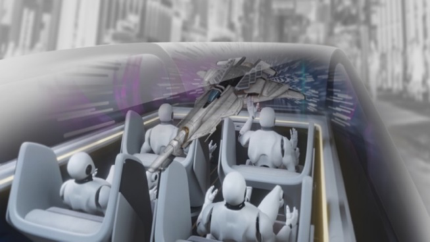
Enter the entertainment (immersion) mode, the seats move in real time, and the holographic projection makes the passengers more immersed. In the entertainment mode, the HUD projection screen and the control screen are linked, so that music, movies, AR games and other entertainment activities can be carried out. Hud is mainly used as a display, and the control screen is mainly used as a controller.
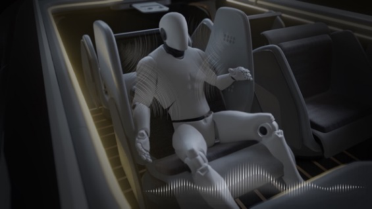
Automatically enter nap (do not disturb) mode seat change mode, and enable active noise reduction. In the rest mode, it will set soft lighting and raise the partition between the seats with one click, and provide sound and message Settings in the rest scene on the screen, with personalized Settings for the user.
CONCLUSION
Autonomous driving vehicles have become the inevitable trend of the future development of the automobile industry. Future automotive interior design must keep pace with The Times. The interior design of autonomous driving vehicles based on emotional research reflects users’ life quality and personal taste from the level of instinct, behavior and reflection, and improves users’ sensory experience during use, which is reflected in each stage of use. The user-centered design requirements should be fully considered in the design process, and personalized customization should be provided to carry out human-computer interaction design in a convincing way (Chen Yangwei, Yu Shulan,2018). Finally, the feedback results can be used for upgrading, esta- blishing the corporate brand image, and providing core competitiveness for the layout of the autonomous vehicle market.
User Experience of Spatial Immersive Interactive Systems in Autonomous Vehicles 697
REFERENCES
Cao Juntao, SHA Qiang, (2013). Talk about the emotion design of small car interior.
Art & design (theory), 03, pp. 126–128. Chen Yangwei, Yu Shulan (2018). Research on Automotive Interior Design Based on User Perception. Technology and Innovation, 06, pp. 49–51. Deng Chunhong, (2017). Research on Emotional Design of Electric Vehicle Interior
[D]. Southeast University. NanJing: Southeast University. Huang Jing (2014). Research on Emotional Design of Electric Vehicle Based on Consumer Psychology. Design, 07, pp. 25–26. Liu Lu (2015). Interior Design of Electric Vehicle under Future Lifestyle [D]. Beijing:
Beijing Institute of Technology. Li Yan, Wang Xin, Pang Yanshuang (2019). Development and Design Trend Analysis of Electric Vehicle. Industrial Design, 02, pp. 139–140. Pang Lanqin (2018). About “people-oriented” car interior design. Automotive
Practical Technology, 20, pp. 179–181. Yuan Dan (2018). Analysis of Automobile Interior Color Design. Science and Technology Innovation and Application, 03, pp. 92–94. Yu Guangxu (2011). Research and Exploration on The Future Development of
Automobile Interior Based on “People-oriented” [D]. Jilin: Jilin University.
LISTED IN THE AHFE DIGITAL BOOKSTORE CATALOGUE
Explore the complete digital volume
Ergonomics In Design
Read this individual research paper free through the original publisher, or explore the full digital proceedings book.
ISBN 978-1-958651-23-0
Explore this ISBN in the AHFE Bookstore ↗Listed in the July 2026 bookstore catalogue; search by ISBN to confirm current availability · Digital book purchase optional