Lee Skrypchuk, Karl Proctor, Daniel Clifton (2022). How does age impact in-vehicle touchscreen performance?. In: Human Factors in Transportation. AHFE Open Access, vol. 60, pp. 441–449. https://doi.org/10.54941/ahfe1002476
Touchscreens are becoming commonplace in the modern-day vehicle, meaning they need to be accessible to all users, young or old. An experiment was conducted to understand the impact of age-related decline on touchscreen task performance when driving where users were asked to complete a simple touchscreen task in both a stationary (static) and moving (dynamic) condition. As expected, a significant decrease in task performance was found when comparing the static condition to a dynamic one. However, when analysing these two conditions by age, only the dynamic condition produced a significant decrease. A positive moderate correlation was also found in both conditions. This result has implications for the design of in-vehicle touchscreen systems to be inclusive of users of different ages and provides insight about the impact of when tasks are carried out in the vehicle.
Touchscreens have become one of the main non-driving input devices in the modern-day automobile. As of 2020, it was estimated that 98% of new vehicles in the USA contained a digital display device, of which 97% had touch screen functionality (Barry, 2020). This shift has been driven by several factors, not least the ubiquity of touchscreens on consumer devices resul- ting in a rapid integration of touchscreen devices into In-Vehicle Information Systems (IVIS). The first IVIS touchscreens were seen in the late 1990’s but have only recently become dominant in an automotive setting. One of the advantages of touchscreen is the naturalness of interaction (Lin, 1993). By natural we mean that the system is operated by a simple pointing gesture using direct hand eye co-ordination. Touchscreens place the touch input ele- ment directly adjacent to the visual output, hereby eliminating the distance between input and output elements (Hutchins et al., 1985). Other advantages include workspace efficiencies, device packaging, durability, and adaptability (Shneiderman, 1991).
From a usability perspective, subconscious preference for in-car touch screens may exist. In a study looking at different input technology, many operators chose to use touchscreen for several tasks, when alternative input devices offering equivalent functionality were available (i.e., rotary controller, touchpad and steering wheel controls) (Large et al., 2019).
However, possibly the biggest advantage is the ease of learning regardless of age. One example demonstrated that even young children can find touchscre- ens easy to learn when compared with other devices (Battenberg and Merbler, 1989). This expedient learnability can be useful in a vehicle to mitigate the difficulty associated with multitasking, and the impact of low frequency of use.
There are, however, several challenges relating to IVIS touchscreen use. One of these is a lack of physical feedback. There have been attempts at inte- grating haptic feedback, which can lead to improved performance (Pitts et al., 2012), but comes at a financial cost to the vehicle manufacturer. There is also the impact of the driving environment. The motion created by the veh- icle, influenced by the road surface and the nature of the pointing gesture, means that the success rate can be compromised due to increased perturba- tion (Ahmad et al., 2015). Whilst this can be mitigated by design (Labio et al., 2006), or technology advancement (Ahmad et al., 2014), there will always be an influence due to vehicle motion because of the use of a pointing gesture. Other potential disadvantages include finger occlusion of the visual target, the potential for arm and neck fatigue for prolonged unsupported intera- ctions, and reduced sensing reliability with gloves or other hand coverings (Hinckley, 2020).
The Impact of Age on Task Performance Age is known to impact human performance in many ways. The key characte- ristics of aging can be broken down into four key areas (Caprani et al., 2012); Perceptual (vision, hearing) (Young et al., 2016; Ziefle and Bay, 2005), Psych- omotor (impaired movement) (Chaparro et al., 1999; Houx and Jolles, 1993), Cognitive (information processing and divided attention) (Craik, F. I. M. & Salthouse, 2008; Salthouse et al., 1984), and Physical (strength and dexterity) (Adamo et al., 2007; Skinner et al., 1984). Each of these have the potential to negatively impact task performance in a vehicle, both with the touchscreen itself and also the driving task (Skrypchuk et al., 2018). One of the main factors is cognitive impairment (Ponds et al., 1988). Driving whilst intera- cting with a touchscreen is a task switching situation where mental workload can be high. It is known that under divided attention performance suffers due to age-related cognitive decline, therefore, both tasks are likely to suffer (Pak et al., 2002). However, this is not always found to be the case (Som- berg and Salthouse, 1982). Evidence suggests that there are some positives for older users when using touchscreen technology (Umemuro, 2004). In a study focused on understanding elderly users’ resistance towards technology, the advantage of reconfigurability meant that many preferred touchscreens. Whilst this may not impact task performance, it will impact older users’ acceptance of the technology. The potential impact of age on touchscreen performance is therefore evident, but by how much, and what relationship exists between age and performance? Vehicle manufacturers are obliged to develop systems that are inclusive (Clarkson and Coleman, 2015). Additio- nally, as the average age of the population increases more older drivers will be exposed to such systems. Understanding the relationship of performance
How Does Age Impact In-Vehicle Touchscreen Performance? 443
Table 1. Key research questions and associated hypothesis.
Table available in the original PDF paper.
Research Question Hypothesis
1. Does task performance differ between Static and Dynamic driving conditions?
A decrease in task performance in the Dynamic condition (H1) 2. Is there a difference because of age in these driving conditions?
A decrease in task performance for the Older age groups in both dri- ving conditions (H2). 3. Is there correlation between task performa- nce and age, for each condition?
A positive correlation in both the Static and Dynamic conditions (H3).
with a touchscreen and how it is impacted by age is as such an important characteristic associated with the design of IVIS.
Comparing the performance of older and younger users is commonplace in research (Findlater et al., 2013; Motti et al., 2013; Sonderegger et al., 2016; Steinert et al., 2015). However, it isn’t always the case that perfor- mance declines (Roberts et al., 2011), for example voice interactions have shown to produce very little detriment as a function of age. There have also been several experiments looking at the impact of age on driving performance (Dukic et al., 2006; Pampel et al., 2019; Ponds et al., 1988; Skrypchuk et al., 2018); (Ponds et al., 1988) found that elderly participants were less efficient at dividing their attention. (Dukic et al., 2006) found that driving perfor- mance and glance behaviour suffered for older drivers, this was concurred by (Skrypchuk et al., 2018) who also found degradation in non-driving task performance. However, none of the prior research describes the magnitude of the change in task performance as a function of age in an automotive setting.
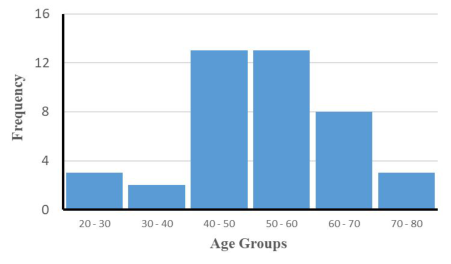
METHODOLOGY AND EXPERIMENTAL DESIGN This paper describes an experiment carried out on a vehicle proving ground to understand the impact of age on touchscreen usability within a moving vehicle. Three questions were proposed and can be seen in Table 1. Before starting Ethical and GDPR guidelines were considered and allowed for the experimental setup to be refined accordingly. 34 participants were recrui- ted to a specific age profile aligning to that of the premium vehicle market segment (see Figure 1). All participants consented for participation and were compensated for their time.
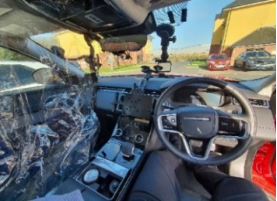
Experimental Design and Setup Two independent variables were present in this experiment. The first was Driving Condition, and had two levels (Static, Dynamic). For the Static con- dition the test vehicle was stationary. For the Dynamic condition the vehicle was driven under controlled conditions on a test track. In both conditions the user was asked to carry out tasks on a touchscreen. The second independent variable was age, separated into two equal groups of participants (Under 55, Over 55). The test was carried out in a production specification vehicle, fitted with a 12.9” iPad (Apple, USA), mounted in the position of an automotive
Figure 1: The age profile of participants in the experiment.Figure 2: The experimental vehicle setup and surrogate reference task.
touchscreen device. Button press data was collected such that response times could be recorded.
The two tasks used in the experiment were (1) the driving task, and (2) a touchscreen task. For the driving task (only active during the Dynamic con- dition) participants were asked to maintain a speed of 50mph, whilst staying in their current lane. Tasks were conducted on a mile long straight section. For the touchscreen, an abstract reference task was used to avoid any bias associated with the task itself. The visual-motor Surrogate Reference Task (SuRT) (BSI, 2012; Wynn and Richardson, 2008), set at a moderate difficulty level, was selected to provide a consistent, error-free level of performance that could be easily learnt, and where the performance of the user would be enti- rely down to their physical and cognitive characteristics. The SuRT task (as shown in Figure 2, right) required the user to find and touch a target circle (larger) amongst other distractor circles (smaller). The task is user paced and requires visual load to locate the target, cognitive load to distinguish the tar- get amongst distractors, and dexterity to operate. The hit area for each target was designed to be larger than the target to avoid any false pushes.
After the user had pressed the target, the screen reconfigured to a different pseudo random configuration. There were 20 targets in total and the task was balanced so that each quarter of the screen received an equal number of targets (5 in each quarter). The only dependent variable reported in this paper is the SuRT touch performance data, taken as the mean response time taken to select each of the 20 targets.
How Does Age Impact In-Vehicle Touchscreen Performance? 445
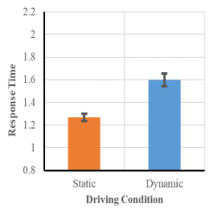
Figure 3: Response time (in seconds) for each driving condition, under 55 and over 55 age groups for both the static (centre) and dynamic driving conditions (right).
RESULTS AND ANALYSIS All data was processed in excel and checked for the assumptions of each test used. The statistical analysis carried out using Minitab v19. The specific analysis used is reported in each sub section. There were three parts to the analysis of the SuRT performance data. Firstly, the two driving conditions were compared to see whether a performance difference existed (Static and Dynamic). Following this the sample was split into Under 55 and Over 55 groups for each driving condition to see if differences were present. Finally, all data was tested using a Pearson’s correlation to see if any relationship existed between age and task performance.
Was a Difference Observed Between the Static and Dynamic Driving Conditions?
Figure 3 shows the mean response time for the two driving conditions. A two sample T-test was conducted to compare the response time performance. There was a significant increase in response time for the Dynamic condi- tions (M = 1.6, SD = 0.382) when compared with the Static conditions (M = 1.267, SD = 0.182; t (5.23), p<0.000).
Was a Difference Observed Between the Under 55 and Over 55 Groups?
Figure 3 shows the mean response time for the Under 55 and Over 55 groups by driving condition. A two sample T-test was conducted to compare the response time performance in both the Under 55 and Over 55 groups for the Static and Dynamic conditions. In the Static condition, there was no significant difference in response time for the Over 55 group (M = 1.313, SD = 0.195) than for the Under 55 group (M = 1.223, SD = 0.163; t (1.43), p = 0.164). For the Dynamic condition, there was a significant increase in response time for the Over 55 group (M = 1.937, SD = 0.485) than for the Under 55 group (M = 1.470, SD = 0.268; t (3.23), p = 0.006).
Was a Correlation Observed Between Task Performance and Age?
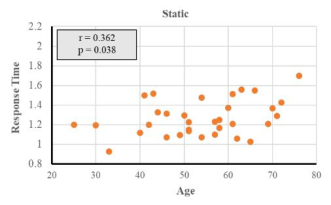
A Pearson correlation was computed to assess the relationship between response time and age. Figure 4 shows response time vs. age for both the Static and Dynamic conditions. For the Static condition, a moderate positive
Figure 4: Plots of response time against age for the static and dynamic conditions.
correlation between the two variables was found (r(33) = .362, p = 0.038), while for the Dynamic condition, a moderate positive correlation was also observed (r(48) = .393, p = 0.006).
DISCUSSION AND CONCLUSION The results show that, as expected, there was a decrease in performance due to test condition (Static vs Dynamic) confirming H1. This suggests that the characteristics of the Dynamic condition (i.e., the concurrent tasks and the perturbation generated by the environment) negatively impacted task per- formance. The ability of the user to perform the SuRT task sufficiently is impaired at a cost of the time taken to respond (increase by approximately 0.333 seconds). As each response was a single operation, this suggests that the time taken to look away from the road, locate the correct target, and operate the control is increased when driving by approximately 26%. This provides an understanding of the impact of carrying out a task while a vehicle is in motion, as opposed to when stationary, regardless of age. Unsurprisin- gly, the ability to focus entirely on the visual SuRT, and the lack of driving demand when stationary provides a better situation in which to complete visual manual tasks.
For the Under 55 and Over 55 groups, differences were found in the Dynamic condition, but not in the Static condition. This suggests that the operational conditions and the nature of the task, did not differ as a function of age when the vehicle was stationary (Static). However, the movement of the vehicle, and the added demand of the SuRT accentuated the impact of age, resulting in slower response time. Therefore, H2 can be confirmed for the Dynamic condition, but must be rejected for the Static condition. When we look closer, the differences between the conditions (discussed earlier) appear to have been heavily influenced by the Over 55 age group where the differe- nce between Static and Dynamic was 0.467 seconds, or 32% (Static condition increased by 0.09 seconds or 7%). This result suggests that even for a simple task, the differences caused by physiological and psychological decline can significantly impact how well users can carry out tasks on in-vehicle touch- screens whilst driving. This reinforces the benefits of completing a task when stationary for users of all ages.
Finally, a moderate positive correlation was found for both the Static and Dynamic conditions, suggesting that a relationship exists between response
How Does Age Impact In-Vehicle Touchscreen Performance? 447
time and age. This can be used to quantify the impact of age on touchscreen performance in the vehicle. Both show a positive correlation of similar magni- tude, suggesting that the increase is valid between the two test conditions used. This finding is particularly useful when looking at how a particular design might impact certain users. If a test can be carried out but can only be done with a limited sample or under laboratory conditions (because of an ina- bility to test dynamically due to lack of facilities, time, or a global pandemic) a relationship can be drawn to understand the impact on specific users.
There were several limitations with this study. Firstly, the IVIS task used was a reference task, and not one traditionally seen in a real application, and therefore could have introduced a source of error. Relatedly, the SuRT targets used (circles) were consistent, known, familiar, and always visible. If the target was not salient, or on occasion missing (Gilchrist et al., 2001) then the result may be different. Finally, the experimental setup and vehicle was new to the participants invited, and hence the novelty of the environment may have impacted the results.
To conclude, these findings have several implications for touchscreen IVIS design in future passenger vehicles. Firstly, the impact of performance can be expected to deteriorate the older the participant is, particularly when the vehicle is in motion, and hence this data can be used to characterize perfor- mance across the spectrum for different age ranges. This can be particularly useful if the recruitment for such studies limits participants ages to specific groups. Also, it opens questions about the right time at which to operate a touchscreen. Systems that promote use when the vehicle is stationary would clearly suffer less, as suggested by the findings in this paper. This highlights the impact of touchscreen use for users of a modern-day motor vehicle and the findings should be considered as part of the development process of future IVIS.
ACKNOWLEDGMENT
The authors would like to acknowledge the Jaguar Land Rover teams in the UK and in Portland, Oregon, USA, for their technical support. This work was part funded by a UKRI Future Leaders Fellowship [grant number MR/T021160/1].
REFERENCES
Adamo, D.E., Martin, B.J. and Brown, S.H. (2007), “Age-Related Differences in Upper Limb Proprioceptive Acuity”, Perceptual and Motor Skills, Vol. 104 No. 3 II, pp. 1297–1309. Ahmad, B.I., Langdon, P.M., Godsill, S.J., Hardy, R., Donkor, R. and Skrypchuk, L.
(2015), “Touchscreen Usability and Input Performance in Vehicles under Different Road Conditions : An Evaluative Study”. Ahmad, B.I., Murphy, J.K., Langdon, P.M. and Godsill, S.J. (2014), “Intent Inference for Hand Pointing Gesture Based Interactions in Vehicles”, IEEE Transaction on Cybernetics, Vol. XX No. Xx, pp. 1–12.
Barry, K. (2020), “Why Are Automakers Replacing Buttons With Touchscreens?”, Consumer Reports, available at: https://www.consumerreports.org/infotainment -systems/screen-stars-in-car-infotainment-systems/. Battenberg, J.K. and Merbler, J.B. (1989), “Touch Screen versus Key- board: A Comparison of Task Performance of Young Children”, Journal of Special Education Technology, Vol. 10 No. 1, available at: https://doi.org/10.1177/016264348901000103. BSI. (2012), “PD ISO / TS 14198 : 2012 BSI Standards Publication Road vehicles
— Ergonomic aspects of transport information and control systems — Calibra- tion tasks for methods which assess driver demand due to the use of in-vehicle systems”. Caprani, N., E., N. and Gurri, C. (2012), “Touch Screens for the Older User”, Assistive Technologies, No. 1, available at: https://doi.org/10.5772/38302. Chaparro, A., Bohan, M., Fernandez, J., Choi, S.D. and Kattel, B. (1999), “The
impact of age on computer input device use”:, International Journal of Industrial Ergonomics, Vol. 24 No. 5, pp. 503–513. Clarkson, P.J. and Coleman, R. (2015), “History of inclusive design in the UK”, Applied Ergonomics, Vol. 46 No. PB, available at: https://doi.org/10.1016/j.apergo.2013.03.002. Craik, F. I. M. & Salthouse, T.A. (Eds. . (2008), “The handbook of aging and cognition (3rd edition)”, Psychology Press, Vol. 23 No. 03, available at: https://doi.org/10.1002/acp.1505. Dukic, T., Hanson, L. and Falkmer, T. (2006), “Effect of drivers’ age and push button
locations on visual time off road, steering wheel deviation and safety perception”, Ergonomics, Vol. 49 No. 1, pp. 78–92. Findlater, L., Froehlich, J.E., Fattal, K., Wobbrock, J.O. and Dastyar, T. (2013), “Age-related differences in performance with touchscreens compared to tradi- tional mouse input”, Conference on Human Factors in Computing Systems - Proceedings, pp. 343–346. Gilchrist, I.D., North, A. and Hood, B. (2001), “Is Visual Search Really like
Foraging?”, Perception, Vol. 30 No. 12, pp. 1459–1464. Hinckley, K. (2020), “Input Technologies and Techniques Ken Hinckley”, The Human-Computer Interaction Handbook, CRC Press, pp. 183–200. Houx, P.J. and Jolles, J. (1993), “Age-related decline of psychomotor speed: effects
of age, brain health, sex, and education.”, Perceptual and Motor Skills, Vol. 76 No. 1, available at: https://doi.org/10.2466/pms.1993.76.1.195. Labio, R.S., Rowan, C.P. and Shattuck, L.G. (2006), “Command and control on the move: Assessing the impact of input device, button size, and road condition”, Proceedings of the Human Factors and Ergonomics Society, pp. 694–698. Large, D.R., Burnett, G., Crundall, E., Lawson, G., Skrypchuk, L. and Mouzakitis, A. (2019), “Evaluating secondary input devices to support an automotive touchscreen HMI: A cross-cultural simulator study condu- cted in the UK and China”, Applied Ergonomics, Vol. 78, available at: https://doi.org/10.1016/j.apergo.2019.03.005. Lin, C. (1993), “User preference and performance with three different input devices:
keyboard, mouse and touch screen.”, Educational Technology1, Vol. 33 No. 7, pp. 56–59. Motti, L.G., Vigouroux, N. and Gorce, P. (2013), “Interaction techniques for older adults using touchscreen devices: A literature review”, IHM 2013 - Actes de La 25ieme Conference Francophone Sur l’Interaction Homme-Machine, pp. 125–134.
How Does Age Impact In-Vehicle Touchscreen Performance? 449
Pak, R., McLaughlin, A.C., Lin, C.-C., Rogers, W.A. and Fisk, A.D. (2002), “An Age- Related Comparison of a Touchscreen and a Novel Input Device”, Proceedings of the Human Factors and Ergonomics Society Annual Meeting, Vol. 46 No. 2, pp. 189–192. Pampel, S.M., Lamb, K., Burnett, G., Skrypchuk, L., Hare, C. and Mouzakitis, A.
(2019), “An investigation of the effects of driver age when using novel navigation systems in a head-up display”, Presence: Teleoperators and Virtual Environments, Vol. 27 No. 1, available at: https://doi.org/10.1162/PRES_a_00317. Pitts, M.J., Burnett, G.E., Skrypchuk, L., Wellings, T., Attridge, A. and Williams, M.A. (2012), “Visual–haptic feedback interaction in automotive touchscreens”, Displays, Elsevier BV, Vol. 33 No. 1, pp. 7–16. Ponds, R.W.H.M., Brouwer, W.H. and Van Wolffelaar, P.C. (1988), “Age Differe-
nces in Divided Attention in a Simulated Driving Task”, Journal of Gerontology, Vol. 43 No. 6, pp. P151–P156. Roberts, S.C., Mehler, B., Orszulak, J., Reimer, B., Coughlin, J.F. and Glass, J. (2011), “An Evaluation of Age , Gender , and Technology Experience in User Performance and Impressions of a Multimodal Human-Machine Interface”. Salthouse, T.A., Rogan, J.D. and Prill, K.A. (1984), “Division of attention: Age dif-
ferences on a visually presented memory task”, Memory & Cognition, Vol. 12 No. 6, pp. 613–620. Shneiderman, B. (1991), “Touch screens now offer compelling uses”, IEEE Software, Vol. 8 No. 2, pp. 93–94. Skinner, H.B., Barrack, R.L. and Cook, S.D. (1984), “Age related decline in propri-
oception”, Clinical Orthopaedics and Related Research, Vol. 184, available at: https://doi.org/10.1097/00003086-198404000-00035. Skrypchuk, L., Mouzakitis, A., Langdon, P.M. and Clarkson, P.J. (2018), “The effect of age and gender on task performance in the automobile”, Breaking Down Barriers, Springer International Publishing, Cham, pp. 17–27. Somberg, B.L. and Salthouse, T.A. (1982), “Divided attention abilities in young
and old adults”, Journal of Experimental Psychology: Human Perception and Performance, Vol. 8 No. 5, pp. 651–663. Sonderegger, A., Schmutz, S. and Sauer, J. (2016), “The influence of age in usability testing”, Applied Ergonomics, Vol. 52, pp. 291–300. Steinert, A., Haesner, M., O‘Sullivan, J.L. and Steinhagen-Thiessen, E. (2015), “Difference in operation of Mouse and Touchscreen in older adults”, International Journal of Serious Games, Vol. 2 No. 4, available at: https://doi.org/10.17083/ijsg.v2i4.70. Umemuro, H. (2004), “Lowering elderly Japanese users? resistance towards com-
puters by using touchscreen technology”, Universal Access in the Information Society, Vol. 3 No. 3–4, pp. 276–288. Wynn, T. and Richardson, J.H. (2008), “Comparison of subjective workload ratings and performance measures of a reference IVIS task”, European Conference on Human Centred Design for Intelligent Transport Systems, pp. 79–88. Young, K.L., Koppel, S. and Charlton, J.L. (2016), “Toward best practice in Human
Machine Interface design for older drivers: A review of current design guidelines”, Accident Analysis & Prevention, Elsevier Ltd, Vol. 106, pp. 460–467. Ziefle, M. and Bay, S. (2005), “How older adults meet complexity: Aging effects on the usability of different mobile phones”, Behaviour and Information Technology, Vol. 24 No. 5, available at: https://doi.org/10.1080/0144929042000320009.
LISTED IN THE AHFE DIGITAL BOOKSTORE CATALOGUE
Explore the complete digital volume
Human Factors in Transportation
Read this individual research paper free through the original publisher, or explore the full digital proceedings book.
ISBN 978-1-958651-36-0
Explore this ISBN in the AHFE Bookstore ↗Listed in the July 2026 bookstore catalogue; search by ISBN to confirm current availability · Digital book purchase optional