Luis Serpa-Andrade, Roberto Garcia'Velez (2022). Intelligent interactive accompaniment ecosystem using parameterizable tools to raise awareness among people who interact in the field of inclusion. In: Human Interaction & Emerging Technologies (IHIET 2022): Artificial Intelligence & Future Applications. AHFE Open Access, vol. 68, pp. 468–474. https://doi.org/10.54941/ahfe1002766
1 Research Group on Artificial Intelligence and Assistive Technologies – GIIATa Universidad Politécnica Salesiana, Cuenca, Ecuador; Research Group on Applied Embedded Hardware – GIHEA, Universidad Politécnica Salesiana, Cuenca, Ecuador ↗
2 Research Group on Artificial Intelligence and Assistive Technologies – GIIATa, Universidad Politécnica Salesiana, Cuenca, Ecuador ↗
The proposed ecosystem will make it possible to sensitize people who are involved in the field of inclusion, it is intended to generate parameterizable tools to measure behavioral variables in the environment of visual, motor and hearing disability and be able to present the same procedure to generate scenarios awareness. We have considered that from the introspection of abilities and skills presented in specific case studies of hearing, visual and motor disability we can study the behavior of the group of people involved with the child and through the proposed ecosystem obtain guidelines that allow to improve and build a path to the meaningful realization of the children in the case study; The sensitization environment will also be presented in the institutions that work with children with these disabilities in order to generate procedures around the capacities present in the case studies.
UNESCO in its Salamanca declaration mentions “promoting and facilitating the participation of parents, with units and organizations of persons with disabilities in the planning and decision-making process to serve students with special educational needs”. This allows us to review the processes set out by the ministries, for example, the “Working Guide Curriculum Adaptations for Special and Inclusive Education”, used in Ecuador, which outlines a map that allows us to identify the starting point from which to reach end-users to raise awareness on the issue of inclusion and disability.
In the awareness of people with disabilities, we can rely on the MISP model (Inclusive Leadership: raising awareness to include), this is a model of lear- ning and awareness to help the inclusion of people with disabilities. The same model has fundamental principles such as equity, people’s potential, training and talent development.
Intelligent Interactive Accompaniment Ecosystem Using Parameterizable Tools 469
By having a leadership approach that appreciates the diversity of people with disabilities, it seeks to eliminate barriers by building an inclusive culture and generating processes for the development of collective and individual skills for inclusion with people with disabilities (Martínez Sánchez et al., 2020). Ecuadorian society is not aware of the inclusion of people with disabilities and how to treat them in general, so it is very important to raise awareness to provide them with help at an early age. The main cause of discrimination and lack of support towards them is the lack of education and information that exists about the different disabilities. Over the years, role models like
Disregard: People with disabilities were not considered skilled actors and were not taken into account.
Rehabilitator: The reason for the anomalies in this group of people with disabilities begins to be investigated and they are taken to rehabilitation for these people.
Social: This is considered an individual who is capable of contributing to society, integration groups are encouraged where respect, equality, and inclusion are encouraged (Gualotuña Vásquez, 2019).
Sensitization towards people with disabilities, about some people in this case students who, when making direct contact, see that there is a change in their image but in daily life, the intervention sometimes helps people to change them. The unlimited time above all the resources that are used for people with disabilities is conditions and injustices which realize that there is much left and how much we can help. Using the APS methodology, which consists of students or teachers identifying the needs that can be improved in their environment, whether in the learning of content, values, and skills. Helping to enrich initial training by helping them integrate or bring them closer to social reality and thus the possibility of raising awareness of people with disabilities, promoting social inclusion (Jiménez Monteagudo, 2020).
The use of an awareness program required activities such as:
Talks: topics about respect were addressed, including the importance of the inclusive education approach.
Conversations: students express emotions, etc. The point of view towards inclusion and respect for differences
Training: exclusively for teachers, administrators, and parents where the inclusive education approach is explained.
Training Workshops: Aimed at parents and teachers that talk about respect in the classroom, recognizing inclusive practices, promoting respect for diversity
Educational inclusion fair: A psycho-educational day was held on respect for differences and the promotion of inclusion, in which topics such as infor- mation on school difficulties that students may present, treating different characteristics with respect, and playful learning games (Dávila & Rodelo, 2020). Raising awareness about the exclusion of children with disabilities is a daily struggle, for this, there are the standards stipulated by the world declaration of human rights, it is shown that teachers or instructors play a very important role in the exclusion of people or children with disabilities
470 Serpa-Andrade and Garcia-Velez
since they are in charge of training the children socially, psychologically and emotionally.
So being this in education as a barrier that is not fully inclusive for the group of people with disabilities for this it presents a challenge when the infrastructure does not comply with what is due for inclusion and it is also concluded that the other people in the case of children are not cruel, but stay away or do not relate because they do not know how to treat.
RELATED WORKS A review of the literature has been generated that covers the areas of inclusive processes, the tools used for this process, the types of systems that encompass this information, and what goal they contain to finally present some works related to the possible solutions that have been found. Until now.
Inclusive Processes It is estimated that “more than a billion people live worldwide with some form of disability; of them, almost 200 million experience considerable diffi- culties in their operation” (World-Health-Organization, 2022). People with disabilities have poor academic results, and less participation in the labor market, and the social sphere, due to the obstacles they face every day.
Even though the Incheon declaration raises the need to “Guarantee inclu- sive and equitable quality education and promote lifelong learning oppor- tunities for all” (p. 7), inspired by a humanistic conception that respects human rights, the dignity, social justice, inclusion; reality paints a different picture for us, excluded children with disabilities, without access to educa- tion, due to multiple factors, among which are mentioned: non-compliance with educational policies of inclusion, inaccessibility to the physical spaces of educational centers, lack of accessibility to educational content and one of the most worrying aspects is the lack of knowledge of teachers about the management of inclusive processes. In this regard, (Proaño Salazar, 2018) in their research “The reality of inclusion in Basic General Education centers in Ecuador 2015-2016” in their findings found: That teachers have a superficial knowledge of various concepts involved in inclusion (educational needs, curricular adaptations, inclusive regulations, evaluation systems) possibly the result of imprecise and basic information. In relation to the knowledge of the methodologies to address the teaching- learning process in children with disabilities, they found alarming results that reflect a limited knowledge.
Following the order of ideas, the Convention on the Rights of Persons with Disabilities and its Optional Protocol, mention the need to “Promote the trai- ning of professionals and personnel who work with persons with disabilities, in order to provide better assistance and training” (p.7). Attention to diver- sity in inclusive classrooms is closely linked to teacher training, with their openness and sensitivity towards differences. “The teacher is the key piece, the driving force, for this he needs an attitude of tolerance, solidarity, respect for differences and above all he needs the knowledge to carry out inclusive processes” (Proaño Salazar, 2018).
Intelligent Interactive Accompaniment Ecosystem Using Parameterizable Tools 471
Adequate teacher training will guarantee students with disabilities com- prehensive quality care and warmth in equal opportunities, eliminating all forms of exclusion, marginalization, and inequality. Infante (2010) states that, in order to promote the development of inclusive education, the training of education professionals is essential.
This research project seeks to contribute to the training of teachers invo- lved in attention to diversity, in order to improve their inclusive practices and cultures. As (Echeita et al., 2014) argue; “All educational research that does not contribute to the development of an inclusive education would become, by action or omission, exclusive educational research and, with it, a partial accomplice of the processes of failure, marginalization, and school segrega- tion, in short, of discrimination, which Millions of boys, girls, adolescents and young people around the world suffer daily”.
Layers of Knowledge and Intelligence in Devices A project focused directly on the subject, carried out by (Criollo et al., 2020), states that a tool such as the electronic glove, it obtains several characteri- stics of people with disabilities, that are stored in a database in the cloud in MySQL, in order to perform monitoring, considering that the implemen- tation of a GSM module would be feasible to be able to manage in a data network.
Additionally, (Gomez et al., 2020) presents an article in which the system effectively helps people with visual disabilities, being a mobile application where the data of places and routes, are stored in a MySQL database on a web server, then stored in SQLite providing connection independence, thus offering help for a better movement of people in certain places.
A tool to support children with cerebral palsy (CP) is presented by (Berrezueta-Guzmán et al., 2016) which allows these children to manipulate a tablet during the process of learning and play. Additionally, (Berrezueta- Guzman et al., 2017) evaluates the performance of these children in learning processes and provides a perspective of how they can be included there.
Another project carried out by (Vejarano et al., 2018) offers a system that informs the user with disabilities about the characteristics of the route, thus having a good interaction in real-time that occurs through a service layer in PHP that connects the BDD server with the mobile device.
As for local research, a thesis prepared to obtain the title of Computer and Computer Systems Engineer, carried out by (Cisneros Vaca & Oña Hidalgo, 2020) which mentions the use of the phpMyAdmin database in the cloud that works together with the application with XAMPP for its connection.
A research project prepared by (Sevilla Velastegui, 2021) aims to provide security for better communication with others, through a series of proto- cols to comply with the expectations of people with disabilities, in terms of information storage, SQLite is used, since it is a light database and in the cloud.
Finally, (López-Pérez et al., 2020) presents a system that supports the learning processes of children with ADHD,and (Dolón-Poza et al., 2020) pro- vides a study that estimates how would be the performance of children with
472 Serpa-Andrade and Garcia-Velez
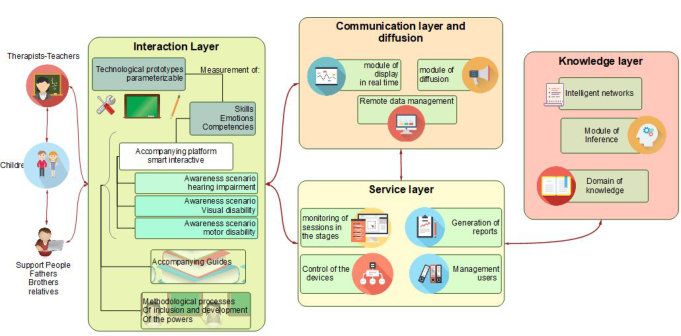
Figure 1: Layers of the awareness ecosystem.
ADHD with the frequent use of the mentioned system. The results show signi- ficant benefits for these children this is demonstrated by (Berrezueta-Guzman et al., 2021).
METHODOLOGY
To establish an intelligent ecosystem of interactive accompaniment using parameterizable tools for the awareness of people who interact in the field of inclusion. First, it is necessary to contextualize the inclusive processes pre- sent in the country and the existing technological aids for hearing, visual, and motor disabilities, thus generating methodological processes of inclusion of people with disabilities analyzed, being feasible that the problem of disability is accepted by the staff. of the area.
Based on the above, parameterizable technological tools will be generated to capture skills and competencies; and descriptive tools to capture the emo- tions of the case studies, thus achieving parameterization of skills, emotions, and competencies through interactive technological devices, translating them into prototypes, being feasible that parameterizable technological tools are capable of effectively measuring skills, emotions, and skills of people with disabilities.
We also establish appropriate awareness and psychoeducation scenarios for those who interact with people who have hearing, motor, and visual disa- bilities with interactive awareness to generate a temporary disability for those who work with people who have hearing, motor, and visual disabilities.
Finally, the support proposals analyzed in the study cases are elaborated in search of strengthening their competencies through their abilities, activities that are going to be submitted in daily areas of the children of the study case, being feasible that the support proposals improve skills of children with disabilities.
Intelligent Interactive Accompaniment Ecosystem Using Parameterizable Tools 473
CONCLUSION
An ecosystem that is based on layers for collaborative awareness and inclu- sion is given by the flow of information that is obtained using the tools and scenarios proposed. The interaction layer obtains methodological processes to potentiate the skills developed and measured with the accompanying tools of the cases, and the use of the parameterizable tools allows to obtain the necessary measurements for the feedback of the system, generating the guides of accompaniment; In the process and with the knowledge layer, intelligent network agents and inference modules are obtained from learning to the com- munication layers and the service layer, the information of the reports and the management of users allow it to be presented in real-time. the interaction and the results of sensitization.
As future works, it is intended to generate multisensory scenarios for data collection and their use in the feedback of the interaction layer, of course, it is necessary to update expert systems that configure the guides and improve the methodologies.
REFERENCES
Berrezueta-Guzmán, J., Coronel-Maldonado, F., Serpa-Andrade, L., & Robles-Bykbaev, V. (2016). A didactic transmitter to support the communi- cation and learning process of children with cerebral palsy. MATEC Web of Conferences, Berrezueta-Guzman, J., Pau, I., Martín-Ruiz, M.-L., & Máximo-Bocanegra, N.
(2021). Assessment of a robotic assistant for supporting homework activities of children with ADHD. IEEE Access, 9, 93450–93465. Berrezueta-Guzman, J., Robles-Bykbaev, V., & Serpa-Andrade, L. (2017). How is the quality of life of patients with cerebral palsy improved? Qualitative and quantita- tive evaluation of a communication and learning assistance system based on ICTs. International Conference on Applied Human Factors and Ergonomics, Cisneros Vaca, E. E., & Oña Hidalgo, K. L. (2020). Aplicación web informativa de
accesibilidad para personas con discapacidad motriz y sensorial en instituciones públicas en el Distrito Metropolitano de Quito Quito, 2020.]. Criollo, S., García, J. A., & Jaramillo-Alcázar, Á. (2020). Implementación de un guante como interfaz hombre computador para personas con discapacidad motriz. Revista Ibérica de Sistemas e Tecnologias de Informação(E33), 114–126. Dávila, D. P. D., & Rodelo, M. M. M. (2020). Educación inclusiva: programa
de sensibilización en una institución educativa de Sincelejo-Sucre. RHS: Revista Humanismo y Sociedad, 8(1), 6–21. Dolón-Poza, M., Berrezueta-Guzman, J., & Martín-Ruiz, M.-L. (2020). Creation of an intelligent system to support the therapy process in children with ADHD. Conference on Information and Communication Technologies of Ecuador, Echeita, G., Muñoz, Y., Sandoval Mena, M., & Simón Rueda, C. (2014). Refle-
xionando en voz alta sobre el sentido y algunos saberes proporcionados por la investigación en el ámbito de la educación inclusiva. Revista latinoamericana de educación inclusiva. Gomez, M., Rodríguez, V., Vejarano, R., & Montes, H. (2020). OGEO: Sistema de navegación interior para la orientación y movilidad de personas con discapacidad visual.
474 Serpa-Andrade and Garcia-Velez
Gualotuña Vásquez, I. N. (2019). Síndrome de Down: Inclusión Social y Sensibilización Quito]. Jiménez Monteagudo, L. (2020). Aps como instrumento de sensibilización hacia la
discapacidad en educación superior. López-Pérez, L., Berrezueta-Guzman, J., & Martín-Ruiz, M.-L. (2020). Development of a home accompaniment system providing homework assistance for children with ADHD. Conference on Information and Communication Technologies of Ecuador, Martínez Sánchez, A., Cárdenas Casillas, C., & Muñoz Ruiz, C. P. (2020). Liderazgo
incluyente: sensibilizar para incluir personas con discapacidad. Capítulo 1. MIPS: el modelo. Proaño Salazar, V. M. (2018). Los recursos didácticos para la inclusión educativa de los estudiantes con discalculia del tercer año de educación general básica Guayaquil: ULVR, 2018. Sevilla Velastegui, J. M. (2021). Desarrollo de una Aplicación Móvil utilizando los
servicios cognitivos para personas con discapacidad visual Pontificia Universidad Católica del Ecuador. Vejarano, R., Henriuez, A., & Montes, H. (2018). Sistema para la interacción activa con autobuses de rutas urbanas de Panamá para personas con discapacidad visual. I+ D Tecnológico, 14(2), 17–23. World-Health-Organization. (2022). Disabilities. Retrieved June 2022 from https://www.who.int/health-topics/disability
Read this individual research paper free through the original publisher, or explore the full digital proceedings book.
ISBN 978-1-958651-44-5
Explore this ISBN in the AHFE Bookstore ↗Listed in the July 2026 bookstore catalogue; search by ISBN to confirm current availability · Digital book purchase optional