Josue Franca, Erik Hollnagel (2023). Comparative analysis of Air France 447 (2009) and Costa Concordia (2012) using FRAM: how organizational culture influences cockpit/bridge decisions. In: Human Factors and Systems Interaction. AHFE Open Access, vol. 84, pp. 159–166. https://doi.org/10.54941/ahfe1003601
In the night of June 1st, 2009, the Airbus A330 of the Air France Flight AF 447, on the route between Rio de Janeiro (Brazil) and Paris (France), after a series of events, lost altitude and fell into the Atlantic Ocean, leaving no survivors. Few years after this event, in the coast of the Mediterranean Sea, on January 13th, 2012, a cruise vessel named Costa Concordia struck a rock formation on the sea floor, listing and capsizing the vessel, leaving 32 fatalities and dozens of wounded. Two accidents apart in time and space, in different domains - aviation and maritime - but which have more similarities than differences. In this study, a systematic analysis of these two accidents with the FRAM (Functional Resonance Analysis Method) is presented, based on the two official reports issued by the responsible authorities, as well as relevant scientific publications about these events. Applying a Human Factors approach, where work systems are analysed from worker’s perspective, understanding the interactions between organizational, technological, environmental, and individual elements, it was possible to comprehend and identify how the organizational decisions, taken in the executive offices, and company’s culture, resonate till the cockpit/bridge decisions. Particularly in these events, it was perceived that this resonance contributed to the accidents, evidencing the real complexity of the workplaces in the aeronautical and maritime industries, where actions, decisions and relationships reverberate (complexly) throughout the system. In this aspect, it was also noted that the levels of complexity of these two distinct domains, despite being structurally different, require the same adaptive and regenerative responses from work systems and, consequently, from workers, generating the organizational culture of work environments.
Since the first labour activities, introduced by the 1st Industrial Revolution in Europe, interactions between machines, people and systems have resulted in products necessary for Society. On the other hand, this same interaction also generated undesirable results, such as production losses, machine breakdo- wns and injuries to people. Over time, the technological evolution fuelled by Humanity’s needs increased qualitatively and quantitatively the constituent
elements of work environments, increasing the scale of the results of labour interactions, whether these are desirable, such as productivity, or these are undesirable, such as accidents. It is noticed, therefore, that the accident is an emergent property of the work system where it is inserted (Hale, Wilpert & Freitag, 1997), being formed from multifactorial interactions of the ele- ments from the productive chain of a workplace (Dörner, 1996). Thus, the more intense the interactions in complex workplaces, the greater the need to understand this complex sociotechnical system functioning (Reiman & Oede- wald, 2007), so that the analysis identifies the rooted constituent factors of an accident. Despite that, most analysis methodologies are based on the pre- mise that work systems have a linear functioning, providing a limited, if not equivocated, comprehension of the entire process (De Vries, 2017). There- fore, it is necessary to use tools and methodologies capable of understanding the complex sociotechnical functioning from the human perspective, iden- tifying, and analysing the factors and interactions responsible for a given event (França et al., 2020). In this sense, the FRAM (Functional Resonance Analysis Method) was applied to develop a comparative analysis of Air Fra- nce 447 (2009) and Costa Concordia (2012), enabling a wider and systemic perception of these accidents.
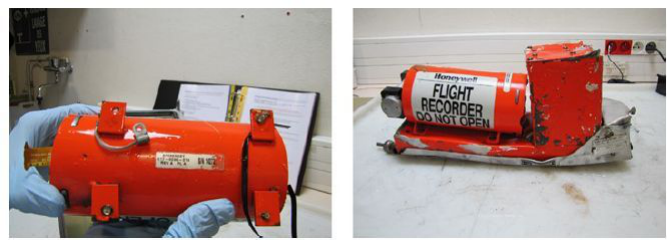
THE AIR FRANCE 447 ACCIDENT IN 2009 Leaving from Rio de Janeiro International Airport on the night of May 31st, 2009, the Airbus A330-200 of the Air France flight 447, bound for Paris, travelled across the Atlantic Ocean for four hours, until encountering a thun- derstorm on its route (Palmer, 2013). This climate presented unusual icing condition at 35,000 feet that caused sensors malfunction and the loss of air- speed indication, disconnecting the autopilot and autothrust (BEA, 2012). From that moment on, the crew performed a series of actions to maintain control of the aircraft, which had its two engines at full power, but even so, was losing altitude (Palmer, 2013). After three minutes and eighteen seconds, the Airbus A330-200 crashed and sank into the sea, causing the fatalities of all aboard (BEA, 2012). After several months of searching, the aircraft’s black-boxes were recovered, bringing crucial data for the investigation and an enhanced understanding of this accident. Figure 1 shows these devices.
Figure 1: The FDR (left) and the CVR (right) of the flight 447 (BEA, 2012).
Comparative Analysis of Air France 447 (2009) and Costa Concordia 161
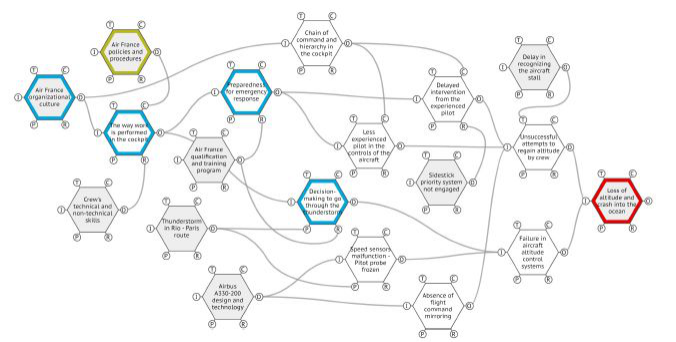
The Flight Data Recorder (FDR) is the device responsible for recording several important flight parameters from the aircraft system, while the Cock- pit Voice Recorder (CVR) is the one responsible for recording the audible sounds in the cockpit, including the conversation of the pilots (Porter, 2020). These devices, plus the knowledge and experience of the investigators, allo- wed the French Authorities to conduct and establish a final report on the accident, covering aspects related to the crew, the weather, and the techni- cal functioning of the Airbus A330-200 (BEA, 2012). Despite this report presenting a detailed and accurate technical analysis, no accident analysis methodology was used, lacking a systemic view of the elements and events analysed independently. And it is precisely in this systemic view that is percei- ved how the organizational culture is carried out in the cockpit interactions, allowing a broader understanding of this accident. Considering this, and based on the official report, books and scientific publications which analysed this accident, a FRAM modelling was developed, being presented in Figure 2.
The FRAM modelling and analysis of this accident was supported by one FRAM expert, two experienced pilots, one non-experienced pilot and a flight safety specialist.
Figure 2: The FRAM analysis of air france 447 accident in 2009. (The authors, 2023.)
THE COSTA CONCORDIA ACCIDENT IN 2012 In a route from Civitavecchia till Savona, both in Italy, the Costa Concordia, a Concordia-class cruise ship owned by Costa Cruises, on January 13, 2012, struck a rock formation on the sea floor near the Giglio Island (MIT, 2012). On the approach to Giglio Island, a deviation from the registered standard route, the ship was sailing very close to the shore, closer than those usually performed, causing this impact to happen, despite all the efforts taken on the bridge to avoid it (Howard & Stephenson, 2013). Of these efforts, the helm- sman steered the boat in the opposite direction ordered by the command, taking 13 seconds delay to correct this manoeuvre (Di Lieto, 2015). This impact provoked a severe damage in the ship’s port side hull, sinking and
162 França and Hollnagel
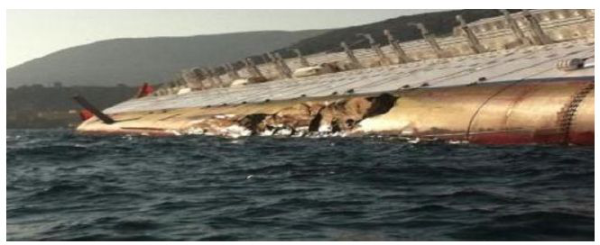
then listing to the starboard side (Howard & Stephenson, 2013). Even with the ship’s propulsion stopped by the bridge, the kinetic energy of the move- ment (216,000 Kj5), associated with the weight of the vessel, caused a high proportions damage with a 53 metres side tear, flooding the compartments almost instantly, leaving the actions of the onboard crew innocuous to pre- vent the flooding (MIT, 2012). Figure 3 show the extension of this damage in the hull.
After these happenings, a coordinated six-hour rescue allowed most of the passengers to be rescued from the ship and taken to the first-response medical teams onshore, with the most serious victims being taken to local hospitals (Di Lieto, 2015). Despite all these efforts, 27 passengers and five crew mem- bers passed away. The insurance company of Costa Concordia, responsible for its salvage, assessed the wreckage and determined the vessel to be a total loss. During these salvage operations, one more fatality of a crew member occurred, totalling the loss of 33 lives in this accident (Howard & Steph- enson, 2013). The official report of this investigation, done by the Marine Casualties Investigation Board of the Italian Ministry of Infrastructures and Transports, found some critical organizational elements, on the bridge, that has contributed for the chain of events. The technical analysis provided by this report did not use an analysis methodology, therefore, something that can systematically show the occurrence of these events, mainly in the bridge,
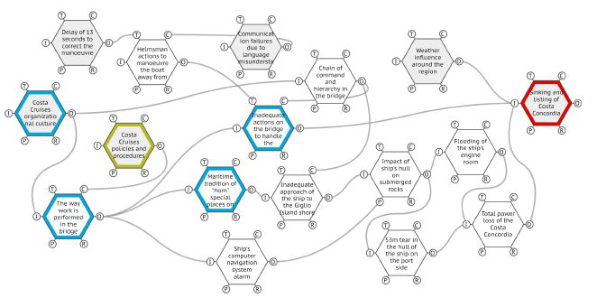
Figure 3: The damage in the Costa Concordia port side hull. (MIT, 2012, 2023.)Figure 4: The FRAM analysis of Costa Concordia accident in 2012. (The authors, 2023.)
Comparative Analysis of Air France 447 (2009) and Costa Concordia 163
is necessary. Considering this, and based on this official report from Italian authorities, books and scientific publications which analysed this accident, a FRAM modelling was developed, being presented in Figure 4.
The FRAM modelling and analysis of this accident was supported by three experienced captains, who also work as instructors in a Maritime Academy of a European University, lecturing for future captains and chief engineers.
COMPARATIVE ANALYSIS OF AIR FRANCE 447 (2009) AND COSTA CONCORDIA (2012) The analysis of these two accidents allowed us to observe how the com- plex combinations of different elements, interacting within a specific context, unfold in an accident of large proportions. It is not simply the absence of a barrier or protection step, but rather a unique result of the functioning dyna- mics of a working system (Thurner, Hanel, & Klimek, 2018), whether in the air or at sea. And despite this noticeable difference between the accidents, it is possible to verify some coincidences in the constituent elements of their chain of events, especially those related to organizational issues. Through a comparative analysis, relevant points of convergence are observed in.
Organizational hierarchy – both accidents had experienced crew blended with newcomers, however the communication and knowledge exchange were degraded due the established status quo of the reverential fear, imposed by the chain of command and corporate culture (Zehir & Erdogan, 2011). The fear of speaking directly and openly to senior officers, both on the bridge and in the cockpit, compromised communication and situational awareness, degrading the decision-making process in emergency recovery actions. Tradi- tional ways of management, based on command-and-control structures, are observable in workplaces where there is a strong hierarchical heritage, espe- cially in activities related or from military, such as maritime shipping and civil aviation (Steers, Sanchez-Runde & Nardon, 2010). Such forms of manage- ment, however, have not found an echo in the constant flexibility required by emerging adaptations in complex sociotechnical systems in most domains, including the maritime and aviation.
Training and qualification – civil aviation regulatory bodies, as well as maritime transport, impose frequent and specific training, which presents a minimum content of compliance with legislation. Qualification training for onboard teams, simulating real interaction situations, such as CRM (Crew Resource Management), in aviation (Stolzer, Halford & Goglia, 2015), and BRM (Bridge Resource Management), in maritime (Di Lieto, 2015), do not have the same requirement. The crew members of both accidents did not have the necessary training qualifications for the situations they have expe- rienced, leaving them with a limited capacity to respond to the demands of the emergency.
High technological interaction – these two workplaces, the cockpit of an Airbus A330-200 aircraft and the bridge of a Concordia-class cruise ship, are locations where there is an intense cognitive workload, due to the technology of the control systems, but also to the complexity of embedded automation. Regardless of the worker’s abilities and skills, there is a neurobiological limit
164 França and Hollnagel
to their cognition and perception, associated with the organizational context and technological level of work systems (França, 2022). The combination of these limitations with the level of automation of the controls, resulted in interactions that thwarted the recognition of crucial signals from the envi- ronment, and from the operation of other systems, compromising the timing of the cockpit/bridge decisions.
Communication in non-routine events – the communication is a key issue during normal operation, in the daily routine of the workplaces, and became critical in non-routine events, such as the emergencies and its correspondently emergency response. The communication in both accidents, already degra- ded due hierarchical constrains, had an additional deterioration caused by the misunderstandings in communication in English, due to the nationalities involved (Italian and Indonesian) on the Costa Concordia’s bridge (Schröder- Hinrichs, Hollnagel & Baldauf, 2012). Communication is a dynamic and integrating part of the sociotechnical system that composes the current work environments, gathering different needs, actions, resources, and several other organizational elements.
External business influences – both civil aviation and maritime cruises are transport business and, therefore, subject to people’s purchasing power, glo- bal economic fluctuations, geopolitical fuel crises and, more recently, the pandemic caused by COVID-19, impacting travel worldwide (Chen et al., 2020). One of the trends that drives these businesses is the financialization, which spreads external influences till the internal operations of a company based on the market (Le Coze, 2021). Therefore, decision taken by the chief executives, unbalanced for market, produces a safety reduction effect in all hierarchical levels, compromising the business itself (Hopkins, 2022). Such effect shaped the organizational culture that influenced the operational decisions in Air France 447 and Costa Concordia.
The observation of the same organizational elements, in two different acci- dents, denotes that the functioning of systems like these is not determined by the part, but by the whole. Therefore, in complex work environments, such as civil aviation and maritime cruise, the search for understanding their ope- ration, and the respective failures (characterized by the accidents), should focus on the relationships between the elements, that is, on the complex sociotechnical interactions of the system. It is through these interactions that all successes and failures of the system emerges, composing its daily functioning as the sum of all adjustment actions promoted by the system itself. In this sense, it is precisely the workers actions that promote the dyna- mics of these adjustments, dealing with conflicting goals, external influences, technological changes, limited resources, and pandemics.
CONCLUSION
Analysing something that happens in modern workplaces, whether it is something desired, such as the expansion of the production process or a change in technology, or something unwanted, such as an accident, needs to understand the non-linearity of their functioning. The combination of the technology of the equipment and processes, with the high qualification of the
Comparative Analysis of Air France 447 (2009) and Costa Concordia 165
workers, and the execution of activities in different environmental conditions transformed the workplaces in truly complex sociotechnical systems. Com- prehending this in the two accidents studied here, it is possible to notice how the decision-making at the highest hierarchical levels reverberates throughout the companies’ structures, outlining their organizational culture, influencing other decision-making, defining actions, investments, and the allocation of resources. The way the real work is performed, routinely (normal work) or in emergencies, is also permeated by the biases brought by organizati- onal culture, influencing behaviours and attitudes towards the needs and demands of work systems. In this sense, analysing accidents, risks, and every- day situations, in modern workplaces, as civil aviation or maritime shipping, require methodologies capable of understanding their complex interrelati- onships, such as the FRAM applied here. Therefore, the solutions, designs and other initiatives arising from such analyses will be able to match the real needs of the work, reducing the distance between the work idealized by norms and standards, and the real work done, with all the dynamic (and complex) constraints that emerge from these sociotechnical work systems.
ACKNOWLEDGMENT
The authors would like to acknowledge all the professionals and experts involved in this work.
REFERENCES
BEA (2012). Final Report on the accident on 1st June 2009 to the Airbus A330- 203, registered F-GZCP, operated by Air France flight AF 447 Rio de Janeiro – Paris. Bureau d’Enquêtes et d’Analyses pour la sécurité de l’aviation civile (BEA). Available at https://bea.aero/docspa/2009/f-cp090601.en/pdf/f-cp090601.en.pdf. Chen, M., Demir, E., García-Gómez, C., Zaremba, A. (2020) The impact of policy
responses to COVID-19 on U. S. travel and leisure companies. Annals of Tourism Research Empirical Insights, 1 (1). https://doi.org/10.1016/j.annale.2020.100003 De Vries, L. (2017). Work as Done? Understanding the Practice of Sociotechnical Work in the Maritime Domain. Journal of Cognitive Engineering and Decision Making, 11 (3), pp. 270–295. https://doi.org/10.1177/1555343417707664 Di Lieto, A. (2015). Bridge Resource Management – From the Costa Concordia to
Navigation in The Digital Age. Brisbane: Hydeas Pty Ltd. Dörner, D. (1996). The Logic of Failure – Recognizing and Avoiding Error in Complex Situations. New York: Metropolitan Books. França, J. (2022). The Neuroscience Behind Perception and Risk Management in
Complex Sociotechnical Workplaces. Human Interaction and Emerging Techno- logies, 68, pp. 411–418. https://doi.org/10.54941/ahfe1002759 França, J., Hollnagel, E., Luquetti dos Santos, I. J. A., Haddad A. N. (2020). Analysing human factors and non-technical skills in offshore drilling operations using FRAM (functional resonance analysis method). Cognition Technology & Work, 23, pp. 553–566. https://doi.org/10.1007/s10111-020-00638–9 Hale, A., Wilpert, B. & Freitag, M. (1997). After the Event – From Accident to
Organizational Learning. Oxford: Pergamon. Hopkins, A. (2022). Sacrificing Safety: Lessons for Chief Executives. Sydney: CCH Australia.
166 França and Hollnagel
Howard, J. L., & Stephenson, E. F. (2013). Stocks on the rocks: a Costa Concordia sinking event study. Atlantic Economic Journal, 41(4), 461+. https://10.1007/ s11293-013-9387-x Le Coze, J. (2021). Post Normal Accident – Revisiting Perrow’s Classic. Boca Raton:
CRC Press. MIT (2012). Report on the Safety Technical Investigation, Cruise Ship Costa Concordia, Marine Casualty on January 13th, 2012. Ministry of Infrastructu- res and Transports (MIT), Marine Casualties Investigation Board. Available at https://www.mitma.gob.es/recursos_mfom/2012costaconcordia.pdf Palmer, B. (2013). Understanding Air France 447. Milton Keynes UK. Porter, D. J. (2020). Flight Failure – Investigating the Nuts and Bolts of Air Disasters
and Aviation Safety. Guilford: Prometheus Books. Reiman, T. & Oedewald, P. (2007). Assessment of complex sociotechnical systems – Theoretical issues concerning the use of organizational culture and organizational core task concepts. Safety Science, 45 (7), pp. 745–768. https://doi.org/10.1016/j. ssci.2006.07.010 Steers, R., Sanchez-Runde, C. J. & Nardon, L. (2010). Management Across Cul-
tures – Challengers and Srategies. 4th Ed. Cambridge: Cambridge University Press. Stolzer, A., Halford, C. & Goglia, M. (2015). Safety Management System in Aviation.
2nd Ed. London: Routledge. Schröder-Hinrichs, J-U., Hollnagel, E. & Baldauf, M. (2012). From Titanic to Costa Concordia – a century of lessons not learned. WMU Journal of Maritime Affairs, 11, pp. 151–167. https://10.1007/s13437-012-0032-3 Thurner, S., Hanel, R. & Klimek, P. (2018). Introduction to the Theory of Complex
Systems. Oxford: Oxford University Press. Zehir, C., & Erdogan, E. (2011). The Association between Organizational Silence and Ethical Leadership through Employee Performance, Procedia – Social and Behavioral Sciences, 24, pp. 1389–1404. https://doi.org/10.1016/j.sbspro.2011. 09.054
LISTED IN THE AHFE DIGITAL BOOKSTORE CATALOGUE
Explore the complete digital volume
Human Factors and Systems Interaction
Read this individual research paper free through the original publisher, or explore the full digital proceedings book.
ISBN 978-1-958651-60-5
Explore this ISBN in the AHFE Bookstore ↗Listed in the July 2026 bookstore catalogue; search by ISBN to confirm current availability · Digital book purchase optional