From the first Neanderthals and Sapiens civilizations to the current world powers, human evolution was driven by its own will to develop, grow, discover, innovate and consolidate. Walking through the history of Humanity is witnessing an entire social, cultural and political evolution, understanding how the Society can shape the individual, and how the individual constitutes the Society. At the centre of this evolution is the brain, as the architect, engineer and executor of all this evolution. The cortical macrostructures of this organ – reptilian, limbic and neocortex systems are responsible for the instinct of preservation and reproduction of the species, but they also imagine and conceive solutions for the most varied daily demands, from simple problems to critical complexities. Its internal structures, such as amygdala, frontal lobes and corpus callosum, in addition to processing all the inputs of the senses – smell, hearing, touch, etc – form neurochemical social bonds, which guarantees preservation, but also manage an almost infinite range of emotions and interactions. The perception, the result of this whole process, in addition to forming a mental projection of the environment, recognizes opportunities and risks, generating an individual and social memory regarding the dangers of everyday life. When this perception is faced with the First Industrial Revolution, the safety at work will be associated with industrial equipment, organizational culture, workplaces, as well as the natural and evolved perception of risk of each individual – a software present in the hardware of the brain’s structures since the first civilizations. Following this evolution, work systems also evolved from simple linear production lines to complex sociotechnical workplaces, involving people, equipment, processes and organizational culture. The methodologies and tools designed to understand these risks, however, do not evolve at the same speed, persisting a misconception that current workplaces can be analysed, in relation to risk, like a linear production line. In this aspect, integrating the concepts of neurosciences, sociology, engineering and ergonomics, but not limited to these, the Human Factors approach, which is integrative and multidisciplinary, brings a systemic understanding of work environments, understanding and demonstrating the real complexity present.
One of the first works in the safety domain during the 20th century is the publication “Industrial Accident Prevention: A scientific approach”, by H. W. Heinrich, in 1931, in which a qualitative and quantitative perspective related to human error is presented, using data related to insurance premi- ums for accidents at work (Heinrich, 1931). The empirical data collected, and the deterministic hypothesis that about 80% of the accidents were cau- sed by human error, met a context of Society and Industry consistent with the scientific and technological development at the time. However, despite the remarkable evolution of work systems, this deterministic hypothesis remained unchanged, being used as a scientific argument for the analysis of
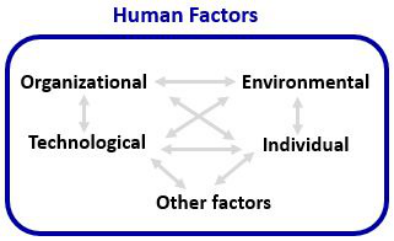
Figure 1: The Human Factors approach. (J. França et al., 2020).
accidents such as Piper Alpha (1988), AF Flight 447 (2009) and Fukushima (2011). This premise, however, has worked very well to find a culprit, a single (and myopic) cause for an accident, but it has not, in fact, contributed to the proper analysis of events, generating learning and prevention (Busch, 2021). It is therefore necessary to understand the mechanisms of human interaction, in a coherent and adequate way, carefully discovering the individual, orga- nizational, environmental and technological contributions, four dimensions that define the Human Factors approach. Figure 1 presents a graphical sche- matic of this approach, showing how these four dimensions are intrinsically integrated. Human Factors, in this sense, are all factors that can influence human performance in their work activities. These factors act together and may be technological, environmental, organizational and individual, among others.
From the first studies by Heinrich, till the application of the Human Factors approach, much has evolved in terms of technology, transforming the workplaces of the first Industrial Revolutions into true complex sociotech- nical systems (A. D. França et al., 2020). Inserted in this context, the human element – workers – have unique skills, such as perception and situational awareness, which allow a systemic and dynamic understanding of complex work demands. Such skills are part of the neurobiological structure of human beings, making the perception of risk something natural in any and all work interactions. The cortical macrostructures of the human brain – reptilian, lim- bic and neocortex systems are responsible for the instinct of preservation and reproduction of the species, but they also imagine and conceive solutions for the most varied daily demands, from simple problems to critical complexities. Its internal structures, such as amygdala, frontal lobes and corpus callosum, in addition to processing all the inputs of the senses – smell, hearing, touch etc. – form neurochemical social bonds, which guarantees preservation, but also manage an almost infinite range of emotions and interactions. And because these brain structures, humans are the most complex living organisms of the planet (Damásio, 2005), being able to imagine, conceive, build and decon- struct systems, artifacts and concepts of equal complexity. Additionally, based on studies of cognitive neurology (Lieberman, 2013), many of the neuronal connections that occur form an exogenous effect of building social relation- ships between people and groups. These social relationships can be noticed in
The Neuroscience Behind Perception and Risk Management 413
the teamwork, leadership and communication, human skills actively present in the interactions of workplaces. Therefore, it is at least myopic to say that human error is the reason of why accidents happen. In fact, this error is an indication that there was a failure in a complex sociotechnical system, and it is therefore necessary, from this failure, to understand how perception, equi- pment, environment, hierarchical relationships, procedures, processes and leadership, acting in an integrated way, did not achieve an expected result. However, the persistent reductionist thinking that current work environments are linear perpetuates a mistaken conclusion that accidents are the exclusive result of a succession of human errors. It is necessary to change.
PERCEPTION, RISK AND DECISION-MAKING IN COMPLEX SOCIOTECHNICAL SYSTEMS Having human error as a background for the analysis of workplace intera- ctions, James Reason consolidates human error as a root cause of accidents at work, and proposes a taxonomy to distinguish them, where they are clas- sified as skill-based slips, rule-based mistakes and knowledge-based mistakes (Reason, 1991). This taxonomy is based on experience, technical skills and adherence to procedures, measured on an individual scale, without consi- dering the interactions or influences of organizational systems and culture. Social elements, non-technical skills and the natural human resilience were not considered, something that limits an adequate analysis of labor relations. However, based on his own work, Reason evolves his studies and integrates organizational and individual elements, considering training, leadership, resi- lience and mindfulness (Reason, 2008), using real events such as the Apollo 13 incident (1970) and the flight British Airways 9 (1982) as empirical argu- ments for this integration. These events show that human actions, with their technical skills (piloting) and non-technical skills (situation awareness, com- munication, teamwork, etc) provide resilient, productive and safe work. In this sense, the recognition that the origin of failure and success is the same, shows that considering human failure is, in fact, the beginning of a systemic and adequate understanding of what happened, and not a limited and deter- ministic conclusion of culpability. In this context, it is important to consider that human perception is influenced by the ETTO (Efficiency-Thoroughness Trade-Off) principle, which is characterized by the balance (not always bala- nced, indeed) between efficiency and meticulousness. This principle states that people make choices between the demands of efficiency and thorough- ness under conditions of limited resources and environmental uncertainty. Efficiency is defined as minimizing the number of resources used to ach- ieve work results, while thoroughness involves ensuring that all necessary conditions have been met for the successful completion of tasks (Hollnagel, 2009). There are a number of cortical structures as well as complex neuro- nal connections involved in this process of managing conflicting goals and decision-making (Magrini, 2019). The hippocampus and the prefrontal cor- tex are the most important areas of the brain involved in the decision-making process, which is congregated in four steps (Moghadam, Khodadad and Kha- zaeinezhad, 2019). The first step is an initial stimulus produced by sensory
414 França
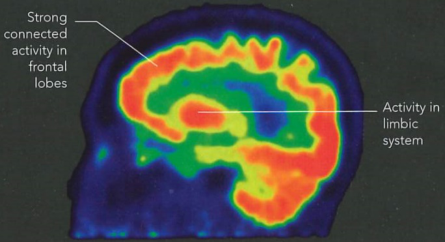
Figure 2: Prefrontal cortex functioning of health brains. (Carter et al., 2019).
inputs – vision, hearing etc. – which excites a set of hippocampal neurons as part of the neural system; the second step is a set of secondary stimulus that arrives in the hippocampus, and the driven neural response is produced as ini- tial information for two entry stimulus sets in the hippocampus; in the third step, the initial information is sent to prefrontal cortex, which determines the additional required information and retrieves complementary informa- tion from the hippocampus; in the fourth and last step, prefrontal cortex process the all incoming information, in mutual communication with hippo- campus, generating a preferred decision (Wang, 2008). Figure 2 presents the prefrontal cortex functioning of a health brain during the decision-making process, based on the individual perception.
The prefrontal cortex is the main cortical area responsible for the decision- making process, regulated by conventions and established social rules (Damásio, 2005). As in the case of Phineas Gage, it was precisely the injury to this area that compromised his decision-making capabilities in the social context in which he was inserted (García-Molina, 2012). Notice that the complexity of the decision-making process in the brain is embedded by the complex sociotechnical system of workplaces. In fact, considering only the evocation of a memory, which is the base of human perception, at least six interconnected brain structures participates in the flow: the prefrontal cortex, the hippocampus, the entorhinal, parietal and anterior cingulate cortices, and the basolateral amygdala (Izquierdo et al., 2007). Therefore, a decision that involves the safety of a task, in the work environment, is the result of a neuro- cognitive analysis of the worker, which considers his experience, perception, social relationships, organizational culture and non-technical skills, being the decision-making itself decision one of these. Therefore, only with a systemic understanding, contextualized in time and space, it is possible to develop a balance between safety and efficiency in work activities. In this sense, the Human Factors approach, which considers the analysis of human interactions from the point of view of the worker, and not focusing on the worker, brings the possibility of integrating individual cognitive elements with the interacti- ons of the sociotechnical systems of the work environments. With this, it is possible to systematically understand how real work actually happens, with all its vicissitudes. However, it is not easy to change from a merely simple and linear approach to a comprehensive and adequate understanding of the
The Neuroscience Behind Perception and Risk Management 415
real complexity of work activities in today’s complex sociotechnical system. Methodologies, practices and new approaches are needed to promote a wider perspective over the complexity of the labor activities performed in today’s workplaces.
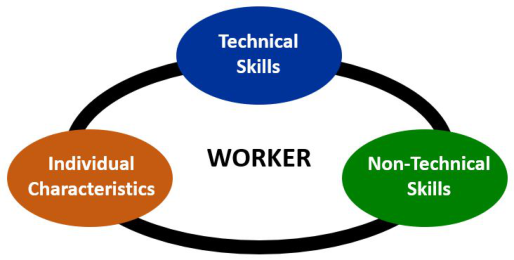
THE EVOLUTION OF RISK MANAGEMENT IN COMPLEX SOCIOTECHNICAL WORKPLACES Along with the evolution of workplaces, despite the concept of human error still being present in certain industrial segments, there was also a certain evolution of concepts, theories and practices of analysis of human intera- ctions, considering four major dimensions: technological, environmental, organizational and individual, being perceived in the areas of O&G, civil aviation, aerospace and specialized health services (Wooldridge et al., 2019). In this evolution, human error, which is part of this analysis and cannot be discarded, is, in fact, a beginning, a path to the analysis of what happened, how it happened, considering the specific contexts of each environment and work situation, but also highlighting what happens positively, what promo- tes productivity. In this sense, the Safety-II theory, developed by Hollnagel, encourages that not only the failures that cause accidents should be conside- red and analyzed, but also the regular, daily and routine performance of the worker, when nothing irregular happens (Hollnagel, 2014). In other words, as important as analyzing the failure, it is also analyzing what works, as both share the same origin, and very likely trigger the same neurocognitive circuits and structures of interaction with the sociotechnical systems of the work envi- ronment. However, dichotomously, all attention is focused on the accident, while normal performance, a rich source of information, remains partially ignored. This ignorance is partial, because in addition to Safety-II, there are other theories that consider the positive elements of work interactions, such as Safety Differently, which recognizes the integrated role of technical and non-technical skills in building safety in work environments (Dekker, 2014). A similar dichotomy also occurred with studies between rationality and emotional decisions, where initially much attention was paid to under- standing rationality segregated from emotion. However, with the evolution of research, it was found that both are integrated in the cognitive processes of decision-making, as well as in other manifestations of behaviors and attitu- des (Damásio, 2005), which includes non-technical skills. In this sense, from the set of the most relevant non-technical skills, namely situational aware- ness, decision making, teamwork, leadership and communication (Flin, O’ Connor and Crichton, 2016). Figure 3 presents a schematic of how the inte- gration of technical and non-technical skills, plus individual characteristics, such as neurocognition, shape the worker.
In this context, situational awareness plays a structuring and integrative role, because it connects mental constructs with the lived reality, helping in the recognition and management of risks of complex sociotechnical system. In fact, according to (Dekker, 2015), situational awareness gives a real perce- ption of what is happening, at the exact moment it is happening, allowing the
416 França
Figure 3: Non-technical skills, individual characteristics, and technical skills integration.
human brain, through its past experiences and survival genes acquired throu- ghout of years of evolution, give an accurate answer to the prominent risk. And specially in workplaces of high risks, such offshore O&G industry, non- technical skills enhance human capabilities to recognize, assess and manage risk (França, Hollnagel and Praetorius, 2022). Additionally, as a result of human evolution itself, civilizations successfully colonized all continents, and their adaptations to local environments, as well as risks, resulted in the deve- lopment of genes that in the distant past saved humans from natural hazards (Roberts, 2018), and today it allows workers and organizations to developed sharped assessments for the risks in their sociotechnical workplaces.
CONCLUSION
The evolution of work and its technologies brought new and productive solutions to process, systems, and products for Society, but still lack a syste- mic understanding of the workers and their variabilities, whether positive or negative. The latter, however, persists as a myopic way of avoiding accidents, through the elimination of the so-called human error. Understand the human element in workplaces is essentially understanding the work itself, as work is, simultaneously, a social and individual manifestation. In this sense, the wor- kers are unique, formed by their physiological and neurobiological structures, interacting with environments, people and systems, influencing and being influenced by them. Thus, the cognitive and social capacities of workers, individually and collectively, constitute the skills and capabilities needed to understand everything around them, responding staggered for the complexity demands required by the work. The worker, consequently, is the constituent element of the resilience of sociotechnical systems, absorbing, understanding, interacting and responding in a dynamic way. Therefore, when someone fails, simply call it human error, in addition to being inadequate, is also something that reduces the resilience of sociotechnical work systems, ironically decrea- sing safety, instead of promoting it. Analyzing this and the entire evolution of work reaching the 21st century, it is clear that the human element – the wor- ker – is the key piece for the development of a safe, resilient and productive workplace, being not the problem, but in fact the solution.
The Neuroscience Behind Perception and Risk Management 417
ACKNOWLEDGMENT
The authors would like to express their gratitude to all personnel involved in this research.
REFERENCES
Busch, C. (2021) Preventing Industrial Accidents: Reappraising H. W. Heinrich – More than Triangles and Dominoes. 1st edn. London: Routledge - Taylor & Francis Group. Carter, R. et al. (2019) The Human Brain Book: An Illustrated Guide to its Structure,
Function, and Disorders. London, UK: Penguin Random House. Damásio, A. (2005) Descartes’ Error: Emotion, Reason, and the Human Brain.
Reprint ed. Lisboa - Portugal: Penguin Books. Dekker, S. (2014) Safety Differently: Human Factors for a New Era. 2nd Ed. Boca Raton, FL: CRC Press. Dekker, S. (2015) ‘The danger of losing situation awareness’, Cognition, Technology
and Work, 17(2), pp. 159–161. doi: 10.1007/s10111-015-0320-8. Flin, R., O’ Connor, P. and Crichton, M. (2016) Safety at the Sharp End: A Guide to Non-Technical Skills. London, UK: Taylor & Francis Group, CRC Press. França, A. D. et al. (2020) ‘A Uberização do Trabalho no Brasil: Histórico e Evolução
com foco na Segurança do Trabalho’, pp. 163–167. França, J. et al. (2020) ‘Analysing human factors and non-technical skills in offshore drilling operations using FRAM (functional resonance analysis method)’, Cognition, Technology and Work. doi: 10.1007/s10111-020-00638-9. França, J., Hollnagel, E. and Praetorius, G. (2022) ‘Analysing the interactions
and complexities of the operations in the production area of an FPSO platform using the functional resonance analysis method (FRAM)’, Arabian Journal of Geosciences, 15(7). doi: 10.1007/s12517-022-09801-0. García-Molina, A. (2012) ‘Phineas Gage and the enigma of the pre- frontal cortex’, Neurología (English Edition), 27(6), pp. 370–375. doi: 10.1016/j.nrleng.2010.03.002. Heinrich, H. (1931) Industrial Accident Prevention: A Scientific Approach. New York: McGraw-Hill Book Company, Inc. Hollnagel, E. (2009) The ETTO principle: efficiency-thoroughness trade-off. 1st Ed.
Farnham, UK: Ashgate Publishing Ltd. Hollnagel, E. (2014) Safety-I and Safety-II - The Past and Future of Safety Management. 1 st. Surrey: Routledge. Izquierdo, L. A. et al. (2007) ‘A link between role of two prefrontal areas in immediate
memory and in long-term memory consolidation’, Neurobiology of Learning and Memory, 88(2), pp. 160–166. doi: 10.1016/j.nlm.2007.04.014. Lieberman, M. D. (2013) Social: Why Our Brains Are Wired to Connect. New York: Crown Publishers. Magrini, M. (2019) The Brain: A User’s Manual: A simple guide to the world’s most
complex machine. London: Short Books. Moghadam, S. S., Khodadad, F. S. and Khazaeinezhad, V. (2019) ‘An algorithmic model of decision making in the human brain’, Basic and Clinical Neuroscience, 10(5), pp. 443–449. doi: 10.32598/bcn.9.10.395. Reason, J. (1991) Human Error. Cambridge, MA: MIT Press: Cambridge University. Reason, J. (2008) The Human Contribution: Unsafe Acts, Accidents and Heroic
Recoveries. New York: CRC Press.
418 França
Roberts, A. (2018) Evolution: The Human Story. Revised ed. New York: Penguin Random House. Wang, X. J. (2008) ‘Decision Making in Recurrent Neuronal Circuits’, Neuron,
60(2), pp. 215–234. doi: 10.1016/j.neuron.2008.09.034. Wooldridge, A. R. et al. (2019) ‘Complexity of the pediatric trauma care process: implications for multi-level awareness’, Cognition, Technology and Work, 21(3), pp. 397–416. doi: 10.1007/s10111-018-0520-0.
Read this individual research paper free through the original publisher, or explore the full digital proceedings book.
ISBN 978-1-958651-44-5
Explore this ISBN in the AHFE Bookstore ↗Listed in the July 2026 bookstore catalogue; search by ISBN to confirm current availability · Digital book purchase optional