Marco Sosa, Boris Orellana-Alvear, Natalia Pacurucu (2023). Making Architecture: Javier García Solera - The Sense of Place in Architecture. In: Human Factors in Architecture, Sustainable Urban Planning and Infrastructure. AHFE Open Access, vol. 89, pp. 43–48. https://doi.org/10.54941/ahfe1003678
There is a growing awareness in today's society of the importance of architecture and place, but as the cities we live in grow and our lifestyles change, so does the way we use space. This means that the role of the architect is increasingly important. The development of the city and its rapid growth has become a stage to demonstrate the individualism of an architecture biased towards the spectacle and clearly towards real estate. It is important to recognize the good way of doing architecture. This article intends to establish the importance of the place in the work of the architect Javier García Solera, being for him an important condition to project and a result to be achieved with the construction. Through the bibliographical review, the condition of its architecture and the purpose of its design are described, establishing the strategy that is part of the solution, when facing the place and the initial idea of projecting. At the same time, the present study establishes through the bibliographic review, the notion of what the place means, its different scales and perceptions. It is concluded that architecture is the human response to the environment in which we live and what is its impact on the landscape, as an expression of identity and what sensations it provokes in those who inhabit it. With this study the fundamental role of the place is defined, understanding it as a necessary condition for architecture to exist.
MAKE ARCHITECTURE Making architecture is making a city. Architecture plays an important role in the development of cities, but today architecture is biased towards entertain- ment and real estate development, leaving aside any aesthetic judgment that it contributes to the place where it is implanted. This architecture must be of quality, thoughtful architecture, which gives priority to the relationship that exists between the place, the program, and the construction (Escoda, 2010). To make quality architecture it is not necessary to be framed in any arch- itectural style, but it is necessary to understand that this new way of doing architecture must meet new criteria of form and must be efficient architecture, this means that there is a logic in the use of the technique, the resources and materials, is, therefore, a sustainable architecture with tectonic ethics, deepe- ning the phenomenological experience of the subject that inhabits it (Muñoz, 2011).
PLACE In architecture, the concept of place plays a vital role in creating habitable spaces for human beings. Place refers to the physical and emotional context of a building when architecture is related to the place, the physical and cultural environment is being related, since it is not only understood as a geograph- ical point, but a set of memories, encounters, and traditions. that form the identity of a society, that is, the project is the revelation of the place (Gastón, 2005). The importance of the place to do architecture cannot be underesti- mated, its determining factors cause a visual consistency in the architectural object. The place is more than a physical point; it is a network of social, cul- tural, and historical factors that influence how we experience and interact with the built atmosphere. It doesn’t matter if it’s a bustling city center or a remote natural habitat, a sense of place is essential to crafting powerful and meaningful architecture.
Sens of Place The emotional and mental relationship that individuals have with places influences their quality of life and well-being. The way we inhabit these places is usually cultivated over time through experiences and memories, establish- ing links of belonging and awareness. Each subject reacts and interacts in different ways with certain places, this approach to the place is multisensory, immaterial, and timeless, that is, a phenomenological experience (Muntañola, 1995). The feeling of the place is not only vital for the person who lives it, but also for the community as a whole. A well-constructed building can become a source of identity and pride for the local society. In this way, the architectu- ral object has the potential to qualify and influence the way in which people understand the place. (Moncada et al., 2004) Therefore, the work of the arch- itect must contribute to the establishment of a unique identity for the place. In this way, constructions can become a tool for social and cultural evolution, emphasizing the connection between people and their environment (Escoda, 2010).
Place as Condition and Result When conceiving a construction project, it is essential to take into account the environment in which it will be built. Its location, its environment, and its historical context influence the architecture and its purpose. The design of a structure must respond to the location, respecting its natural and urban environment. Architects must consider the orientation of the building, the materials used, and the energy efficiency of the building, among other crite- ria (Escoda Pastor, 2007). In this way, the structure can become an integral part of the landscape and accentuate the beauty and utility of the region (Montestruque, 2016). The place can also serve as a source of inspiration for architects. The cultural and historical importance of the area can be a source of motivation for the design of the building. It is absolutely essential that when you talk about place, you think about two things: That a work is always in the place and therefore enters into a relationship with it; and on the other hand that a work of architecture creates a place where things will
Making Architecture: Javier García Solera, the Sense of Place 45
happen (Aravena, 2002). The ultimate goal of the construction is a combina- tion of various elements, the location being one of the most crucial. Factors such as geography, environment, culture, and the area’s background influence the final product. The work focuses on the importance of understanding the place in the design process, so that the structure not only integrates into the environment but enhances it, becoming an integral part of the identity of the town. Regarding the relationship of the building with its surroundings, inte- gration is essential to achieve a satisfactory result. The design must take into account the scale, materials, and shapes of neighboring structures to create a unified and harmonious look.
The Architect and His Work Javier Garcia Solera Spanish architect, and university professor, awarded for his professional work that is distinguished by its precision and inventiveness. His participation in various exhibitions and projects has earned him worldwide recognition in the world of planning. García-Solera’s approach to designing living spaces is
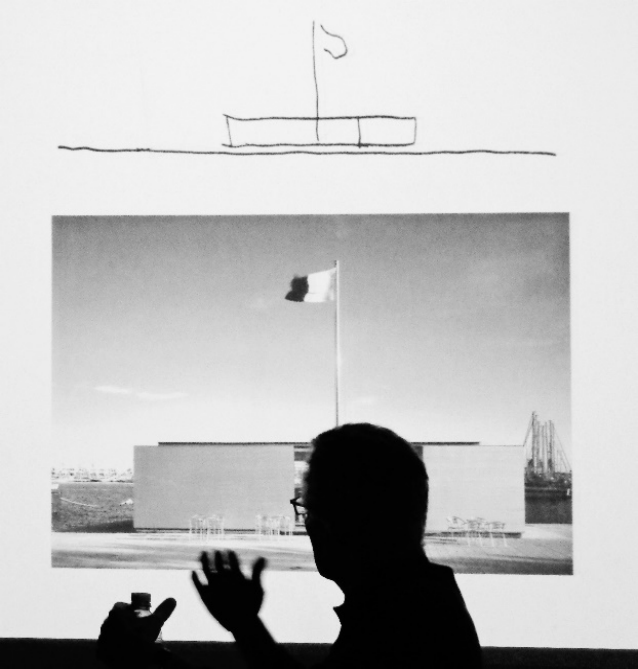
Figure 1: Photography by Javier Garcia Solera at the conference: why draw. Cuenca, Ecuador 2018 own elaboration.
46 Sosa-Altamirano
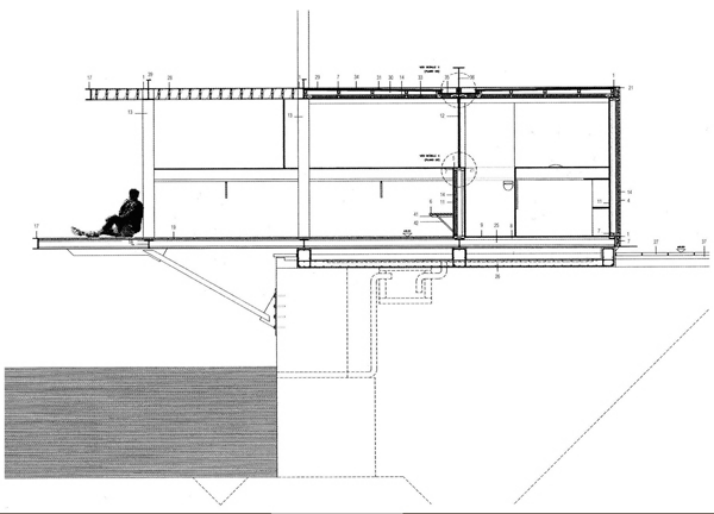
Figure 2: Noray construction section _ Javier Garcia Solera source: www.via- arquitectura.net 2023.
based on the understanding that the terrain is the starting point of any task. Recognizes the unique qualities of each place and works to build buildings that not only meet the needs of the inhabitants but also contribute to the beauty of the environment.
Javier García-Solera’s work is a testament to his rigor and precision when designing. His projects are known for their unique aesthetics and the use of materials that have had a considerable impact on modern architecture (Solera and Jaen I Urban, 2015). His creations include a wide range of buildings, from art galleries to residential housing. García-Solera’s constructions are inspired by the environment, and he often includes elements of nature in his projects. From his first work to the most current, his work is conditioned by three premises: the place. The technique and the occupant.
The architect believes that the immediate environment is the basis of any project, and facing the conditions that it presents, allows different strategies to face them (López, 2003). The versatility of the response does not obey pre-established solutions but rather aims to provide a rigorous and precise response to the different challenges that the place imposes, in short, the con- ditions that the place imposes, extract its meaning. The work of García-Solera qualifies the place, makes it possible for the inhabitant to appropriate it, and gives rise to that encounter It gives rise (García-Solera et al., 2017).
García-Solera’s architectural work is characterized by an accentuation of the notion of place. He understands that the earth is more than just a place, but a living force that interacts with all the constructions that are built on it
Making Architecture: Javier García Solera, the Sense of Place 47
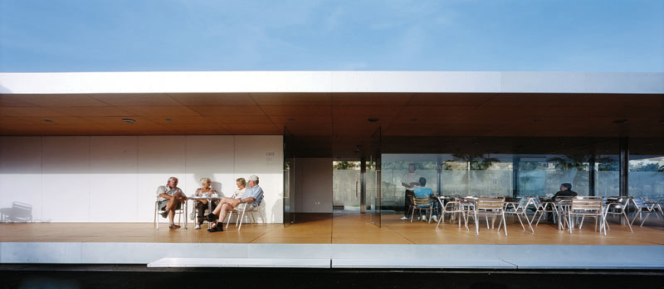
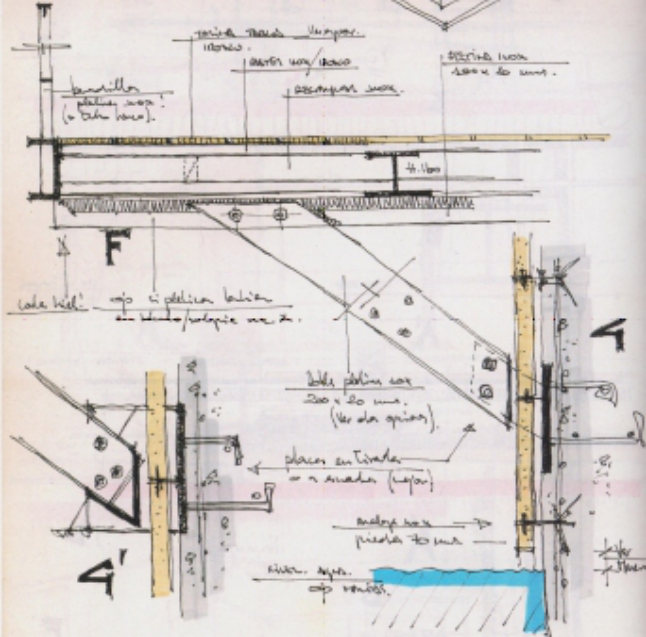
Figure 3: View of Cafe del Puerto _ Javier Garcia Solera source: www.via- arquitectura.net 2023.Figure 4: García-Solera’s sketchbook, detail of the projection of the Noray. Source: building boats (2005). Alicante: architecture papers, D.L.
(Construida and Concursos, 2002). His planning method takes into account the unique characteristics of each place, giving rise to structures that represent the identity of the area. His work is a reminder that architecture is not just a profession, but an art form that can transform the world around us.
48 Sosa-Altamirano
In order to respond to the conditions of the place, the architect previously analyzes the materiality with which he is going to build, understands that he defines its stability and always seeks comfort for those who inhabit it. The rigor and precision of his architecture is supported by his skill in detailing the different construction episodes, he understands that the detail intensifies the form (Hermida Palacios, 2011).
CONCLUSION
Exploring the work of Javier García-Solera, it is evident that he has a singular and commendable approach to the art of designing buildings. It emphasizes the notion that the place is the condition as the result of the creative pro- cess. García-Solera is capable of building spaces that are both utilitarian and in tune with their surroundings, his work serves as a lesson that architects should not only focus on the aesthetic aspect of their designs, but also take the environment into account.. In short, this research work underlines the relevance of the link between architecture and place. García-Solera’s job illu- strates very well how attractive structures can be built that are attentive to the environment. His attitude shows that, taking into account the place and its conditions, designers can create places that are both practical and aesthe- tically pleasing. The legacy of Javier García-Solera is a reminder of the power of architecture to enrich the human experience and its environment.
REFERENCES
Aravena, A. (2002) ‘El lugar de la Arquitectura’, ARQ, 51, p. 73. Construida, P. A. O. and Concursos, P. E. N. (2002) ‘Javier García-Solera (21-09- 1958)’. Escoda, C. (2010) ‘La arquitectura como paisaje’, Arquiteturarevista, 6(1), pp. 12–26. Available at: https://doi.org/10.4013/arq.2010.61.02. Escoda Pastor, C. (2007) ‘El magnetismo del lugar en la arquitectura. Un análisis a
través del dibujo de las diferentes estrategias de intervención en el paisaje a partir de la arquitectura del Movimiento Moderno’, TDX (Tesis Doctorals en Xarxa) [Preprint]. Available at: https://www.tdx.cat/handle/10803/84054 (Accessed: 12 May 2017). Garci’a-Solera, J. et al. (2017) Industrias. Javier Garcia Solera. Gastón, C. (2005) Mies: La arquitectura como revelación del lugar. Hermida Palacios, M. A. (2011) ‘El Detalle como intensificación de la forma: el Illinois Institute of Technology de Mies van der Rohe’, TDX (Tesis Docto- rals en Xarxa) [Preprint]. Available at: https://www.tdx.cat/handle/10803/96156 (Accessed: 9 March 2023). López, L. (2003) ‘Javier García Solera’, Visions. Edicions UPC, pp. 38–41. Availa-
ble at: https://upcommons.upc.edu/handle/2099/10513 (Accessed: 13 November 2016). Moncada, G. DE et al. (2004) ‘CONCEPTO DE LUGAR’. Montestruque, O. (2016) ‘Memoria y lugar. El recuerdo y olvido como forma de conservación inmaterial’, Limaq, 2, pp. 143–158. Muñoz, A. (2011) Using Technique in Architectural Conception. The space between
earth an sky: towards a tectonic ethic. Universidad de Granada. Muntañola, J. (1995) La arquitectura como lugar. Solera, J. G. and Jaen i Urban, G. (2015) Edificio Germán Bernacer: Del dibujo y de la obra. Universidad de Alicante. Available at: https://books.google.es/books?id= a0qhCwAAQBAJ.
LISTED IN THE AHFE DIGITAL BOOKSTORE CATALOGUE
Explore the complete digital volume
Human Factors in Architecture, Sustainable Urban Planning and Infrastructure
Read this individual research paper free through the original publisher, or explore the full digital proceedings book.
ISBN 978-1-958651-65-0
Explore this ISBN in the AHFE Bookstore ↗Listed in the July 2026 bookstore catalogue; search by ISBN to confirm current availability · Digital book purchase optional