Jin Bin Liu, Si Ye Chen (2023). Investigating the creative design strategy for H5 news based on the Octalysis. In: Usability and User Experience. AHFE Open Access, vol. 110, pp. 386–394. https://doi.org/10.54941/ahfe1003212
This study explores how to enhance H5 news user experience and promote news dissemination by constructing gamified creative design strategies. Through interviews and observations, eight key elements that affect H5 news user experience are summarized, and their weight values are calculated using AHP. Furthermore, the feasibility of gamification in H5 news is verified by comparing the high-weight elements with the eight core intrinsic motivators of gamification. A gamified design framework based on the Octalysisis proposed, and creative design strategies that aim to motivate the experience, set the incentive, and help to spread the news。
Keywords: H5 news, Gamification, Octalysis, Creative design, User experience
INTRODUCTION
With the development of mobile internet, the media landscape and commu- nication ecology have undergone tremendous changes. Online news media has begun to explore innovative reporting forms, among which H5 news has received high attention from mainstream media. However, there are also some problems, such as homogenization, form over content, engagement and engagement depth, which directly affect the experience and dissemination effect of H5 news. By using the eight Core driving force of gamification, user experience can be comprehensively improved, including optimizing news content expression and presentation, deepening user participation, and understanding, and ultimately achieving the dissemination goals of H5 news.
ANALYSIS OF USER EXPERIENCE IN H5 NEWS Overview of H5 News
H5 news refers to a form of news presentation built on the foundation of HTML5 technology. Its content can include media elements such as text, ima- ges, audio, video, and animation, and users can interact with the page through various screen operations, such as clicking, long pressing, and dragging, to obtain a rich audio-visual experience (Liu, 2021).
Analysis of User Experience for H5 News In order to gain a deeper understanding of the behavioral state and experiential factors affecting H5 news users, the author employed on-site
Investigating the Creative Design Strategy for H5 News Based on Octalysis 387
interviews and observations, using pre-set questions to interview different users. The users’ answers were collected as raw data, while their problems while browsing different H5 news were observed. The author summari- zed eight of the most important factors affecting user experience, including Unpredictability, Achievement, Loading speed, Social Impact, Autonomy, New Technology Use, Scarcity and Desire, Empowerment. This study mainly focused on interviews with news researchers, media practitioners, and H5 news users.
Calculation of User Experience Influence Factor Weights Based on AHP Method In order to scientifically establish the basic user experience influencing factors of H5 news, the author used the AHP method to compare each factor with each other to obtain their weights. Specifically, the author created an AHP questionnaire and invited 20 researchers, designers, and professionals rela- ted to H5 news to participate in the survey. These participants included 4 journalists, 7 professional designers (with more than 5 years of experi- ence), 4 doctoral students in user experience, and 5 professors in visual communication design.
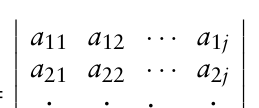
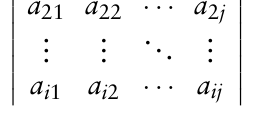
1) The author asked the participants to use a 1–9 rating scale to com- pare and rate the importance of each user experience influencing factor. The arithmetic mean was taken as the basis for weight calculation and the judgment matrix was obtained. Then, the author used the geometric mean method to calculate the weight coefficients and obtained the weight values of the basic user experience influencing factors for H5 news. The specific calculation process is shown below, and the results are shown in Table 1.
Equation reproduced from the original PDF.
(1)
Equation reproduced from the original PDF.Table 1. Calculation of weight for user experience impact factors.
2) Calculate the maximum eigenvalue λmax and the consistency index ICI, for each judgment matrix. Determine the random consistency index value IRI by referring to the consistency index table. Calculate the consistency ratio ICI/IRI using the formula ICR. If ICR < 0.1, the consistency test is passed.
THE FEASIBILITY OF USING OCTALYSIS IN H5 NEWS The Eight Core Drives of Gamification
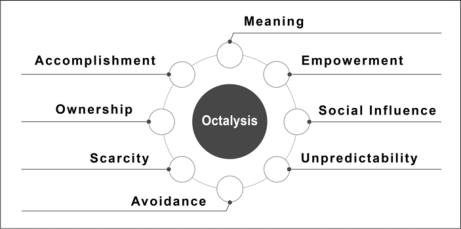
Before the concept of gamification emerged, Yu-Kai Chou studied the rea- sons why games are so captivating to people. He believes that gamification is not simply adding game elements and interactive gameplay to activities or products, but rather understanding the goals and motivations of users and designing interactive experiences that motivate them to achieve their goals. Chou’s 17-year research revealed that people’s reasons for playing games can be basically attributed to eight core driving forces(Refer to Figure 1), which are Meaning, Accomplishment, Empowerment, Ownership, Social Influence, Scarcity, Unpredictability, Avoidance (Chou, 2014). These driving forces can help design attractive gamification practices, with the “user-centric” design philosophy as the core principle.
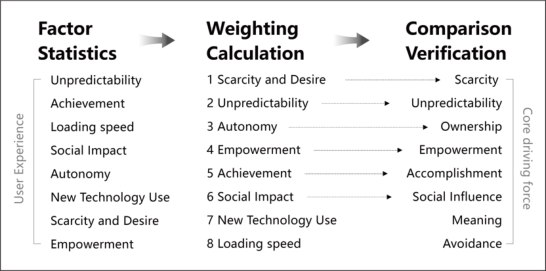
Feasibility of Applying Octalysis in H5 News According to the results of AHP, the eight factors that affect user experie- nce are ranked in order of weight from high to low: Scarcity and Desire, Unpredictability, Autonomy, Empowerment, Achievement, Social Impact, New Technology Use, Loading speed. At the same time, the author com- pared these eight factors with the eight core driving factors of gamification. The results showed that six of the factors with high weight corresponded to the six core driving factors of Octalysis (Refer to Figure 2). Therefore, in the planning and design process of H5 news, combining the driving factors of Octalysis with the creative design strategies of H5 news will help optimize user experience.
Figure 1: Octalysis. (The author redrawn it.)
Investigating the Creative Design Strategy for H5 News Based on Octalysis 389
Figure 2: Verification of factors influencing user experience (drawn by the author).
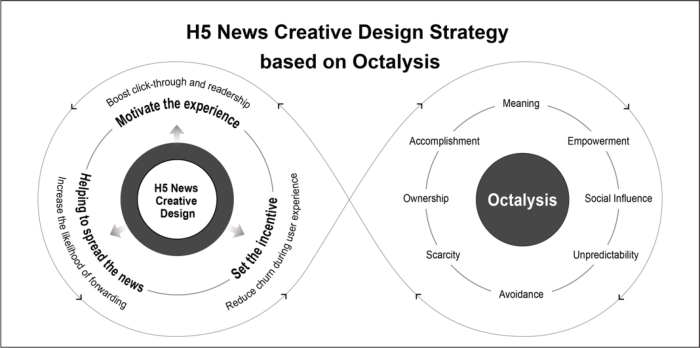
H5 News Creative Design Strategy Based on Octalysis Motivate the Experience: Boost Click-Through and Reads
Optimizing Entrance Design to Arouse Curiosity Curiosity is an individual’s tendency to imagine information and unknown things and is one of the important internal motivations for individuals. In games, curiosity is the driving force for players to continue their gaming experience and can evoke their exploration desire. For H5 news, curiosity is the main factor driving users to click and read. In the process of designing and producing H5 news works, there is an information asymmetry betw- een designers and users. To solve this problem, designers can create suspense to arouse users’ cognitive curiosity. Based on this, entrance copy that defies common sense can break users’ habitual thinking patterns, making them feel surprised and unbelievable, thus generating an impulse to explore the truth.
Initiating Micro Challenges to Arouse “Competition Desire” Jane McGonigal is a game designer and behavior research expert. She beli- eves that the fun of games comes from challenges and restrictions because overcoming challenges can bring a sense of achievement. The purpose of gamification is to integrate the sense of achievement in games into non-game contexts. To stimulate users’ competitive desire and enhance their experience, H5 news can use game elements such as points, badges, leader boards, and levels. When designing challenge mechanisms, the challenge cycle and qua- lity should be controlled, and lightweight micro-challenges are more suitable for H5 news. For example, People’s Daily launched the H5 “China Spelling Competition,” using a game checkpoint mode that allows users to unlock new answers by handwriting Chinese characters. In addition, the work also incorporates Chinese traditional culture and uses gamification elements such as countdown timers, clear goals, progress bars, and titles to help users easily understand the main points of government planning drafts while learning in entertainment.
390 Liu and Chen
The Lure of Scarcity Awakens Desire People often crave things they can’t get, which is also a psychological factor that designers can use. Therefore, when designing H5 news, designers can use interactive gameplay and plot settings to evoke users’ “Scarcity,” thereby increasing the reads of works. For example, People’s Daily’s H5 news work “Look! This is my military uniform photo” is a successful case that uses the “Scarcity “strategy. It was released on the 90th anniversary of the founding of the People’s Liberation Army, guiding users to upload photos to generate military uniform photos and share them with friends. This H5 news work cre- ates a feeling of “once in a lifetime” and increases users’ desire to participate. In this way, designers can let users achieve a sense of accomplishment through continuous challenges and restrictions, thereby increasing their participation and loyalty.
Set the Incentive: Reduce Churn During User Experience Giving Users Meaningful Choices Yu-kai Chou, in his book “Actionable Gamification,” argues that when users have identical choices, creativity and empowerment are lost. This is the allure of LEGO, as they allow users to create unique ite ms. Similarly, NetEase News’ special feature “The Daily Life of the Escaping Man” commemorating the 70th anniversary of the victory of the Anti-Fascist War is a successful example, with up to 86 different endings that allow users to deeply feel the history and pain of World War II, leaving a lasting impression on related issues. Through such meaningful choices and interactive narratives, users can gain a deeper understanding and knowledge of specific news events or social issues.
Setting Easter Eggs and Surprises The fun of games lies in emotional change, and game makers design inte- resting secrets, or Easter eggs, such as text information, special props, and extra tasks. These unexpected “rewards” can bring surprises and uncertainty to users, thus enhancing the overall experience and impression. Therefore, in the design of H5 games, details similar to Easter eggs can be added to bring reading surprises and the joy of experience to users. For example, People’s Daily’s H5 game “No. 70, Revival Road” uses this design, with a one-shot approach that allows users to experience the changes in society and people’s lives since the founding of the nation. In addition, sliding the screen can col- lect commemorative tickets from different eras and share them with friends, providing unexpected rewards and fun for users.
Timely and Interesting Guidance and Feedback In gamification systems, guidance design and immediate feedback are cru- cial to motivate users and reduce churn rates. They can serve as information transmission mechanisms to guide users to complete expected behaviors and initiate new triggers. At the same time, guidance and feedback should be timely, clear, accurate, and fun to enhance user experience. There are two
Investigating the Creative Design Strategy for H5 News Based on Octalysis 391
situations that require feedback: first, to provide feedback on the user’s expe- rience progress. In H5 news, progress bars are the most commonly used game elements, effectively providing users with feedback on their experie- nce progress. Second, to provide feedback on user interaction operations. In H5 news, this can be achieved by changing visual presentation, adding animations, and playing sound effects. For example, in Tencent News’ H5 “Awakening Spring in Wuhan,” the starting screen when the user slides is an uncoloured line drawing, but the page becomes colorful after sliding. This approach achieves emotional communication between life experience and mobile operation experience, making information transmission more effective.
Help to Spread the News: Increase the Likelihood of Forwarding Empathy Drives Sharing Emotional contagion is an objective phenomenon that accompanies news communication. It plays a significant role in the initiation, process, and effect of news communication (Zhao, Liu, 2020). Foreign scholars have found that emotionally driven information is more likely to receive higher levels of sha- ring and replies on social media, demonstrating the importance of emotions in news communication (Stieglitz, Dang-Xuan, 2013). Therefore, in order to increase the sharing rate of H5 news, creative design should focus on the tran- smission of emotions and feelings, using emotional language to touch readers, allowing them to fully experience the news content and generate empathy.
To achieve this goal, there are two aspects to consider. Firstly, on the basis of real news materials, a vivid “plot” and a lifelike scene can be created to immerse users in a specific context, clarify the news theme, and enable rea- ders to obtain a more focused meaning. Secondly, game mechanisms can be introduced to promote the progress of the story, encourage user participation, and create emotional resonance between users and the interactive system. By offering more operational experiences through game mechanisms such as challenge, competition, cooperation, feedback, and resource acquisition, users can have an immersive emotional experience through human-computer interaction. These designs can make H5 news more vivid, interesting, and engaging, increase user participation and sharing rates, and enhance the spread of news.
Personalized Repost Poster In the creative design of H5 news, designers can meet the increasingly per- sonalized needs of users by providing personalized experiences. This not only improves user experience satisfaction but also stimulates users’ desire to share, thereby increasing the dissemination effect of news. Among them, personalized and customized experiences can be formed by encouraging users to engage in creative behaviors and emotional expressions. After the H5 expe- rience, generating a personal exclusive forwarding poster is direct feedback of “creative authorization,” which can increase the “ownership and sense of possession” in gamification and further stimulate the desire to share. For example, the H5 news “Look! This is my military uniform photo” launched
392 Liu and Chen
by the People’s Daily allows users to independently choose their gender and the year of the military uniform and upload their own front-facing photos to generate their own military uniform poster, thereby obtaining a unique personalized experience and sharing opportunities. In conclusion, meeting personalized needs can bring better user experience and dissemination effects, and should be given more attention in the creative design of H5 news.
Public Benefit Outcomes Triggers a Sense of Mission In gamification, “epic meaning and a sense of mission” is considered one of the core driving forces. People feel motivated because they believe they are doing something greater than the task itself, and happiness itself is no longer as important. Therefore, designers can try to integrate “epic meaning and a sense of mission” into the process design of H5 news to improve the conver- sion rate. While staying relevant to the news theme, the end page can be connected to topics that many people care about, making users feel that they are really contributing to the world and achieving great things. For example, in the H5 news work “2021 International Snow Leopard Protection Day” launched by NetEase News Public Welfare, users can learn about the distri- bution of snow leopards in China and better care about the lives of snow leopards to promote the cause of snow leopard protection and increase the possibility of forwarding. In this way, designers can integrate epic meaning and a sense of mission into the design of H5 news to enhance users’ sense of participation and identification.
CONCLUSION
Successful games are able to attract players because they can meet their needs and have strong user stickiness. By applying gamification mechani- sms, this game mechanism that reinforces human desires and brings benefits into non-gaming fields, thereby enhancing user engagement and retention, and achieving the dissemination goals of H5 news. The author proposes an
Figure 3: H5 news creative design strategy based on octalysis (drawn by the author).
Investigating the Creative Design Strategy for H5 News Based on Octalysis 393
H5 news creative design strategy based on Octalysis (Refer to Figure 3), and suggests continuously modifying and improving these methods in practice to compensate for any possible shortcomings.
APPENDICES
Table 2. User interview information.
Table available in the original PDF paper.
Numbering Gender Occupation Involved H5 news works C1 Woman News editor “Unknown Angel” C2 Woman Student “100 Days My Prince” C3 Woman Designer “If Light Had Shape” C4 Woman Professor “Chinese Characters Dictation Competition” C5 Man Student “Digging Potatoes” C6 Man Student “The Wordless Therapy Room” C7 Woman Student “The 24-Hour Race Against Time” C8 Woman Designer “2019 Entertainment Industry Portrait Gallery” C9 Woman Student “What Book Are You?”
Table 3. Statistics of factors affecting user experience.
Table available in the original PDF paper.
H5 news User Experience Process Influencing factors
A2
C1 Its title is attractive and users are eager to click and see. A1 C3 The user was curious about what would happen next, so they browsed the entire way. C4 After completing each character, users will anticipate what the next one will be. C2 The entire interaction process was not very complicated, the experience was smooth, and in the end, the user received a personalized poster.
A3
C4 The gameplay was somewhat challenging but not too difficult, and in the end, I earned a medal, which gave me a sense of achievement. C6 Users can participate in interactive activities during the experience, and the entire process is fun and satisfying. C1 Translation: Users can quickly interact with the work by clicking on it as soon as they enter.
A4
C2 The user can quickly see the illustrations after clicking into the work, and the experience is relatively smooth. C9 The loading speed of this work in the early stage is relatively fast, which will not waste the user’s time. C3 A colleague recommended this interesting work to the user, so they clicked on it to have a look.
C6 The content of the work is about hot topics and keywords that young people can resonate with, so they will share it with their friends.
394 Liu and Chen
Table 3. Continued.
Table available in the original PDF paper.
H5 news User Experience Process Influencing factors
A5
C9 If there are many people sharing it in their social media circle, users will be curious about what is inside the link. C2 The work will generate a customized sharing poster based on the user’s selection.
A6
C4 The work will generate calligraphy based on the user’s handwriting, which is quite unique. C6 Users can choose different hot topics to generate a customized hot topic list. C6 The use of 3D modelling in the scene is relatively rare, which can attract users and make them feel surprised.
A7
C2 The use of long illustrated graphics can provide users with a more intuitive understanding of the content of the work. C4 The interactive form of the text-based game is interesting, which can stimulate users’ desire for experience. C3 Users can experience the world from the perspective of the visually impaired, which helps them to understand the lives of blind people better.
A8
C4 Users didn’t expect the combination of news content and mini-games, which is surprising and innovative. C7 The music rhythm in the work creates a sense of tension, which is very appropriate for the urgent events depicted in the theme. C2 The overall process does not involve complicated interaction, providing a smooth user experience;
Table 4. User interview information.
Table available in the original PDF paper.
Social Impact
Influencing factors
Unpredictability Achievement Loading speed
Empowerment
Numbering A1 A2 A3 A4 Influencing factors
Autonomy New Technology Use
Scarcity and Desire Numbering A5 A6 A7 A8
REFERENCES
Chou, Y. (2014). Actionable gamification: Beyond points, badges, and leader boards.
(G. Yang, Trans.). Huazhong University of Science and Technology Press. Liu, T. (2021). Ronghe Xinwenxue [Integrated Journalism] (1st ed.). Beijing, China: Higher Education Press. Stieglitz, S. & Dang-Xuan, L. (2013). Emotions and Information Diffusion in Social
Media—Sentiment of Microblogs and Sharing Behavior. Journal of Management Information Systems, 29. Zhao, Y. & Liu, Z. (2020). Emotion Propagation: Concept, Principle, and Reflections on Its Status in Journalism Studies. Editing Friend, (01), 51–57.
LISTED IN THE AHFE DIGITAL BOOKSTORE CATALOGUE
Explore the complete digital volume
Usability and User Experience
Read this individual research paper free through the original publisher, or explore the full digital proceedings book.
ISBN 978-1-958651-86-5
Explore this ISBN in the AHFE Bookstore ↗Listed in the July 2026 bookstore catalogue; search by ISBN to confirm current availability · Digital book purchase optional