Franziska Braun, Sebastian Stegmüller, David Agola, Carolin Hamel, Paul Gerlach, Fabian Edel (2024). The vehicle as an immersive device to enhance the mental health to a peak state. In: Advances in Human Factors of Transportation. AHFE Open Access, vol. 148, pp. 678–686. https://doi.org/10.54941/ahfe1005260
As a result of technological progress, environmental aspects and social change, the automotive industry is undergoing a radical transformation. The focus is no longer on the product "vehicle" but much more on the mobility service itself and the users individual experience and well-being during travel time. In that field of innovation, the study deals with a explorative investigation of using the travel time for a improvement of the mental health of the passenger. The vision is to integrate breathwork relaxation in combination with a human centric lighting scenario as an immersive service within luxury ride-hailing vehicles to enhance the mental health during automated rides and utilizing the time spent in cars for personal pleasure. To enable a user-centered and experimental approach, a test vehicle from the non-profit company bq.Labs was equipped with the bq breath work app and a spezialized LED-based lighting screen that was developed by Fraunhofer. The effects were tested on randomly selected and voluntary users in a guerrilla testing at three different locations in San Diego. The tests explored user acceptance of the innovative technologies by combining surveys, vital data collection, qualitative interviews and observations. Initial data analysis provides insights into the feasibility and potential effects on well-being and user perception. The study illustrates those innovations in the field of mobility, involve systemic dependencies and considerations beyond technology, encompassing social and psychological dimensions. It underscores that successful innovations require a holistic, user-centered approach that considers technological, social, and psychological dimensions. The findings lay the groundwork for future research and development of innovation strategies in the evolving field of mobility and personalized strength.
Since the 2010s, the focus on mobility as a service has been constantly increasing. Whereas previously the primary focus was on the means of trans- portation itself, the focus is now shifting to the transportation from A to B.
The Vehicle as an Immersive Device to Enhance the Mental Health to a Peak state 679
The increasing automation of vehicles raises the question of how to use time in the vehicle on both short and long commutes when the driver’s full atten- tion no longer needs to be focused on the task of driving. In previous studies, participants named working, sleeping and screen time as preferred activities during an automated journey (Dungs et al., 2016). What has been neglected so far, is the active relaxation of the passengers. In the recent years, the trend towards mindfulness and the importance of mental health have increased due to rising burnout figures and discussions about mental stress. An active approach to personal well-being and conscious stress management should help. Active relaxation is already established in many areas, for example in the context of work or in leisure activities, but it is still neglected in the field of mobility. Most of the employees commute shorter and longer distances to work, which offers a great potential for a sensible use of travel time.
The idea of the study is therefore to investigate whether commuter routes in the vehicle can be used for active relaxation and in what form the strength- ening of mental health must take place in order to be successful. For this purpose, a light interaction and an auditory and visually guided breathing exercise are implemented in a vehicle interior that has been converted into a convenient lounge for a most relaxing transportation experience.
LITERATURE REVIEW
The interaction concept is based on previous studies and examines the status quo in the area of light effects and breathing exercises for mental relaxation.
Human Centric Lighting Previous studies by the Fraunhofer IAO and the University of Stuttgart have already provided insights into the stress-reducing effects of light. In par- ticular, different colors, brightness and light dynamics play a decisive role (Braun et al., 2022).
A distinction must be made between physical and psychological effects. For example, blue has a calming effect and promotes concentration due to the stimulating effect on serotonin production, while red is stimulating and activating. Red could also stimulate the release of adrenaline and thus trig- ger more exciting or energetic reactions (Ramachandran, 2011). Green has a balancing and refreshing effect, yellow is optimistic and energizing, purple is calming and inspiring, and orange is uplifting and sociable. White stands for purity and neutrality, black for elegance, while brown creates a ground- ing and warm atmosphere. It is important to note that the effect of colors can vary both culturally and personally, and individual experiences and pref- erences play a role. In therapeutic contexts (Iebed, 2021, pp. 90–97). such as art therapy, the conscious choice of colors can help to promote specific emotional responses (Birren, 2006, p. 10ff.).
Breathwork It is worth noting that conscious breathing has been identified as the swiftest and most effective method for stress reduction and targeted relaxation (cf. Maercker, 2009, p. 500ff). Relaxation procedures serve as an experienced
state of pleasant being and the mediation of strategies for coping with anxiety situations and states of tension. The body’s energy turnover is reduced and the body remains in the parasympathetic state of the autonomic nervous system - it is not on alert. Behavioral therapy focuses on progressive methods and autogenic training. These have been empirically validated and often lead to meditation and yoga as classic methods of relaxation (see Maercker, 2009, p. 500ff).
By combining breathing techniques, visual elements and physical light interaction, a comprehensive, immersive experience is created that positively influences passengers and makes driving a relaxed and enjoyable experience.
METHODOLOGY
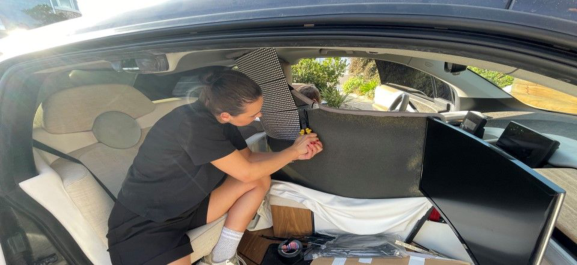
The long-term goal is to use the application in luxury ride-hailing vehicles or later also in autonomous vehicles. Thus, a test vehicle with a modified rear seat was chosen for testing that is isolated from the driver to increase privacy. For the study, LED panels were integrated into the screen behind the driver’s rear seat and an additional display was attached to the dashboard on the passenger’s side (Figure 1).
Figure 1: Assembly of the test vehicle and integration of the LED panels.
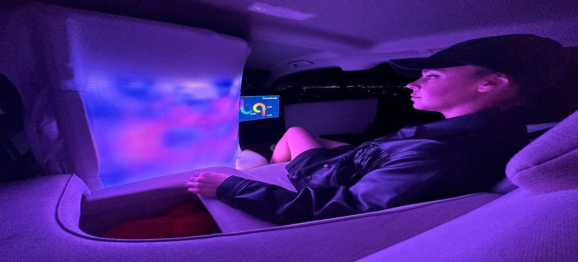
The light interaction is realized on a deep black background on a white projection surface, which serves as a screen for the light interaction. Light patterns in the style of moving galaxies are created and shown in the center of the screen. The entire scene radiates a universal appeal and creates a calming atmosphere in the vehicle interior. The light patterns are not only aesthetically pleasing, but also functional. They synchronize with the breathing exercises and move, creating a profound connection between the visual display and the physical activity. The predominant colors in this immersive experience are a calming blue and a mystical purple, which together create a harmonious and relaxing color palette (Figure 2).
The entire sequence lasts eight minutes. During this time, not only visual stimuli are presented, but also biological aspects are included. Neuronal structures and brain areas are activated by specific colors to create a deeper connection between the visual experience and the biological reactions in the brain to create a holistic effect.
The Vehicle as an Immersive Device to Enhance the Mental Health to a Peak state 681
Figure 2: Light-interaction concept in the vehicle interior.
Prototyping by using early prototypes offers the advantage of systematic, fast, simple and cost-effective implementation of ideas at an early stage of the innovation process. Especially when evaluating ideas in the early phases of the innovation process, early prototypes offer the added value of making ideas tangible. As Edel et al. (Bähr et al., 2023) have already shown in sev- eral projects and scientific studies, early implementations offer considerable innovation potential.
USER TESTING The aim of the study was a first assessment of the effect of the light interaction and breathing exercise on 1), situational states of mindfulness, 2) measuring the impact of the treatment of the breathing exercise with light interaction on subjective stress level, 3) identifying potentially occurring states of overload during the treatment and 4), an initial identification of the potential of the treatment from a product and company perspective.
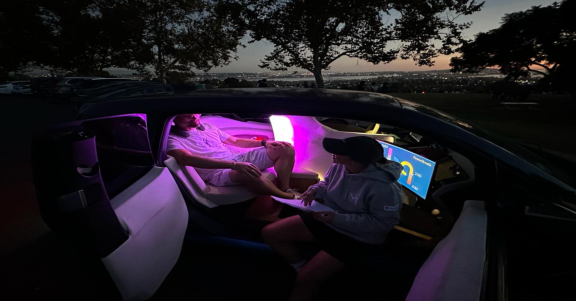
Figure 3: Testing the immersive experience.
To this end, a pre-post measurement approach was used to measure changes in subjective stress level. For this purpose, a range of validated scales
were included and adapted to the specific use case (see Table 1). In detail, four item batteries were applied. An assessment of the subjective stress level was based on the stress sub-factor of the Stress Adjective Checklist (Fischer et al., 1988). Subjective stress level was measured via 10 items prior to and follow- ing the light interaction with breathing exercise. To detect possible states of overload amongst participants, the NASA Task Load Index according to Hart and Staveland was included (National Aeronautics and Space Administra- tion (NASA), 2024). It measures states of mental demand, physical demand, temporal demand as well as the success in achieving the formulated goal of the task, required effort and frustration level. Lastly, the evaluation of the light interaction and breathing exercise as a product feature was conducted based on the product evaluation scale (Ker and Kao, 2021). Other product evaluation related items were additionally included in the survey.
Table 1. Measured changes in subjective stress levels.
Evaluation of the breathing exercise with light interaction NASA-Task Load Index Task load during the treatment
National Aeronautics and Space Administration (NASA) 2024
The study design consisted of three parts and was conducted at differ- ent outdoor locations in San Diego, USA between November 12, 2023 and November 13, 2023. Firstly, a pretest aimed at determining subjective stress levels before the treatment alongside socio-demographic characteristics. In the second step, participants underwent the treatment, namely the breath- ing exercise with light interaction. Here, participants sat in the demonstrator vehicle that enabled passengers to perform breathing exercises guided by light interaction at the rear bench. Lastly, after completing the treatment, partici- pants answered questions about their post-treatment subjective stress levels and their experience and evaluation of the breathing exercise in the proto- type. A standardized online questionnaire was used for the surveys, which were filled out by the participants on site. The items were rated on a five-point scale, with 5 being the highest level of agreement and 1 being the lowest.
RESULTS
Overall, more than 10 participants took part during the experiment and where interviewed and observed. Due to technical issues only six full data sets including the stress level detection could be used for the analysis as
The Vehicle as an Immersive Device to Enhance the Mental Health to a Peak state 683
described in the following (50% male, 50% female). The age of those partic- ipants ranged from 28 to 63 years (M = 38.17). The sample consisted of four full-time employees and two self-employed individuals. The results of the pre- post measurement using the stress subfactor of the stress adjective checklist (SACL) indicate that the breathing exercise generally reduced the subjective perception of stress. On average, participants reported a decrease of 0.28 points on a five-point scale in their perceived stress level after the breathing exercise. Table 2 reveals that the test subjects perceived an improvement par- ticularly in the positively valanced items after the breathing exercise. They stated that they felt calmer, happier and more relaxed. However, the partic- ipants also reported feeling more distressed on average after the breathing exercise. Overall, four out of six participants experienced a decrease in stress levels, while two reported an increase after the breathing exercise. Notably, these two participants were female and already had a moderate stress level prior to the breathing exercise. Besides the clearly observable stress-reducing tendency of the positively valanced items, items that were framed negatively did not offer a clear pattern. In terms of mindfulness during the treatment, as measured using the State Mindfulness Scale, both the overall index of mind (4.02) and the overall index of body (4.04) were above the midpoint of the scale. Participants who exhibited higher levels of mindfulness during the breathing exercise tended to feel less stressed. As a result, on average, two participants reported feeling no stress at all after the breathing exercise, while at the same time they showed a high level of mindfulness during the breathing exercise. It can be reasonably assumed that the mindfulness from the breathing exercise may contribute to a reduced perception of stress after the breathing exercise.
Table 2. Pre-post measurement using the stress subfactor of the stress adjective checklist (SACL).
*Reverse-coded items A look at the perceived task load of the treatment, i.e. the potential overload when performing the breathing exercise, provides information on possible states of overload during the breathing exercise. By that, it repre- sents an important component for the understanding of such treatment as a product feature and is crucial for the success of the latter.
Table 3. Perceived task load of the treatment.
Table available in the original PDF paper.
Item M Mo
1.83 1
How mentally demanding was the task? 2.67 1 How physically demanding was the task? 2.83 2 How hurried or rushed was the pace of the task? 1.83 1 How successful were you in accomplishing what you were asked to do? (recoded)
2.00 1
How hard did you have to work to accomplish your level of performance?
1.83 1
How insecure, discouraged, irritated, stressed, and annoyed were you?
Equation reproduced from the original PDF.
Descriptive analyses revealed that respondents rated mental (M = 2.67) and physical (M = 2.83) demands moderately below the central midpoint. During the breathing exercise, participants reported low levels of insecurity, discouragement, irritation, annoyance, or stress. In addition, participants reported that they did not feel hurried or rushed. Lastly, three out of six participants stated that they performed the breathing exercise very success- fully. Thus, results suggest that the task load during the breathing exercise remained moderate. This is reflected in the overall product evaluation, which lies above the central mid-point of the scale (M = 3.63) and implies a ten- dentially positive rating of the breathing exercise as a product feature. Three of the participants stated that they liked the breathing exercise. Furthermore, the exercise was rated as particularly exciting and desirable (see Table 4).
Table 4. Rating of the exercise.
Table available in the original PDF paper.
Item M Mo unfavorable | favorable 3.67 4 dislike | like 3.83 5 unappealing | appealing 3.50 3 unexciting | exciting 3.50 2 undesirable | desirable 3.67 4 Index 3.63 5
Delving further into the potential of the breathing exercise as a product feature, an increased preference for this feature is found. For four out of six participants, it is very likely that they will opt for the ride-hailing vehi- cle with breathing exercise instead of one without breathing exercise. These participants also showed consistently high scores on the Product Evaluation Scale. The remaining two participants rated it as likely or neutral to choose a ride-hailing vehicle with breathing exercise. When asked how often the participants would use the breathing exercise as a feature in ride-hailing vehi- cles, three out of six people stated that they would use it often, one person would always use it and two would sometimes opt for the feature. Thus, all
The Vehicle as an Immersive Device to Enhance the Mental Health to a Peak state 685
participants indicated that they could imagine using such a service at least occasionally when ordering a ride-hailing vehicle. In this regard, the most likely purposes of use were for reaching the workplace, school or university and for private purposes. As it is to be expected that the feature studied in this article will not be available in all ride-hailing vehicles from the begin- ning, the question of the willingness to wait longer for a vehicle with such a feature is central especially in phases of early market diffusion. Respondents tended to be willing to wait longer for a vehicle with breathing exercises. Two out of six stated that it is very likely that they would wait longer. One person rated it as rather likely to wait longer, two people assigned themselves to the central midpoint and for one person it is less likely to wait longer for a vehicle with breathing exercises. While not all subjects are willing to wait longer for a vehicle with the option of a breathing exercise, all participants stated that they would be willing to pay more for a ride-hailing service with an integrated breathing exercise.
CONCLUSION
The present empirical user study provides initial findings on the effect prop- erties of breathing exercises in combination with light interactions in the specific environment of a vehicle interior as well as an assessment of its potential for the specific ride-hailing business case. The descriptive analyses indicate that the breathing exercise may help to minimize perceived stress. In addition, the participants rate the feature favorably and are likely to spend additional time and/or money in order to being able to use this feature. Thus, the results suggest the potential of integrating breathing exercises into ride hailing services. However, due to the small sample size, it is crucial to per- form follow-up research based on a larger and more diverse sample. The described findings may serve as a starting point for inferential statistical anal- yses. In future studies, it might therefore be worth investigating whether the positive effects on stress perception after the breathing exercise can be quan- tified and statistically validated. The same applies to the suitability of the scales used for the intended measurement of effects, particularly regarding the measurement of subjective stress levels. A deeper look into the observed stress-reducing effects, particularly in the case of positively framed items, is indicated. By additionally incorporating biostatistical vital data such as heart rate into the study design would allow to draw an even more gran- ular and valid picture of the effect that was identified in the present study. Related to possible deeper follow-on analyses, it could be hypothesized that the perception of stress is reduced particularly among individuals who exhibit above-average mindfulness during the breathing exercise. How trait mind- fulness and the associated previous experience with mindfulness exercises moderates perceived stress reduction may provide deeper insights into the treatment’s mechanism of action and thus suggest important implications for the future, especially for the user research domain. This hypothesis integrates into the overarching question of the adoption processes of different poten- tial users. It may be assumed that individuals with existing experience with breathing exercises will be among the early adopters of the feature. How
this target group can be characterized in greater depth is of particular impor- tance for providers of such a feature and has implications for strategic and marketing decisions. At the same time, within the framework of an experi- mental design involving different experimental groups, variations in sensorial stimuli can be considered.
ACKNOWLEDGMENT
The authors express their sincere appreciation and gratitude for the contri- butions and support they have received in the course of this scientific work. Special thanks go to the collaboration with bq.labs.
REFERENCES
Bähr, S., Edel, F. (2023). The effect of colored light in the vehicle interior on the thermal comfort and thermal responses of vehicle occupants. In: Gesa Praetorius, Charlott Sellberg and Riccardo Patriarca (eds) Human Factors in Transporta- tion. AHFE (2023) International Conference. AHFE Open Access, vol. 95. AHFE International, USA. Birren, F. (2006). “Color & Human Response: Aspects of Light and Color Bearing
on the Reactions of Living Things and the Welfare of Human Beings.” Schiffer Publishing. Braun, F., Edel, F., Ardilio, A. (2022). Enhancing driver’s experience through emotion sensitive lighting interaction. In: Tareq Ahram and Christianne Falcão (eds) Usability and User Experience. AHFE (2022) International Conference. AHFE Open Access, vol. 39. AHFE International, USA. Dungs, J., Duwe, D., Hermann, F., Schmidt, A., Stegmüller S., Gaydoul, R., Peters,
P., Sohl, M., (2016) The value of time - Potential for user-centered services offered by autonomous driving, Online: https://publica.fraunhofer.de/entities/publication /8a820147-8e6e-4c84-ae82-4f7e30d07137/details. Edel, F.; Pulkus, C.; Kim, S.; Erhardt, J.; Kuijpens, S. Investigation and Development of Textile Lightweight Bodies for Urban Logistic Vehicles. World Electr. Veh. J. 2023, 14, 121. https://doi.org/10.3390/wevj14050121 Fischer, Donald G. Hansen, Robert J and Zemore, Robert W. (1988). Factor Struc-
ture of the Stress Adjective Checklist: Replicated, Educational and Psychological Measurement Volume 48, No. 1. Iebed, A. (2021). Possible effects of colors and symbols on selected groups (Doctoral dissertation, Private Pädagogische Hochschule der Diözese Linz). Ker, Wen-Ying. Kao, Danny Tengti. (2021). “Give me perfection or nothing!”: The
impact of perfectionism on product evaluation as moderated by secrecy effect and name volatility, Journal of Consumer Behaviour Volume 20, No. 6. Maercker, A., & Krampen, G. (2009). Relaxation methods. Textbook of behavior therapy: Volume 1: Basics, diagnostics, procedures, framework conditions, 499–506. National Aeronautics and Space Administration (NASA). (2024) The NASA TLX
Tool: Task Load. Website: https://humansystems.arc.nasa.gov/groups/tlx/. Ramachandran, V. S. (2011). The Tell-Tale Brain: A Neuroscientist’s Quest for What Makes Us Human. New York, NY: W. W. Norton & Company. Tanay, Galia. Bernstein, Amit. (2013). State Mindfulness Scale (SMS): Development
and initial validation, Psychological assessment Volume 25, No. 4.
LISTED IN THE AHFE DIGITAL BOOKSTORE CATALOGUE
Explore the complete digital volume
Advances in Human Factors of Transportation
Read this individual research paper free through the original publisher, or explore the full digital proceedings book.
ISBN 978-1-964867-24-3
Explore this ISBN in the AHFE Bookstore ↗Listed in the July 2026 bookstore catalogue; search by ISBN to confirm current availability · Digital book purchase optional