Fatihah Aisy, Erikco Hadides, Kukuh Lukiyanto, Christian . (2026). Effectiveness Analysis of Intellitrac GPS Application for Heavy Equipment Monitoring and Management in Coal Fired Power Plant Environment. In: Human Interaction and Emerging Technologies (IHIET-AI 2026): Artificial Intelligence and Future Applications. AHFE Open Access, vol. 201, pp. 412–424. https://doi.org/10.54941/ahfe1007195
Coal-fired power plants (PLTUs) naturally feature highly demanding environments that require heavy equipment to be managed with utmost efficiency, hence the deployment of GPS-based telematics such as Intellitrac to provide more visibility and improve the performance. Though there has been some validation of such systems through quantitative methods in terms of metrics like optimizing fuel consumption, the aspect that has been neglected is the understanding of the experience, human perspective and day-to-day use of the technology involved. In response, this research qualitatively explores how Intellitrac works by examining into the users' subjective lived experience to understand the role of human-factor in technological outcomes. An Interpretative Phenomenological Analysis (IPA) approach was used to conduct semi-structured interviews with five key personnel (Operations Manager, Field Supervisor, Maintenance Technician, and two Heavy Equipment Operators) at the Rembang PLTU, whose data was triangulated with direct observation and document review. Four major, interconnected themes emerged from the analysis: (1) a paradigm shift to more proactive vigilance but still largely constrained due to lack of integration with maintenance systems; (2) the paradox of visibility effect, which on one hand facilitates coordination but on the other hand corrodes trust due to perceived surveillance; (3) the inadequacy of raw metrics out of context, where data was seen to miss the operational details leading to defensive reactions; and (4) systemic problems such as fragmented IT systems and poor training that blocked efficiency. The findings suggest that the effectiveness is a phenomenon that is socially and technically constructed through a series of complex interactions between human and non-human agents which encompass and extend beyond technical dimensions. This research makes a theoretical contribution by opening the technology adoption literature with a qualitative-phenomenological lens that gives weight to subjective experience, organizational culture, and system integration as key factors. On the other hand, it yields important insights for developers and management, highlighting the fact that in order to maximize ROI, it is not only about technological advances per se but also rationalization, user empowerment, and context-sensitive analytical features that collectively facilitate a data-driven and flexible way of working.
The power generating sector, particularly coal-fired power plants (PLTU), is facing difficult and unstable conditions due to intensifying competition and the need for sustainable solutions (Sulich & Sotoudeh-Pelc, 2022). In this regard, the decision to increase efficiency and the use of smart asset management systems have been pointed out as significant measures for the survival and sustainability of the companies in the long term (Febrianto et al., 2025). The heavy equipment which constitutes a large part of the plant’s fixed assets as well as its main working material is the key driver of these objectives. Hence, supplying the plants with advanced technologies that can give instant, dependable data, and decision support is a great benefit in lessening operational risks, cutting maintenance costs, and raising production capacity in a sustainable way (Febrianto et al., 2025).
Regardless of technological advancement, power plants with coal- fired units still experience major problems such as limited asset visibility, underutilization, and challenges with predictive maintenance planning, which in turn lead to an economic viability line being negatively affected due to increased operational costs and unplanned downtime (Dashtaki et al., 2025; Febrianto et al., 2025). GPS based telematics systems have been broadly used to monitor equipment, coordinating logistics, and overseeing operations by the acquisition of real-time data (Ferro-Diéz et al., 2020; Qiu et al., 2024; ZALEWSKI et al., 2022).
The current studies concentrate on the numerical outputs of telematics incorporation such as improvement in on-road efficiency, reduction in fuel consumption, and optimal work time planning (Heinbach et al., 2022; Qiu et al., 2024). Such research works efficiently reflect measurable performance outcomes, but they fail to fully elucidate the human factors that relate to system acceptance, adaptation, and daily use (Nguyen Ngoc et al., 2022; Orlovska et al., 2019). Relying heavily on objective measures may lead to neglecting subjective experiences which ultimately determine if a technology is successfully utilized in organizational contexts (Bondarouk et al., 2022).
This gap is particularly evident in the PLTU environment, where specialized working conditions and organizational cultures have a significant impact on human-technology interaction (Masudin et al., 2024). Very little research has been done on how different users, the field operators and managerial staff, perceive and experience GPS based systems such as Intellitrac (Khayamian Esfahani et al., 2024; Piardi et al., 2023). Consequently, qualitative phenomenological aspects of technology use, particularly those associated with acceptance and adaptation, remain largely unnoticed (Braun & Clarke, 2019; Nizza et al., 2021).
This research examines the Intellitrac GPS system in a real coal-fired power plant context with the users’ actual experiences as a basis. Taking an interpretive phenomenological perspective, this study delves into the process whereby prolonged interaction with the system changes the users’ understanding of the performance of the plant, the perceived reduction of the operational costs, and the efficiency in equipment management (Domova et al., 2019; Sebald et al., 2024) Furthermore, it also considers the role organizational and cultural factors play in facilitating the success of the system implementation (Brundage et al., 2019). Therefore, it has two main aims: (1) to explore the daily experiences of the operators and managers who are users of the Intellitrac GPS system, and (2) ascertain whether those experiences are reflected in the belief about a decrease in operational costs and the increase in time efficiency.
Heavy Equipment and Operational Efficiency in PLTUs Mobile equipment management, especially heavy equipment assets, is a critical factor in the coal-fired power plants (PLTUs) operation and financial performance which rely on high reliability, optimal resource usage, and regulatory compliance. Inefficient management of these assets can, besides other damages, cause unscheduled downtimes, increase maintenance and repair costs, raise safety concerns, reduce the overall productivity of the plant which eventually leads to plant performance deterioration (Al Ameeri et al., 2023; Febrianto et al., 2025; Odeyar et al., 2022). A previous study has established that beyond the basic operational efficiency, strategic asset management can deliver long-term competitive advantage and help an organization to be resilient against a changing environment in case of an industrial setting (Gavrikova et al., 2020). In this context, the study has shown that well-organized and data-driven asset management can be beneficial in equipment lifespan extension, safety improvement, energy efficiency increase, and cost saving realization in the long term, whereas inadequate maintenance policies or incompetent execution contribute to inefficient operations and increased the risk of incidents (Al Ameeri et al., 2023). The fact remains that Indonesian PLTUs are still confronted with issues related to technology adoption and operational performance, thus highlighting the very core of which is to take advanced asset management approaches that are capable of incorporating real-time performance data, equipment specification, and operational scenarios (Febrianto et al., 2025; Masudin et al., 2024; Parvathareddy et al., 2025). This deficiency highlights a critical necessity it is insufficient to explore the technical practicality of data-driven solutions, but also how such systems are understood, taken up, and experienced by the users in real-life operational environments which give the justification of the methodological approach that has been chosen for the present investigation.
Effectiveness Analysis of Intellitrac GPS Application 415 Telematics and GPS in Asset Management
The rapid growth of information and communication technologies has fundamentally revolutionized the management of mobile assets across industrial sectors, owing to the evolution of telematics systems, particularly those based on GPS technology. Telemetics solutions have developed from merely location tracking to fully integrated IoT enabled platforms that support intelligent fleet and asset management by continuously monitoring asset location, condition, and utilization via embedded sensors and wireless communication technologies (Nasir et al., 2025; Ortiz et al., 2020). Real time data created and transferred to centralized or cloud-based platforms enables data driven planning, predictive maintenance, and resource optimization, resulting in significant operational and economic benefits (Nasir et al., 2025). Some of the previous research work has revealed that optimizing the route, improving the behavior of the operators, and continuously monitoring the performance in real time are able to significantly reduce the operational costs, delivery time, and fuel consumption levels and at the same time also enhance the safety by better coordinating the vehicle movements and preventing accidents (Ahmed et al., 2020; de Oliveira Neto et al., 2019; Khan et al., 2024; Szcześniak & Gorzelańczyk, 2024). Efficient use of the GPS-based telematics system together with system set-up, continuous data interpretation, and performance checking guarantees correct GPS positioning, punctual operations, and complete supply chain visibility (Shrivastava & Verma, 2024; Verma et al., 2024). However, despite these well documented performance outcomes, existing research is predominantly outcome-oriented and provides limited insight into how such technologies are practically implemented, interpreted, and experienced by users in real world operational contexts, emphasizing the need for methodological approaches capable of capturing the human and contextual dimensions of telematics adoption addressed in this study.
Research Gap and Phenomenological Approach Previously, studies on telematics and GPS systems have concentrated mainly on tangible outputs and operational outcomes, such as costs reduction and time efficiency, using quantitative methods (Braun & Clarke, 2019; Nizza et al., 2021). However, while these methods allow for objective performance assessments, they hardly help understand the human- technology interaction intricacies and do not capture the users’ subjective experiences in their normal work settings (Sapkota, 2024). Quantitative methods are incapable of fully depicting human behavior and technology use because of rigid assumptions and lack of sufficient sensitivity to the environmental and social factors (Kalibatienė & Miliauskaitė, 2023; Sapkota, 2024). On the other hand, well-known technology adoption models like TAM and UTAUT, although theoretically based, suffer from methodological weaknesses that limit their ability to consider contextual risks and the full spectrum of factors influencing behavioral intentions,
thus leaving a considerable part of adoption variance unexplained (Addotey-Delove et al., 2023; NDUBUEZE et al., 2024). As a result, there is a big gap in the literature about how heavy equipment operators and asset managers understand, accept, and use GPS based apps like Intellitrac in the specific operational environment of coal-fired power plants (PLTUs). A phenomenological approach, which reveals users’ lived experiences and intuitive perceptions in depth, is suitable for this purpose, as it uncovers not only how the daily use of Intellitrac affects the perception of performance improvement, cost efficiency, and time savings, but also the human processes that make technological effectiveness meaningful (Díaz Andrade et al., 2023; Fiordelli et al., 2024).
METHODOLOGY
This research is conducted through a qualitative research design known as Interpretative Phenomenological Analysis (IPA) which facilitates revealing users’ personal views on the usage of Intellitrac GPS. IPA was chosen because it is a method that intensely investigates how people understand their interaction with a particular technology (Bondarouk et al., 2022; Michelotto & Joia, 2024). The roles and experiential scope of the interview participants are summarized in Table 1.
Table 1: Interview with workers PLTU.
Table available in the original PDF paper.
Code Key Role in PLTU Potential Interview Focus P1 Operational Manager Strategic visibility, decision making
P2 Maintenance Technician System integration, maintenance patterns & barriers P3 Field Supervisor Daily coordination, Field data interpretation
Direct experience, pressure, feature utilization
P4 & P5 Heavy Equipment Operators Interviews were transcribed word for word and IPA’s iterative stages of immersion, initial noting, theme development, and cross case synthesis were used for analysis. The trustworthiness of the study has been ensured by triangulation, audit trails, and researcher reflexivity.
RESULT AND DISCUSSION
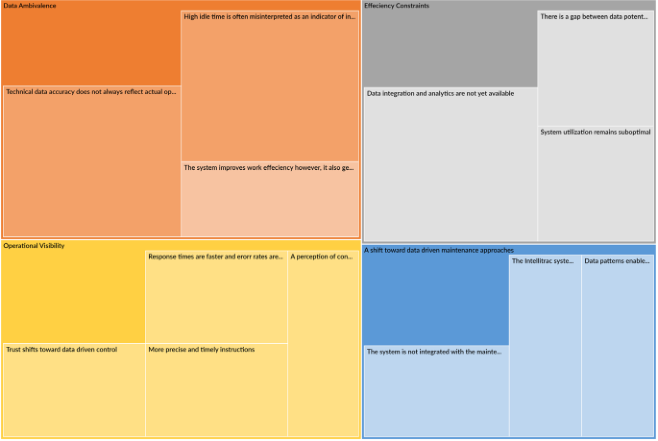
A phenomenological analysis of interview transcripts identified four interwoven themes that reflect users’ perceptions, interpretations, and negotiations about the usefulness of the Intellitrac GPS application at the PLTU. The findings illustrate a complicated picture that far surpasses merely effectiveness claims, thus demonstrating the interaction between technical potential and socio-technical reality at the ground level. Figure 1 depicts the four major concepts of Intellitrac GPS implementation.
Figure 1: Hierarchy chart.
Shifting From Reactive to Proactive Vigilance The introduction of Intellitrac system has changed the users’ mindset so radically that now, post implementation of this system, users react less and do fewer breakdown-led maintenance as the system leads to more proactive, pattern led vigilance. The team was so impressed by this tool that they termed it “first diagnostic” and used it for checking the trend in data and predicting the problems even before breakdowns. One of the fields supervisors (P3) narrated a story to depict their practice: “From the dashboard, I pretty much understood what BD-03 was doing. I saw that the worker was consistently putting 12-14 hours daily, and the time when the worker was not doing anything was less than 5%. Such an abnormally high energy level of employee doing the work set the case as highly unusual. So, I immediately took it up with them and it was confirmed by the maintenance team that it was very early-stage hydraulic wear. We left the minor repair works for the night shift and thus, the production breakdown of the major kind was totally averted.”
The story here shows a change of role at a fundamental level where the manager no longer is only a passive observer but an active interpreter of data and this totally changes the nature of collaboration with the system. Nevertheless, the top line single huge unit was a major constraint on the whole system’s capability to be proactive. A maintenance engineer (P2) made an uncovering regarding this: “Intellitrac is a closed system. Our maintenance work orders are raised when the hour meters are changed manually and not based on the number of actual hours of usage as the GPS operating hours track automatically. In fact, it is like there are two parallel realities that are describing the same piece of equipment.”
In fact, this research significantly broadens the knowledge of predictive maintenance based on IoT in the literature. The findings of our
phenomenological research contrast with those of quantitative articles that take the availability of data as a given enabling directly proactivity, by showing that true “prediction” is an interpretative and incorporative task of human organization. Therefore, the performance of technological innovations is not only determined by the amount of data but also by the extent to which data can be integrated without difficulty into the already existing business procedures such as the Computerized Maintenance Management Systems (CMMS). This illustrates the gap between technological capabilities and business process integration, thus, hailing the necessity for socio-technical alignment.
The Paradox of Visibility The second theme delineates the ambiguity of the transparency that is a consequence of the deployment of the real-time GPS tracking. One aspect of it, which has been widely acknowledged, is the unprecedented level of operational coordination and the resulting logistics efficiency. The same field supervisor (P3) who had been around then really upsets talking about the current situation said: “It used to take us a copious 30 minutes with a lot of radio calls and actual searching before we could finally locate the same dozer in the coal yard.” Now, I can pull up a map and guide a crew to the exact place in under 5 minutes.”
An operator (P4) confirmed the statement of the supervisor by mentioning the precision in the work execution and the benefits that came with the improvements: “You will notice the difference immediately when I say that instead of ambiguous instructions like ‘go over there’ we are now given the direction to ‘move 150 meters to the north.”
On the other hand, though, the experience of being under surveillance gradually eroded the old trust and the operator construed this loss of trust as a defect in his profession, operator (P5) has this to say: “There’s always a sense of being watched from above. You can’t explain a brief halt without the data identifying you. Trust in the screen is replacing trust gained via face- to-face contact and mutual understanding. “We sometimes joke that we’ve become just ‘coloured dots’ on a map.”
It is hardly surprising that the paradox of trade-off between efficiency and morale, which has been quantitatively downplayed by telematics research metrics, is spotted in visibility interventions. Thus, visibility can top the management’s priority list by bringing organizational power dynamics to the fore and contributing to worker objectification, subsequently employee morale and intrinsic motivation might suffer. These last two elements are seldom found in performance dashboards yet are indispensable for continued success.
Contextual Deficiency of Raw Metrics The third theme evolved from the tension of the system supplying detailed and technically accurate data but frequently lacking operational contexts, thus causing user stress and increasing managerial work. A supervisor (P3) acknowledged a fundamental limitation: “The data by Intellitrac are technically valid... however, from an operational perspective, they are not
Effectiveness Analysis of Intellitrac GPS Application 419 always correct. A 25% idle time signal by itself cannot tell whether the operator was simply waiting for a coal delivery, was in communication with a surveyor, or had been confronted with an unanticipated obstruction.”
Such a weakness meant that the field workers had to put up a defensive line. An operator (P4) talked about the depressing incident: “The contracting vehicle blocked my dozer for ten minutes. Intellitrac’s log: ‘BZ-03, idle, 10 minutes.’ I have to write a report and explain the situation. We are incessantly busy explaining the data instead of letting the data work for us.”
This theme stands in contrast to the positivist view that objective facts by nature are better. Using a phenomenological stance, it can be shown that data without the inclusion of involved, tacitly understood knowledge of the field operations is always lacking and even deceptive. The essence of real operational intelligence is that it needs hybrid systems which merge the use of automated measuring tools with methods for contextual annotation and user interaction.
Systemic Barriers to Efficiency The last theme deals with non-technical obsracles to the full evolution of intellitrac. Such multidimensional challenges consist of information system fragmentation, user capacity gaps, and an inability to transfer knowledge into practice. The first impediment is information system fragmentation. A maintenance technician (P2) stressed the “walls between systems” separating Intellitrac, WhatsApp, and CMMS (Computerized Maintenance Management System) platforms such as Maximo which are not only integrated but isolated: “Reports from Intellitrac are stopped at emails... Not connected.” This incompatibility results in the same work being repeated and data being entered manually, which is completely against the principles of automation.
The second constraint is restricted user capability. Operators (P4 and P5) lamented the lack of proficiency due to insufficient training: “We only use about 30% of it...basically, we’re passive users.” Consequently, the more sophisticated features like geofencing and self-assessment remain largely unexploited.
The third and major inhibiting factor is the gap between insight and rationale. A supervisor (P3) lamented the absence of managerial follow-up: “It is data that show potential savings… yet to realize those savings in terms of actual financial reports involves further decision-making and investment decisions...” The place where the biggest challenge lies is the separation of data from its practical application. In the absence of data being used to inform top-level decisions or to disseminate business information, data remain underutilized.
These findings tacitly criticize the literature portrayal of technology adoption solely as a direct line to efficiency (Michelotto et al., 2024). On the contrary, there are many socio technological challenges in the way of the implementation of technology, made visible through the execution process. The use of such beneficial tools as fuel-saving devices and the reduction in downtime can be achieved only if companies first address issues of integration, training, and process re-engineering. In other words, how well technology
GPS monitoring works is determined more by organizational factors such as competence in data management, a conducive data culture, and the ability of management to translate data into value than by technology or software (Gavrikova et al., 2020).
Synthesis and Implications In fact, the four core themes indicate the gradual evolution of Intellitrac GPS from basic tracking to creating significant and measurable operational cost and time savings by providing a clear operating picture. However, the problem of surveillance ambivalence and the demand for interpretative contextual information, both of which hinder adoption, are the technological effects that exacerbate the situation even more. Going up the strategic ladder from crude optimization (pure efficiency) to predictive maintenance necessitates resolving the integration and capacity issues of the system.
At the conceptual level this study proposes that technology evaluation frameworks should be broadened beyond input-output metrics. An all- inclusive framework must also take into consideration user experience, system integration quality, and the maturity of data-driven decision- making processes. These findings can be turned into practical, actionable recommendations. Technologies such as Intellitrac derive their real value from being constantly used together with CMMS and ERP platforms, and also for the empowerment of users at all levels through structured training programs. To ensure that a technology becomes a real organizational benefit, it must be continuously supported through regular data review sessions that help transform system insights into genuine process changes.
CONCLUSION
Through a phenomenological lens, this article interprets the role of the Intellitrac GPS system in enhancing operational visibility that increases cost and time savings and shifts maintenance from reactive to proactive. Its effectiveness, however, is influenced by socio technical factors such as surveillance ambivalence, system fragmentation, and user capability gaps. Theoretically speaking, these results extend technology acceptance models by including subjective experience and socio-psychological aspects that supplement quantitative studies. On the other hand, the report puts forward proposals like the system’s integration, extensive user training, and better data interpretation tools to unlock strategic value. Although this study only focuses on the Rembang PLTU site, the researchers urge further examination of socially empowering and adaptive technology deployments in the heavy industries by employing mixed-methods and longitudinal research designs.
DISCLOSURE STATEMENT The research described in this paper did not get any specific grant from funding agencies in the public, commercial, or non-profit sectors. At the very beginning of this work, the authors employed AI-assisted tools for brainstorming, literature exploration, and preliminary drafting of some
Effectiveness Analysis of Intellitrac GPS Application 421 sections. All analysis, interpretation, results, critical discussion, and final conclusions rest solely with the authors.
ACKNOWLEDGMENT
The authors would like to express their gratitude to the management and employees of the Rembang Coal-Fired Power Plant (PLTU) for being so willing, friendly, and generous with their time during data collection for the present study. We would also like to extend our special appreciation to the operators, technicians, supervisors, and managers for their valuable contributions and sharing their experiences and insights. We are grateful for the support and facilities extended to us by Bina Nusantara University in this research.
DATA AVAILABILITY Hadides, Erikco; aisy, fatihah; Lukiyanto, Kukuh; Christian (2025), “Qualitative Data on User Experience and Perceived Effectiveness of Intellitrac GPS in Coal-Fired Power Plant Operations (PLTU)”, Mendeley Data, V1, doi: 10.17632/v7d6drgcpp.1
REFERENCES
Addotey-Delove, M., Scott, R. E., & Mars, M. (2023). Healthcare Workers’ Perspectives of mHealth Adoption Factors in the Developing World: Scoping Review. In International Journal of Environmental Research and Public Health (Vol. 20, Issue 2). MDPI. https://doi.org/10.3390/ijerph20021244 Ahmed, F., Phillips, M., Phillips, S., & Kim, K. Y. (2020). Comparative study of
seamless asset location and tracking technologies. Procedia Manufacturing, 51, 1138–1145. https://doi.org/10.1016/j.promfg.2020.10.160 Al Ameeri, T. A., Ab Rahman, M. N., & Muhamad, N. (2023). Analysing Effective and Ineffective Impacts of Maintenance Strategies on Electric Power Plants: A Comprehensive Approach. Energies, 16(17). https://doi.org/10.3390/en16176243 Bondarouk, T., Iqbal, Q., Vrchota, J., Cunha, L., Silva, D., & Maggioli, S. (2022).
OPEN ACCESS EDITED BY Exploring the status of the human operator in Industry y..: A systematic review. Braun, V., & Clarke, V. (2019). Reflecting on reflexive thematic analysis. Qualitative Research in Sport, Exercise and Health, 11(4), 589–597. https://doi.org/10.1080 /2159676X.2019.1628806
Brundage, M. P., Sexton, T., Hodkiewicz, M., Morris, K., Arinez, J., Ameri, F., Ni, J., & Xiao, G. (2019). Where Do We Start? Guidance for Technology Implementation in Maintenance Management for Manufacturing. Journal of Manufacturing Science and Engineering, 141(9). https://doi.org/10.1115/1.4044105 Dashtaki, M. R., Jafari, A. J., & Hoseinie, S. H. (2025). Development of a new
method for maintainability and downtime analysis of mining machinery. Scientific Reports, 15(1). https://doi.org/10.1038/s41598-025-88505-3 de Oliveira Neto, G. C., Costa, I., de Sousa, W. C., Amorim, M. P. C., & Godinho Filho, M. (2019). Adoption of a telemetry system by a logistics service provider for road transport of express cargo: a case study in Brazil. International Journal of Logistics Research and Applications, 22(6), 592–613. https://doi.org/10.1080 /13675567.2018.1564253 Domova, V., Muñoz, A. A., Edoff, P., & Vaara, E. (2019). Feel the water: Expressing
physicality of district heating processes in functional overview displays. ISS 2019 - Proceedings of the 2019 ACM International Conference on Interactive Surfaces and Spaces, 229–240. https://doi.org/10.1145/3343055.3359708 Díaz Andrade, A., A. Techatassanasoontorn, A., & Singh, H. (2023). Understanding the digital experience: phenomenological IS research. In Handbook of Qualitative Research Methods for Information Systems (pp. 88–103). Edward Elgar Publishing. https://doi.org/10.4337/9781802205398.00011 Febrianto, A., Suef, M., Hakim, M. S., Yayat, K. D., & Hardiatama, I. (2025).
Operational efficiency and sustainable asset management of heavy equipment in industry: a data-driven framework. Results in Engineering, 27. https://doi. org/10.1016/j.rineng.2025.106476 Ferro-Diéz, L. E., Villegas, N. M., & Diáz-Cely, J. (2020). Location data analytics in the business value chain: A systematic literature review. In IEEE Access (Vol. 8, pp. 204639–204659). Institute of Electrical and Electronics Engineers Inc. https://doi.org/10.1109/ACCESS.2020.3036835 Fiordelli, M. (2024). Transitioning Perspectives in Digital Health Through
Phenomenology Integration. Journal of Medical Internet Research, 26, e62691. https://doi.org/10.2196/62691 Gavrikova, E., Volkova, I., & Burda, Y. (2020). Strategic aspects of asset management: An overview of current research. Sustainability (Switzerland), 12(15). https://doi. org/10.3390/su12155955 Heinbach, C., Meier, P., & Thomas, O. (2022). Designing a shared freight service
intelligence platform for transport stakeholders using mobile telematics. Information Systems and E-Business Management, 20(4), 847–888. https://doi. org/10.1007/s10257-022-00572-5 Kalibatienė, D., & Miliauskaitė, J. (2023). An Effect of User Experience on A Data-Driven Fuzzy Inference of Web Service Quality. International Journal of Computers, Communications and Control, 18(4). https://doi.org/10.15837/ ijccc.2023.4.5162 Khan, A. M., Alrasheed, K. A., Waqar, A., Almujibah, H., & Benjeddou, O.
(2024). Internet of things (IoT) for safety and efficiency in construction building site operations. Scientific Reports, 14(1). https://doi.org/10.1038/ s41598-024-78931-0
Effectiveness Analysis of Intellitrac GPS Application 423 Khayamian Esfahani, B., Boundaouda Camara, S., & Bourma, R. (2024). Bridging
the Gap: Enhancing Mobility and Usability in Industrial Devices for Operational Efficiency. Human Factors in Design, Engineering, and Computing, 159. https:// doi.org/10.54941/ahfe1005664 Masudin, I., Tsamarah, N., Restuputri, D. P., Trireksani, T., & Djajadikerta, H.
G. (2024). The impact of safety climate on human-technology interaction and sustainable development: Evidence from Indonesian oil and gas industry. Journal of Cleaner Production, 434. https://doi.org/10.1016/j.jclepro.2023.140211 Michelotto, F., & Joia, L. A. (2024). Organizational Digital Transformation Readiness: An Exploratory Investigation. In Journal of Theoretical and Applied Electronic Commerce Research (Vol. 19, Issue 4, pp. 3283–3304). Multidisciplinary Digital Publishing Institute (MDPI). https://doi.org/10.3390/jtaer19040159 Nasir, M. N. M., Zin, M. S. I. M., Isa, A. A. M., & Salim, S. I. (2025). Smart Asset
Tracking and Monitoring: A Practical Approach for Resource Optimization. International Journal of Research and Innovation in Social Science, IX(VIII), 5141–5152. https://doi.org/10.47772/IJRISS.2025.908000415 Ndubueze, I. F., Osman, M. N., Hasan, N. A. M., & Waheed, M. (2024). Evaluating Technology Adoption Model On Agro-Small Performance In Selangor, Malaysia. Quantum Journal of Social Sciences and Humanities, 5(6), 38–50. https://doi. org/10.55197/qjssh.v5i6.466 Nguyen Ngoc, H., Lasa, G., & Iriarte, I. (2022). Human-centred design in industry
4.0: case study review and opportunities for future research. In Journal of Intelligent Manufacturing (Vol. 33, Issue 1, pp. 35–76). Springer. https://doi. org/10.1007/s10845-021-01796-x Nizza, I. E., Farr, J., & Smith, J. A. (2021). Achieving excellence in interpretative phenomenological analysis (IPA): Four markers of high quality. Qualitative Research in Psychology, 18(3), 369–386. https://doi.org/10.1080/14780887.20 20.1854404 Odeyar, P., Apel, D. B., Hall, R., Zon, B., & Skrzypkowski, K. (2022). A Review
of Reliability and Fault Analysis Methods for Heavy Equipment and Their Components Used in Mining. In Energies (Vol. 15, Issue 17). MDPI. https://doi. org/10.3390/en15176263 Orlovska, J., Novakazi, F., Wickman, C., & Soderberg, R. (2019). Mixed-method design for user behavior evaluation of automated driver assistance systems: An automotive industry case. Proceedings of the Design Society: International Conference on Engineering Design, 2019-August, 1803–1812. https://doi. org/10.1017/dsi.2019.186 Ortiz, F. M., Sammarco, M., Costa, L. H. M. K., & Detyniecki, M. (2020). Vehicle
Telematics Via Exteroceptive Sensors: A Survey. http://arxiv.org/abs/2008.12632 Parvathareddy, S., Yahya, A., Amuhaya, L., Samikannu, R., & Suglo, R. S. (2025).
Transforming mining energy optimization: a review of machine learning techniques and challenges. In Frontiers in Energy Research (Vol. 13). Frontiers Media SA. https://doi.org/10.3389/fenrg.2025.1569716 Piardi, L., Queiroz, J., Pontes, J., & Leitão, P. (2023). Digital Technologies to Empower Human Activities in Cyber-Physical Systems. IFAC-PapersOnLine, 56(2), 8203–8208. https://doi.org/10.1016/j.ifacol.2023.10.1001
Qiu, M., Gao, L., Lin, Z., Zheng, M., & Lin, Q. (2024). Green logistics optimization for coal supply in a power plant connecting maritime port. Cleaner Logistics and Supply Chain, 13. https://doi.org/10.1016/j.clscn.2024.100177 Sapkota, M. (2024). Implications and Critiques of Quantitative Research: A
Systematic Review. Journal of Learning Theory and Methodology, 5(3), 153–159. https://doi.org/10.17309/jltm.2024.5.3.09 Sebald, C., Treiber, M., Eryilmaz, E., & Bernhardt, H. (2024). Usability Testing of Novel IoT-Infused Digital Services on Farm Equipment Reveals Farmer’s Requirements towards Future Human–Machine Interface Design Guidelines. AgriEngineering, 6(2), 1660–1673. https://doi.org/10.3390/agriengineering6020095 Shrivastava, P., & Verma, R. (2024). Integrating Blockchain Technology with
Telematics for Secure and Transparent Data Sharing in Supply Chain Management License: Creative Commons Attribution 4.0 International License (CC-BY 4.0) International Journal of Global Innovations and Solutions (IJGIS)
IJGIS June 2024 Integrating Blockchain Technology with Telematics for Secure and Transparent Data Sharing in Supply Chain Management 2. In International Journal of Global Innovations and Solutions. Sulich, A., & Sołoducho-Pelc, L. (2022). Changes in Energy Sector Strategies: A Literature Review. In Energies (Vol. 15, Issue 19). MDPI. https://doi.org/10.3390/ en15197068 Szcześniak, J., & Gorzelańczyk, P. (2024). Analysis of the use of logistics-telematics
systems for cost reduction in a transport company. Journal of Sustainable Development of Transport and Logistics, 9(1), 6–18. https://doi.org/10.14254/ jsdtl.2024.9-1.1 Verma, R., Singh, B. K., & Zahidi, F. (2024). Management of GPS Tracking Systems in Transportation (pp. 251–263). https://doi.org/10.1007/978-981-97-0515-3_11 Zalewski, W., Osińska, M., & Żurek, M. (2022). Do Telematics Technologies Help
To Manage Road Transport Enterprises? Evidence From Sme In Poland. Scientific Papers of Silesian University of Technology. Organization and Management Series, 2022(157), 723–741. https://doi.org/10.29119/1641-3466.2022.157.46
LISTED IN THE AHFE DIGITAL BOOKSTORE CATALOGUE
Explore the complete digital volume
Human Interaction and Emerging Technologies (IHIET-AI 2026): Artificial Intelligence and Future Applications
Read this individual research paper free through the original publisher, or explore the full digital proceedings book.
ISBN 978-1-964867-77-9
Explore this ISBN in the AHFE Bookstore ↗Listed in the July 2026 bookstore catalogue; search by ISBN to confirm current availability · Digital book purchase optional