Carl Jörgen Normark (2021). Personalizable Vehicle User Interfaces for Better User Experience. In: Advances in Affective and Pleasurable Design. AHFE Open Access, vol. 14. https://doi.org/10.54941/ahfe100563
In earlier research it has been shown that a personalizable product, one that is flexible and can be tailored to suit the users’ needs, can offer a closer, more emotional and personal attachment to the product that affects the way the product is used and experienced. The possibility to personalize a product can increase both user experience of the product and usability, since unwanted functions and appearance related features can be removed and other features more usable and relevant to the user can be chosen. The objective of this paper is to show that the possibility to personalize a product is beneficial for users emotional responses towards the product. In this paper data from a study that used experience prototyping to study what happens if computerized interface personalization features are brought into the vehicle context. Twenty participants participated in a study, where a personalizable vehicle driver interface prototype was evaluated with a number of methods, for example interviews and Microsoft product reaction cards. The interface prototype was integrated in a high fidelity driving simulator and the participants interacted with the system both while driving the simulator and while standing still in order to be in the right context for increased ecological validity. All of the participants would, to some extent, like to use a system like this in their own cars. The possibility to make a product ones’ own with a personal touch was important for many participants. This makes the users feel better and the product funnier and more entertaining to use. The usefulness and flexibility of the system was the most salient features and about 22% of the words best describing the users experience with the interface were related to their emotional experiences. It can be concluded that personalizable vehicle interfaces can increase both the usefulness and the user experience with the product.
Lately, there has been a great focus on positive emotional experiences within human-product relations. This follows the increasing interest in positive affect and emotions in positive psychology (Seligman and Csikszentmihalyi, 2000). There are many frameworks for describing this relationship and many share one characteristics that differ them from traditional human factors design, namely the view on where pleasure come from: removing usability issues that causes the user some pain versus promoting positive aspects of the product that provide delight and enhancement. There are studies within affective human factors design that show that positive affect and emotion leads to, for example, more creative and flexible decision making (Isen, 2001), increased perceived usability when the product is regarded as aesthetically attractive (Ben-Bassat, Meyer, and Tractinsky, 2006; Sauer and Sonderegger,
2009) and also that the user performs better (Sonderegger and Sauer, 2010). Also Jordan (1998) has shown that aesthetics as well as usability and performance affect the user’s pleasure with the product. The distinction between removing pain and promoting pleasure translates to the difference between utility oriented perspectives (problem solving, useful and usable) and hedonically oriented perspectives (feeling, aesthetics, attractiveness). This distinction is present for example within the frameworks of Jordan (2000), Forlizzi (2008), and Hassenzahl (2003) who defines the views as pragmatic qualities and hedonic qualities. The emotional relationship is specifically important in personalized products. For example Blom and Monk (2003) state that personalized IT affects users in emotional, cognitive, and social ways.
Users motivation for using personalization There are ways to bridge the gap between users’ needs and the solutions that satisfy them, for example Gkouskos and Normark’s (2014) need dimensions. A personalizable product can form the solution that satisfies many needs. In order to make a similar bridge over the gap between users’ needs and the actions people take when they personalize their products Oulasvirta and Blom (2008) use the notion of motivation. The users’ motivations for using personalization features are important for which type of emotional affect the product will convey. They make a distinction between extrinsic motivation (something outside of the user mandates what to be done) and intrinsic motivation, (the task itself motivates). According to Oulasvirta and Blom (2008) personalization features can support the users to align their motivation with their actions. Personalization features also help nurturing the users’ intrinsic motivation. Utility aspects are often related to extrinsic motivation and hedonic aspects are often related to intrinsic motivation. Oulasvirta and Blom’s (2008) motivations build upon Deci and Ryan’s (1985) Self Determination Theory (SDT), which identifies three basic needs: autonomy, competence, and relatedness. Among the motivations for personalization identified by Oulasvirta and Blom (2008) that are related to SDT are: control and stabilization, differentiation, flow, emotional expression, ego-involvement, identity expression, and territory marking.
Motivational views in personalization are also present in other studies. For example, Fan and Poole (2006) have identified four different strategies for personalization each with different motivations for using personalization features: Architectural, Relational, Instrumental, and Commercial. The motivation for using personalization related to the architectural view is to express oneself through the design of one’s environment. The relational view is motivated by socialization and a sense of belonging. The instrumental view caters to humans’ efficiency and productivity sides. The motivation related to commercial personalization is to increase ones material and psychic welfare.
There are also many other motives for using a personalizable system to address hedonic and emotional factors. For example, people can express themselves through products that represent events, relations, or feelings important to the her or him (Hassenzahl, 2003), the user’s personal and group identity can be represented (Blom and Monk, 2003), and the users identity can be represented by modifying and making an interface of her or his own (Kleine, Kleine, and Allen, 1995). Mugge, Schoormans, and Schifferstein (2009) and Normark and Mankila (2013) also showed that the attachment between user and product is important for the adoption and usage of personalized products.
AIM OF THE RESEARCH Van Velsen (2011) points out that research regarding personalization is mostly within effectiveness and efficiency and that usability and user experience are underrepresented in personalization research. This gap in the research motivates the aim of this paper:
What are the users’ emotional experiences with a personalizable vehicle interface prototype?
What motivates people to use hedonically oriented personalization features?
METHOD
Participants This study consisted of 20 participants from Luleå University of Technology, four university academics within the same department as the researcher, six academics within other areas of the university, five university administrators, and five students. In total eight females and twelve males in the ages of 22-60 years, M = 36.1 years. When asked about their tendencies to personalize their products 19 participants responded that they personalize their products in some way.
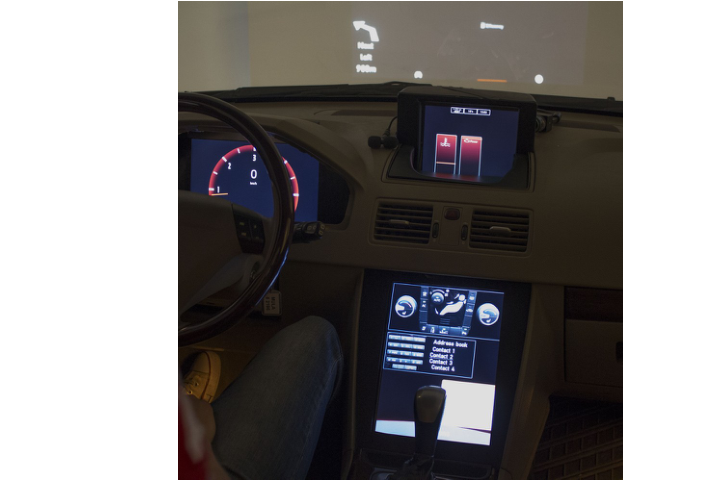
The study was conducted with a high fidelity driving simulator as a carrier for the prototype interface. The driving simulator consists of an actual vehicle cab with preserved factory standard automotive controls in order to maintain a realistic setting for studies regarding experiences of in-vehicle systems. The driving simulator is equipped with integrated programmable LCD displays, and a simulated HUD display in order to accommodate design and testing of various in-vehicle system prototypes.
Figure 1. The user interface prototype inside the driving simulator
RESULTS
The results were analyzed in order to uncover to which extent the participants’ experiences with the prototype were emotionally laden. Also, to which extent the participants personalize their personal gadgets to reflect the hedonic view. Two views on motivations for personalization were merged into one framework, and finally, the participants’ experiences with the prototype were compared and matched to these motivational views.
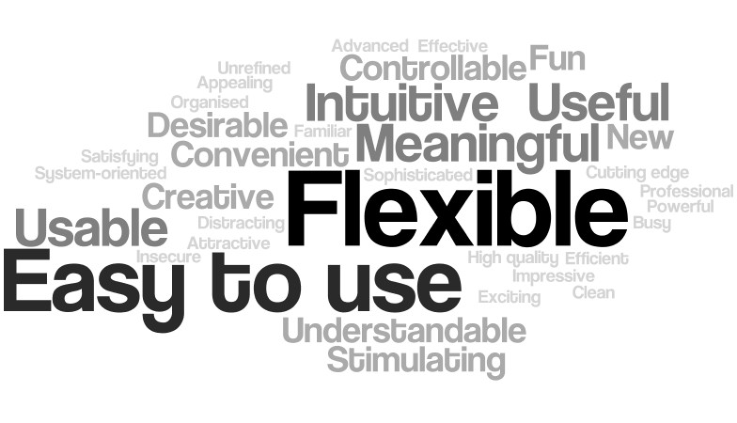
Figure 2. Word cloud visualising most frequently chosen words. (Created with wordle.net)
Experiences about personalization in general
The participants were asked whether they usually personalize their own phone or computer. Almost all, 19 participants, reported that they personalize either one of those. Fourteen participants personalized both functionality and appearance of the product. Nine participants personalized things related to structure and eight to make the device more personal, relevant, or to make it feel new. Four altered for better performance specifically.
After having had some experience with the prototype, the interviews revealed that most participants were positive towards the concept of personalizable vehicle interfaces. In general, 14 participants expressed a liking of the hedonic look-and-feel aspects of the interface personalization. Seven of these participants expressed that hedonic look-and- feel personalization was not only a bonus, but also an important feature of electronic consumer products in general.
User experiences of the prototype interface The chosen word from the product reaction method where analyzed in order to study to which extent they reflected hedonically oriented experiences. The most frequent chosen words among the top five circled descriptive adjectives were mostly positive towards the prototype, except for the word ‘distracting’ (Figure 2. ). The same pattern was found, when taking all ticked words in the list into consideration. 82 (22%) of the total pool of chosen words were considered related to the users’ emotional feeling or reaction to the interface. When considering the words marked as being the most important the same ratio was maintained, 22 out of 100 (22%) words were emotionally related. Only one percent among the emotional words were in a negative manner. The most frequently chosen emotionally laden descriptive words were: appealing, attractive, creative, desirable, entertaining, fun, and satisfying.
Mapping out the motivational views on personalization The research by Oulasvirta and Blom (2008) and Fan and Poole (2006) show some similarities and the frameworks can be roughly mapped onto each other (Table 1).
Motivations for control and stabilization, which satisfies the need of autonomy strongly relates to instrumental personalization (efficiency and productivity).
Motivations for interest, mastery, differentiation, and flow, which satisfy the need of competence strongly relates to architectural personalization (expression through the built environment)
Motivations for emotional expression, ego-involvement, identity, and territory marking, which satisfy the need of relatedness strongly relates to relational personalization (socialization and belonging). Commercial personalization is disregarded since it is mostly out of the users influence.
Table 1: Two frameworks of motivations for personalization merged together
Table available in the original PDF paper.
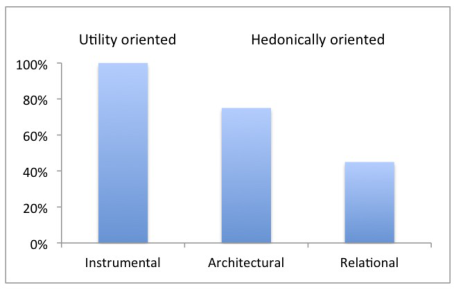
Figure 2. Percentage of the participants’ motivations related to different personalization strategies.
The participants’ motivations for using personalization in this study were analyzed and compared to the unified framework (Figure 2. Percentage of the participants’ motivations related to different personalization strategies.). The interviews with the participants revealed that, given that they had access to such a system, all of them would personalize the system to accommodate instrumental aspects. These aspects include selecting the suitable set of functions or improving the usability, as exemplified in the following quote: “It felt like I became a more efficient driver when I personalized as I want to have it. That what’s relevant is in the right place. Both the type of info and the placement”.
However, there was also a substantial interest for personalizing to accommodate more hedonically oriented aspects. Fifteen of the participants seem to be motivated by architectural related motivations. The visual appearance for example is important for many participants: “I change primarily the visual appearance. For me it’s important to personalize the visual, not only on a functional basis”. Some participants were even very explicit in that they wanted to personalize in a hedonic way: “I want to change background and such, mostly for the feeling of it, not the function”. Some also mentioned intrinsically motivated views of competence and mastery: “You get very eager to personalize it and can’t keep away from it. You want to keep on optimizing the system”.
There were also nine of the participants that expressed some kind of view related to relational personalization. Both that it will fit and reflect the individual: “I always want to change the interface, the aesthetics, to fit me. Make it a little more personal“ and also that there was a factor that may affect other peoples view: “It’s desirable both to me and to others. It can be something to brag about, that you have the latest apps or so”.
DISCUSSION
It is important to note that even if the emphasis is on the emotional side of human-product relations in this paper, the majority of the experiences with the prototype interface were still utility related. All 20 participants could see instrumental benefits and motivations with a personalizable interface, whereas six of these did not consider the hedonic side at all. Both the utility and hedonic aspects need to be considered at the same time in order to form a good user experience. Tractinsky, Abdu, Forlizzi, and Seder (2011) claim that both of these aspects matter, when humans make a choice, and Blom and Monk (2003) suggest that personalization features affect users cognitively and emotionally, but also socially.
Many participants emphasized that the biggest advantages with a personalizable product is that it can be “adapted to particularly suit me”. It can be argued that this construct can be related to the instrumental view (it conveys the right functionality), to a more architectural hedonic view (it makes the user feel good), or to a relational view (it reflects the user’s personality). However, this construct is most probably a composite of all three of these aspects and all three contribute to making the product appear to be tailored to just that particular user.
Affective design can be considered as consisting of a continuum of stages, where affect is considered to be the first initial reaction towards an object, while emotion is a more conscious longer lasting reaction developed over time (Aboulafia and Bannon, 2004). The relatively short time the participants in this study interacted with the prototype interface elicited some affective responses. However, the use of interviews in the study gives a broader view on how people function and can also give some insights in how the product is likely to affect the user emotionally in the future as well.
All the participants in the study emphasized instrumental aspects in personalization, such as changing functions. Many of the motivations for using personalizable features were also categorized as related to the hedonic look-and- feel aspects. The smallest category was regarding relational aspects. This outcome is not surprising since an interface was the object of study. The vehicle interface has a central role in the driving of the vehicle, which is a task that is laden with safety related issues. Thus, the functionality must be of uttermost importance. Nevertheless, the hedonic aspects were still apparent and many participants highlighted that look-and-feel aspects are important in the use of technological products.
REFERENCES
Aboulafia, A. and Bannon, L.J. (2004) ‘Understanding affect in design: an outline conceptual framework’, Theoretical Issues in Ergonomics Science, Vol. 5, No. 1, pp.4–15. Benedek, J., & Miner, T. (2002). Measuring Desirability: New Methods for Evaluating Desirability in a Usability Lab Setting.
Redmond: Microsoft Corporation, 2002. Ben-Bassat, T., Meyer, J. and Tractinsky, N. (2006) ‘Economic and subjective measures of the perceived value of aesthetics and usability’, ACM Transactions on Computer. Human Interaction, Vol. 13, No. 2, pp.210–234. Blom, J. O., & Monk, A. F. (2003). Theory of personalization of appearance: why users personalize their pcs and mobile phones.
Human-Computer Interaction, 18(3), 193-228. Caird, J. K., & Horrey, W. J. (2011). Handbook of Driving Simulation for Engineering, Medicine and Psychology (Chapter 5).
Alberta: CRC Press. Isen, A.M. (2001) ‘An influence of positive affect on decision making in complex situations: theoretical issues with practical implications’, Journal of Consumer Psychology, Vol. 11, No. 2, pp.75–85. Fan, H., & Poole, M. S. (2006). What is personalization? Perspectives on the design and implementation of personalization in
information systems. Journal of Organizational Computing and Electronic Commerce, 16(3-4), 179-202. Forlizzi, J. (2008) 'The product ecology: understanding social product use and supporting design culture', International Journal oJ Design, Vol. 2, No. 1, pp.11- 20. Gkouskos, D., Normark, C. J., & Lundgren, S. (2014). What Drivers Really Want: Investigating Dimensions in Automobile User
Needs. International Journal of Design, 8(1), . Hassenzahl, M. (2003) 'The thing and I: understanding the relationship between user and product', in Blythe, M.A., Monk Andrew, F., Overbeeke, K. and Wright, P.C. (£ds.): Funology: From Usability to Enjoyment, Kluwer Academic Publishers, Dordrecht, The Netherlands, pp.31-42. Jordan, P. (2000). Designing pleasurable products: An introduction to the new human factors. CRC Press. Kleine, S. S., Kleine III, R. E., & Allen, C. T. (1995). How is a possession" me" or" not me"? Characterizing types and an
antecedent of material possession attachment. Journal of Consumer Research, 327-343. Lewis, J. R. (1995). IBM Computer Usability Satisfaction Questionnaires: Psychometric Evaluation and Instructions for Use.
International Journal of Human-Computer Interaction, Vol. 7:1, pp. 57-78. Mugge, R., Schoormans, J.P. and Schifferstein, H.N. (2009) ‘Emotional bonding with personalized products’, Journal of Engineering Design, Vol. 20, No. 5, pp.467–476. Normark, C. J., & Garling, A. (2011). Assessment of Automotive Visual Display Guidelines and Principles: A Literature Review.
The Design Journal, 14(4), 446-474. Normark, C. J., & Mankila, J. P. (2013). Personalizable in-vehicle systems, technology acceptance and product attachment.
International Journal of Human Factors and Ergonomics, 2(4), 262-280. Oulasvirta, A., & Blom, J. (2008). Motivations in personalisation behaviour. Interacting with Computers, 20(1), 1-16. Seligman, M.E.P. and Csikszentmihalyi, M. (2000) ‘Positive psychology: an introduction’, American Psychologist, Vol. 55, No.
1, pp.5–14. Sauer, J. and Sonderegger, A. (2009) ‘The influence of prototype fidelity and aesthetics of design in usability tests: effects on user behaviour, subjective evaluation and emotion’, Applied Ergonomics, Vol. 40, No. 4, pp.670–677. Someren, M. W., Barnard, Y. F., & Sandberg, J. A. (1994). The think aloud method - A practical guide to modelling cognitive
processes. London: Academic Press. Sonderegger, A. and Sauer, J. (2010) ‘The influence of design aesthetics in usability testing: effects on user performance and perceived usability’, Applied Ergonomics, Vol. 41, No. 3, pp.403–410. Tractinsky, N., Abdu, R., Forlizzi, J., & Seder, T. (2011). Towards personalisation of the driver environment: investigating
responses to instrument cluster design. International Journal of Vehicle Design, 55(2), 208-236
Velsen, L. S. (2011). User-centered design for personalization. University of Twente. Van Velsen, L., Van der Geest, T., Klaassen, R., & Steehouder, M. (2008b). User-centered evaluation of adaptive and adaptable systems: a literature review. The Knowledge Engineering Review, Vol: 23:3, pp. 261-281.
LISTED IN THE AHFE DIGITAL BOOKSTORE CATALOGUE
Explore the complete digital volume
Advances in Affective and Pleasurable Design
Read this individual research paper free through the original publisher, or explore the full digital proceedings book.
ISBN 978-1-4951-2109-8
Explore this ISBN in the AHFE Bookstore ↗Listed in the July 2026 bookstore catalogue; search by ISBN to confirm current availability · Digital book purchase optional