Yixin Fan, Xiaoping Hu (2022). Functional Clothing Design for the Elderly. In: Human Factors in Aging and Special Needs. AHFE Open Access, vol. 38, pp. 72–79. https://doi.org/10.54941/ahfe1001666
This paper introduces a functional clothing design for the elderly. Due to the aging of the elderly body organs and tissues, joint stability and mobility are declining, bone density and strength are also declining, physical activity is not as good as before. The purpose of this paper is to determine the needs and problems of the elderly on clothing and design functional clothing in line with their physiological functions and life needs.To determine the needs and problems of the elderly for clothing, we prepared a questionnaire, and the sample was from 101 elderly people across the country. Sample data show that the elderly have a great demand for the functionality of clothing, and have varying degrees of feedback on the color, fabric, size, structure, and other aspects of clothing. In combination with the questions reflected by the elderly in the questionnaire survey, we conducted market research on the existing clothing for the elderly. The results showed that the existing clothing for the elderly did not fully consider the physiological characteristics of the elderly to carry out the targeted design, and the clothing sold by the brand was relatively simple. In addition, the questionnaire sample data also showed that more than half of the elderly related to the section of pain, that the existing clothing wearing process is very difficult. Therefore, 10 elderly people with arthritis were selected from the questionnaire for in-depth interviews. Through the interview, we found that these elderly people, due to the lack of flexibility of joints, would consume a lot of time in the process of wearing clothes, especially pants. Therefore, clothing design for the elderly should be able to facilitate their life in the way of wearing, and reduce the difficulty of the elderly to put on and take off clothes.Based on the preliminary investigation, we came up with a design plan for the elderly. First of all, from the perspective of the model we adjust it according to the physiological characteristics of the elderly with arthritis. Due to the tubular design of pants, the elderly need to put the pants on the floor and wear them leg by leg, which is inconvenient in the process of putting them on and taking off. Therefore, we tried to change the original tubular sleeve pants into open pants, so that the elderly can wear them without lifting their legs. Since the open pants need to be designed with the function of closing, it takes more time for the button to be put on and taken off, and the zipper is not easy to wear, so we choose the mother-and-child buckle in the design. At the same time, according to the clinical symptoms and protection needs of arthritis, we focused on the knees and selected warmer and more protective materials for the knee. There are also some details on the pockets, belts and legs of trousers. Add protection to pocket openings to reduce the chance that items in your pocket will fall or be lost. In the waistband leg can be added to narrow the fixed details, to prevent the elderly from obstructing activities. Finally, the elderly living alone who had been followed up were interviewed to adjust the clothes and improve the design through their trying-on experience and wearing situation.
According to the results of China’s seventh census, the number of elderly people in China is 18.7% of the total domestic population. The proportion of the elderly has increased, but the proportion of elderly clothing in the market has not increased accordingly. Due to the weak purchasing power of the elderly, most businesses are reluctant to use the elderly as the main audience, resulting in very single and insufficient care for the elderly clothing.
From a physiological point of view, the human body enters the aging period from 40 to 59 years old, and various physiological indicators begin to decline. Among them, the aging of joints has a greater impact on daily life. Among them, the impact of knee arthritis is the most obvious, and the number of people suffering from arthritis is also increasing with the increase of age. The swelling and pain in the early stage of arthritis have already had a significant impact on the activities of the elderly. It can lead to disability, and the impact on the life of the elderly is very worthy of attention.
Based on the elderly’s preference for clothing, behavioral patterns, and physiological needs under the influence of joint pain, the research provides the elderly with functional clothing that is more comfortable, fit, and easy to wear from the perspective of clothing design and designs suitable trousers for the elderly.
RESEARCH AND ANALYSIS We conducted a multi-angle survey on the elderly and their clothing and analyzed it on this basis. To determine the needs and problems of the elderly
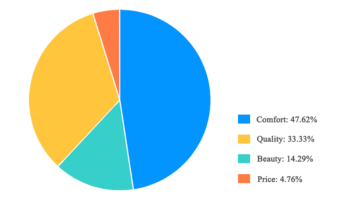
Figure 1: Seniors’ primary preference for clothing selection.
for clothing, we have prepared a questionnaire, the survey sample is from 101 middle-aged and elderly people across the country. We divided the survey samples into three age groups. Middle-aged people aged 45-59 were used as the reference group, and the elderly aged 60-79 were the most important rese- arch samples. The long-lived people over 80 years old had the least sample data. Summarize commonalities at the time of research to conduct research. Combined with the existing clothing problems reflected by the middle-aged and elderly people in the questionnaire survey, we conducted market research on the existing elderly clothing and conducted in-depth research and analysis on the details of the elderly clothing products. In addition, the questionnaire sample data also showed that more than half of the elderly had joint pain and believed that there were some problems with the existing clothing. Therefore, we conducted in-depth interviews and observational research on the elderly with arthritis.
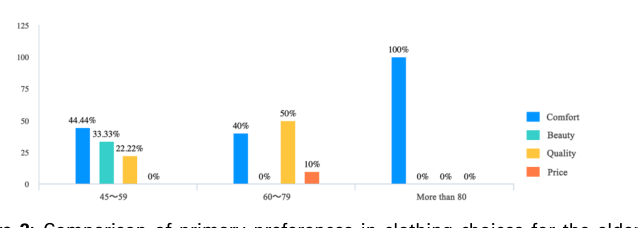
Investigation and Analysis on Clothing Preference of the Elderly According to the questionnaire data, we concluded that most elderly people will regard wearing comfort as their primary preference when choosing to clothe, while the consideration of clothing price is placed at the bottom of their choice (see Figure 1). With the growth of age, the elderly have higher and higher demands for the quality and comfort of the clothing itself, but lower and lower demands for its beauty and cost-effectiveness (see Figure 2). Clothing shows the characteristics of daily necessities more, which is closely related to the consumption pattern of the elderly. During the survey, most elderly people said that thicker clothing in autumn and winter can be worn for 10 to 20 years, and their clothing has a long use time and a long repla- cement cycle. Therefore, durable characteristics such as comfort and quality have become the choice of the elderly. The main consideration for clothing is standard.
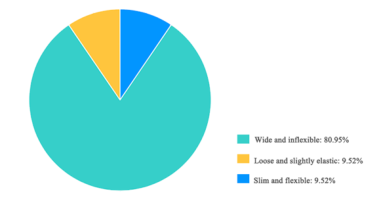
In terms of fit, most of the elderly prefer a loose fit (see Figure 3). The loose fit has more margin to give the elderly more freedom of movement and a more relaxed wearing experience. As the metabolism of the elderly slows down, the body will appear out of shape to varying degrees. For example, the protruding lower abdomen will widen the mid-abdomen and hip circumferences, and the crotch of the original trousers will move up. In addition, the bones and joints of the elderly will undergo certain deformation due to aging damage. In this case, the loose version can make the tolerance of the clothing larger.
74 Fan and Hu
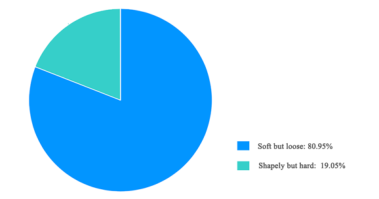
Figure 2: Comparison of primary preferences in clothing choices for the elderly in different age groups.Figure 3: Elderly clothing fit preference.Figure 4: Elderly clothing fabric preference.
In terms of fabrics, most older people prefer softer fabrics (see Figure 4). The elderly are much more sensitive than young people due to loose skin and thinning of the stratum corneum, so the softness of the fabric can bet- ter protect the skin of the elderly and bring the elderly a better wearing experience.
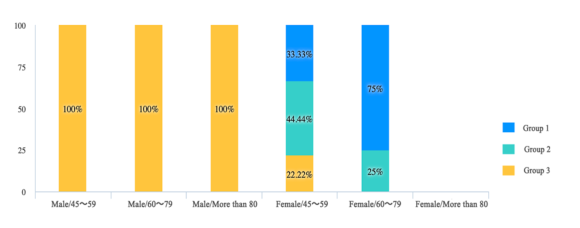
In terms of color, we have set up three groups of color cards with different classifications (see Figure 5), one group is the color with lower saturation and higher brightness, the second group is the color with higher saturation and moderate brightness, and the third group is Colors with less saturation and lightness. To investigate and analyze the preference of the elderly for cloth- ing color. We found that almost all older men chose the three groups, while women’s preference for high-saturation colors decreased with age, preferring one group of colors (see Figure 6).
Functional Clothing Design for the Elderly 75
Figure 5: Classification color card.
Figure available in the original PDF paper.
Figure 6: Comparison of clothing color preferences of the elderly in different gender and age groups.Figure 7: The channel preference of the elderly to buy clothing.
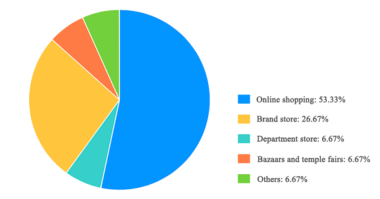
Investigation and Analysis on Elderly Clothing Elderly Market We conducted market research on the existing clothing for the elderly. Through the research, we divided the existing clothing purchase channels into online shopping and physical shopping, and divided the physical shop- ping according to the sales place, which is divided into chain clothing brand stores, We compared and analyzed various channels for mobile sales stalls in department stores and fairs and temple fairs (see Table 1). At the same time, we also surveyed and integrated the data on the channels through which the elderly purchase clothing (see Figure 7). Data shows that more than half of the elderly will buy clothes through online shopping, to find more suitable clothes for themselves. Chain clothing brand stores are the purchase channel with the largest proportion of physical shopping. Combined with the previ- ous survey data on the preference of elderly people’s clothing, this channel is more in line with the needs of the elderly. However, during the research, we also found that there are still a few specialized clothing brands designed from the aspect of human factors engineering for the elderly. Due to the long clothing replacement cycle for the elderly and insufficient purchasing power, fewer businesses are willing to use the elderly as the main consumption object. Causing a vacancy in the elderly clothing market.
76 Fan and Hu
Table 1. Analysis table of purchasing channels of clothing for the elderly.
Table available in the original PDF paper.
Quality Price Advantage Disadvantage Online shopping You can’t see the real thing directly, you can’t see its quality, fabric, details, and you can’t try it on to judge whether it’s suitable.
Spotty Spotty Expanding your selection for easy comparison makes it easier to find the right outfit.
Brand store Good High The quality of chain brands is guaranteed, the service is better, and the after-sales service is more complete.
The demand for sales of the brand makes it not set the elderly as the main consumer, so it will sell all-purpose clothing suitable for consumers of all ages, and will not design clothing from the perspective of human factors for the elderly. Department store
Moderate Moderate The clothing types are relatively complete, covering almost all daily clothing needs.
There are few choices of clothing, and the purchase depends on the needs of life. It sells all-purpose clothing suitable for consumers of all ages and does not design clothing from the perspective of human factors for the elderly. Market and temple fairs
Poor low The price is reasonable and targeted.
The garments are of poor quality, have rough workmanship, and can last for a short period.
When we researched existing senior clothing products, we found some commonalities in design details. Due to the aging of the respiratory system of the elderly, there will be insufficient air supply. In this case, the clothing of the elderly no longer meets the physiological needs of the elderly. Therefore, the collarless design and the lapel with zipper have become the clothing choices of the elderly. The aging of the body’s function makes most of the elderly suf- fer from the problems of spinal curvature and cervical vertebrae. In addition, the flexibility of the joints decreases. The clothing design for the elderly will place the more laborious wearing details on the front side of the body so that the elderly can operate independently. Therefore, most elderly clothing will be designed as cardigans, and the buttons used are also larger, to reduce the difficulty of wearing clothing. There are many details on the tops for seniors that make them more suitable for seniors, but the senior pants have always been the same fit as the young ones.
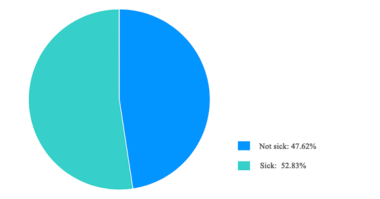
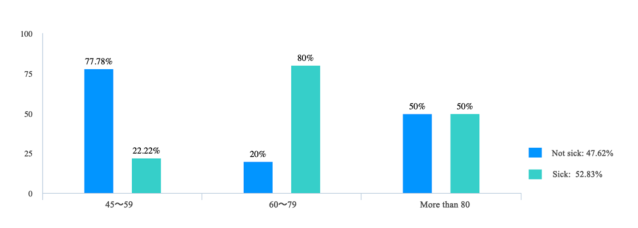
Investigation and Analysis of the Influence of Knee Joint Pain on the Elderly Clothing Choice and Wearing From the questionnaire data, we learned that more than half of the elderly have some joint pain phenomenon (see Figure 8), and the number of patients in the age group of 60 to 79 is the largest (see Figure 9), and in our survey data, the number of women suffering from the disease is much higher than that of men, and their joint pain is also mostly reflected in the knee joint.
We conducted in-depth interviews with older adults with knee arthritis. The results of the interview showed that the patient would wear thicker trou- sers and knee pads for a long time to prevent the knees from getting cold, but
Functional Clothing Design for the Elderly 77
Figure 8: The proportion of elderly people suffering from joint pain.Figure 9: The proportion of the elderly suffering from joint pain in different age groups.
the knee pads are elastically wrapped around the legs, and it is easy to change their position during activities and slip from the knee to the calf. Therefore, the wearing experience is not good. In addition, since the knee joint is one of the main stress-bearing parts of the human body, the injury of the knee joint makes the elderly unable to perform fast standing, fast squatting, and other actions. In more serious cases, swelling and even joint distortion will occur at the knee joint, which makes the patient’s joint unable to bend, and cannot be easily passed on to conventional trousers. It takes a lot of time to pass the process.
We conducted an observational study of older adults with knee arthritis to see how they would wear and take off their trousers under the influence of more severe arthritis. We observed that the patient now lays the trousers flat on the bed, moves the less mobile leg to begin putting on the trousers, pulls one side of the trousers up to about 10 cm above the knee, and pulls the waistband to insert the other leg. When the patient pulls the two legs of the trousers to the crotch, they will move from the side of the bed, put their legs on the ground, stand up slowly, and finally lift the trousers to the waist to end wearing.
Knee arthritis sufferers spend a significant amount of time and physical exertion wearing conventional tubular pants on their own. Therefore, we will make functional pants design for the elderly with knee pain.
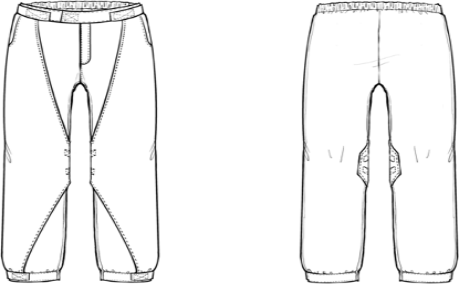
DESIGN SCHEME Summarizing the previous research, we have come up with a design plan for the elderly (see Figure 10).
78 Fan and Hu
Figure 10: Trousers design diagram.Figure 11: Trousers design front and back illustration.
From the version, we first adjusted it according to the physiological cha- racteristics of the elderly. The elderly will show the state of the abdomen protruding forward due to the accumulation of abdominal fat. Because of the loose skin, the fat on the waist will fall and accumulate on the hip bone to reduce the waist-hip difference. Therefore, in the design of trousers, the side seam should be placed. The arc is reduced to better fit the waist-hip arc of the elderly. Since the longitudinal length of the body remains unchan- ged and the body dimension increases, we need to increase the looseness and improve comfort by reducing the crotch of the pants. Due to the aging and bending of the bones of the lower extremities, the accumulation of fat in the thighs, and the poor blood circulation in the lower legs, it is easy to edema.
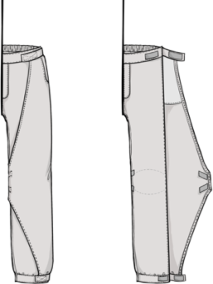
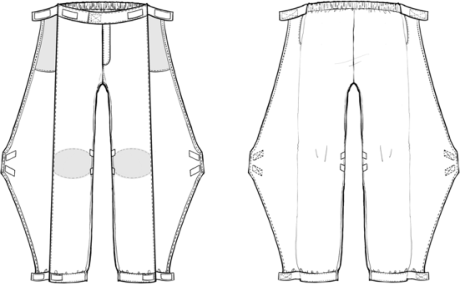
We then adjusted for the physiological characteristics and behavioral pat- terns of older adults with arthritis. Due to the tubular design of the trousers, the elderly with knee joint pain have insufficient flexibility in joint activities. When wearing, they need to wear slowly according to the steps summari- zed in our observation and research, which is inconvenient in the process of putting on and taking off. Therefore, we tried to change the original tubular slip-on trousers into an open wrap (see Figure 11), so that the elderly can wear them without exercising large leg movements.
Finally, we added details to the trousers that are more accessible to older people. Since the open trousers need to be designed with the function of
Functional Clothing Design for the Elderly 79
Figure 12: Schematic diagram of trousers design details.
closing the mouth, we chose Velcro in the design. The Velcro is easy to wear and can provide self-adjustment space for the clothing. The elderly can adjust the looseness of the trousers according to their personal needs. At the same time, according to the clinical symptoms and protection needs of arthritis, we focused on the design of the knee and selected warmer and more protective materials for the knee (see Figure 12). An elastic band is used at the waist of the trousers to increase the activity of the garment. Use the cuff design at the trousers to prevent the elderly from being hindered and accidentally falling during activities.
In terms of fabrics and colors, we selected soft, comfortable, micro-elastic, and light gray fabrics according to the analysis data of the clothing prefere- nces of the elderly in the previous research, so that the trousers can be more functional and more in line with the aesthetic orientation of the elderly.
CONCLUSION
This study investigates and analyzes the clothing preferences of the elderly, the current situation of elderly clothing in the market, and the influence of knee joint pain on the elderly’s dressing, and designs suitable trousers for the elderly with knee arthritis. The trousers reduce the wearing difficulty of the elderly through the side opening and add detailed designs such as Velcro to improve the fit of the trousers and the ease of operation for the elderly. The design meets the needs of elderly patients with knee arthritis, takes into account both aesthetics and comfort, and has great practical value.
ACKNOWLEDGMENT
The authors would like to acknowledge all the participants who helped us fill out the questionnaire during the research phase, the students who provided us with references during the writing of the thesis, the instructors who guided the research process.
REFERENCE Haijin, Liu and Jiaqi, Lin. (2021) “The structure design of wearable common clothes for the elderly with lower-limb paralysis based on wheelchair”, in Textile Reports Volume 40 No. 9. pp. 663–698.
LISTED IN THE AHFE DIGITAL BOOKSTORE CATALOGUE
Explore the complete digital volume
Human Factors in Aging and Special Needs
Read this individual research paper free through the original publisher, or explore the full digital proceedings book.
ISBN 978-1-958651-14-8
Explore this ISBN in the AHFE Bookstore ↗Listed in the July 2026 bookstore catalogue; search by ISBN to confirm current availability · Digital book purchase optional