Kihyun Park, Jungmin Ryu, Kitae Hwang, Sungmin Kim, Younghee Song, Woojin Park (2023). Effects of crease features on crease visibility and goodness of smartphone foldable display. In: Affective and Pleasurable Design. AHFE Open Access, vol. 71, pp. 232–240. https://doi.org/10.54941/ahfe1003263
Recently, foldable smartphones have become popular due to their flexibility and portability. However, the line-shaped mark (crease) produced by folding and unfolding can negatively affect user experience. Since eliminating the mark is difficult with current technology, it is important to understand the relationship between crease features and human perception, and develop a grading system to establish crease design guidelines to improve user experience. In this study, 25 participants were recruited, and 17 prototypes with different crease features were compared in terms of crease visibility. The findings showed that deeper crease depth and larger folding radius increased crease visibility, with depth being the more influential factor. The grading system established that foldable display prototypes with a crease depth below 60 µm were considered "good" or better. Also, the study found that a single-line crease was less visible/noticeable than a multi-line crease. These findings may provide practical guidelines for designing creases for foldable displays.
A foldable smartphone, also known as a foldable phone or simply a foldable, is a smartphone equipped with a flexible display (Jin and Yu, 2019; Khad- dam et al., 2020; Huang, 2021; Chung, 2022). Unlike traditional flat-screen displays, a flexible display can be rolled, folded, or bent. Thanks to this flexi- bility, foldable smartphones provide a wide screen when unfolded and offer excellent portability when folded (Jang, 2021; Chung, 2022). The increa- sed usage rate of foldable smartphones reflects the growing interest among customers in these devices. According to Display Supply Chain Consultants (DSCC), the average annual growth rate of foldable smartphone sales from 2021 to 2026 is expected to be around 43%. The introduction of foldable smartphone technology, however, has brou- ght with it a new challenge in user experience (UX): creases. Foldable displays typically use plastic windows instead of glass, as plastic has a good combina- tion of tensile strength and flexibility. A plastic window can take some time to return to its original state when it is bent and then straightened. Thus, a
Effects of Crease Features on Crease Visibility and Goodness 233
line shape mark, that is, a crease, is left at the folding edge of the display when a phone is folded for a certain length of time and then is unfolded (Lee et al., 2015).
A conspicuous crease not only compromises the emotional appeal of a foldable smartphone’s appearance but also negatively impacts its usability (Chung, 2022). Eliminating a crease completely through engineering design is known to be a very difficult technical problem. Hence, a more practical approach currently adopted by flexible display manufacturers is to reduce crease visibility and other negative affects. It is reasonable to hypothesize that physical parameters of a crease (for example, the folding radius and depth of a crease) would influence crease perception. Also, design decisions on the mechanical structure of a foldable display would have impacts. For exam- ple, depending on the choice of the foldable display hinge type, a foldable smartphone could show a single-line or a multi-line crease. A single-line cre- ase presents only one line but the line is relatively deep. On the other hand, a multiple-line crease consists of multiple shallow lines. An understanding of the relationship between the crease features (physical parameters and design type) and the crease perception would help effectively reduce a crease’s nega- tive impacts on UX. However, very few research studies have been conducted to provide such knowledge - the authors are not aware of any.
To better support the current effort to mitigate the adverse impacts of fol- dable smartphone creases and thereby improve the user experience, this study aimed to accomplish the following research objectives: Objective 1: To empirically test possible effects of two crease featu- res (crease folding radius and depth) on human crease perception (crease visibility),
Objective 2: To develop a foldable smartphone display crease grading system on the basis of crease visibility and perceived goodness evaluation data, and Objective 3: To compare the single-line and the multi-line crease configu- rations in crease visibility and perceived goodness.
This study only considered the power-off condition display, and in the case of Objectives 1 and 2, only the single-line crease type is considered.
METHOD
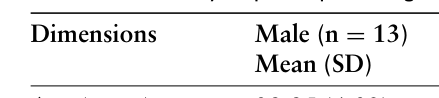
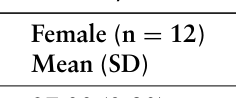
Participants Thirteen males and twelve females who were in their 20s and 30s participa- ted in the experiment. All participants had a normal or corrected-to-normal vision, and were free of visual acuity disease such as color blindness or color weakness. The age, and visual acuity data are summarized in Table 1. They were informed about the goal and procedure of the study and signed a con- sent form. This study was approved by the Institutional Review Board of Seoul National University.
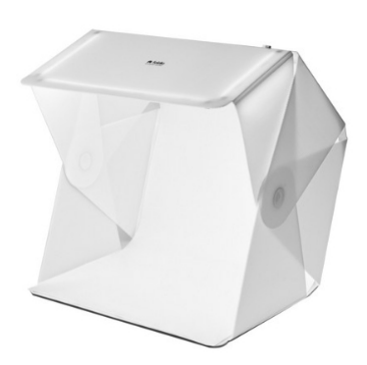
Experimental Settings The experimental setup consisted of a height-adjustable chair, a table, a stu- dio photo box (Orangemonkeykorea, Foldio 3) and a turn table. The studio photo box is shown in Figure 1.
Table 1. Summary of participants’ age and visual acuity.
Table available in the original PDF paper.
Equation reproduced from the original PDF.Equation reproduced from the original PDF.
All (n = 25) Mean (SD) Age (years) 28.85 (4.32) 27.33 (2.90) 28.12 (3.71) Visual acuity Left eye 0.97 (0.12) 0.92 (0.24) 0.94 (0.18) Right eye 0.94 (0.10) 0.92 (0.22) 0.93 (0.16)
Figure 1: Studio photo box (Foldio 3) which was used in the experiment.
In each experimental trial, each participant was seated in the chair facing toward the studio photo box placed on the table. The studio photo box cove- red the participant’s entire visual field minimizing visual distraction. It also provided the participant with uniform, indirect light of 500 lux. The turn table was placed within the studio photo box.
Prior to each trial, the foldable display prototype for the trial was mounted on the turn table. Two different mounting conditions in terms of the included angle between the display surface and the transverse plane were considered: 0
(flat condition) and 30
. In the 30
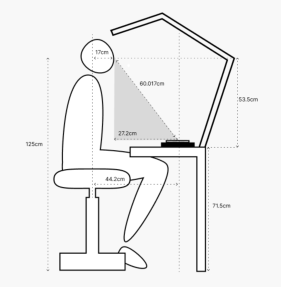
condition, a smartphone stand was used to orient the prototype. By rotating the turn table along the vertical axis, the participant was able to examine the foldable display prototype in different directions. The chair height was adjusted for each participant such that the eye height was identical across all participants. The details of the experimental settings are presented in Figure 2.
Foldable Display Prototypes Each participant examined a total of 17 foldable display prototypes. The prototypes were all rectangular in shape (height: 15.5 cm, width: 13.5 cm) and could be folded vertically in half. The prototypes differed in three crease features: crease depth, folding radius and number of lines. Cre- ase depth was defined as the distance from the maximum crease peak to the crease valley in the direction normal to the display surface. Folding
Effects of Crease Features on Crease Visibility and Goodness 235
Figure 2: Details of the experiment environment setting.
radius was defined as the degree of bending of a circle with a radius of x in internal curvature of display module. Number of lines had two levels: single-line and multi-line. Table 2 presents the crease features of the 17 prototypes.
Table 2. Characteristics of foldable display prototypes.
Experimental Procedure Prior to the experimental trials, the participants were informed of the objectives and the procedure of the study, and, had training sessions to familiarize themselves with the experimental task. During each task trial, each participant was asked to visually examine the corresponding foldable display prototype for 30 seconds in each of the two mounting conditions
(0
, 30
), focusing on the crease. During the visual examination, the parti- cipant was instructed to rotate the turn table to inspect the foldable display prototype in different directions. The presentation order of the 17 prototy- pes was randomized for each participant. After the visual examination of each prototype, the participant subjectively rated the crease visibility and the perceived goodness of the foldable display prototype in the vicinity of the crease. Crease visibility was defined as ‘the ease of detecting (and/or identifying) the presence or appearance of a crease on the display,’ and, was evaluated using an 11-point scale (0: Extremely visible, 10: Not visi- ble at all). A seven-point adjective-anchored Likert scale (‘worst imaginable’, ‘awful’, ‘poor’, ‘neutral’, ‘good’, ‘excellent’, and ‘best imaginable’) proposed by Bangor, Kortum and Miller (2009) was employed to evaluate the perceived goodness.
Data Analysis For each of the three research objectives (Objectives 1∼3), data analysis was conducted accordingly.
To test if the crease features (crease depth and folding radius) affect crease visibility (Objective 1), multiple linear regression analysis was performed. Crease depth, folding radius, and their interaction were selected as the initial predictor variables. The response variable was the sample mean of crease visibility ratings.
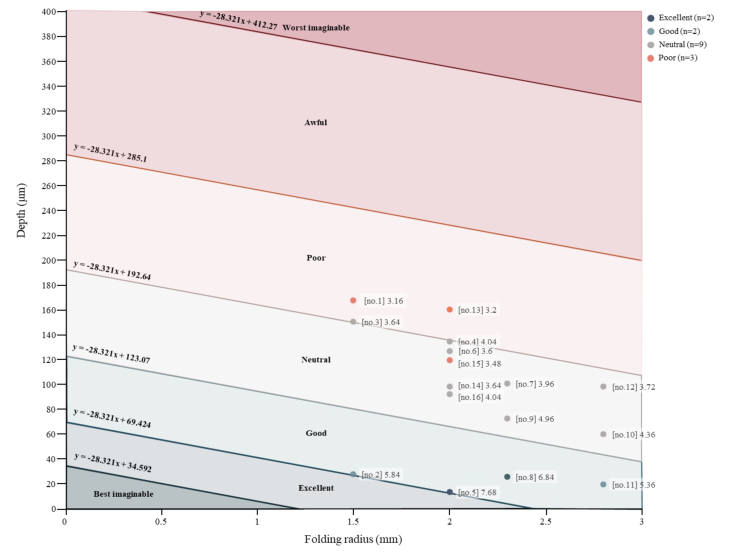
To develop a crease grading system (Objective 2), the method described in Bangor, Kortum and Miller (2009) was adopted and then modified. In the grading system, each of the adjectives used in the evaluation of perceived goodness (‘worst imaginable,’ ‘awful,’ ‘poor,’ ‘neutral,’ ‘good,’ ‘excellent,’ and ‘best imaginable’) represented a distinct grade category. To determine the inte- rval of mean crease visibility score for a grade category, first, the mean crease visibility score for each grade category was computed - this was accompli- shed by calculating the mean of all crease visibility ratings that co-occurred with the adjective of the grade category. Then, the interval of mean crease visibility score for a grade category was determined as from the midpoint between the grade category and the category right below it to that between the category and the category right above it. In the cases of two extreme cate- gories, that is, ‘best imaginable’ and ‘worst imaginable,’ the upper bound for the ‘best imaginable’ category was 10, and the lower bound for the ‘worst imaginable’ was 0. As part of the grading system, for each grade category, the corresponding region in the two-dimensional depth-folding radius space was determined as well. This was accomplished by combining the intervals of mean crease visibility for the grade categories with the linear regression model developed for Objective 1. For each grade category, the linear regres- sion model converted the corresponding interval into a continuous region in the depth-folding radius space To test possible differences between the single-line and multi-line crease configurations in crease visibility and perceived goodness (Objective 3), a paired t-test was conducted to compare prototype No. 5 (with a single-line crease) and prototype No. 17 (with a multi-line crease). The two prototypes were similar in depth and folding radius.
Effects of Crease Features on Crease Visibility and Goodness 237
RESULTS & DISCUSSION Result 1: Effect of Crease Features on Crease Visibility
The multiple linear regression analysis resulted in the model below:
Note that response variable is ln(Visibility). Adjusted R2 : 0.859 ***p<0.001, **p<0.01, *p<0.05 The regression analysis results revealed that crease depth and folding radius significantly affected crease visibility, but their interaction did not, and, an increase in crease depth or that in folding radius increases crease visibility (Note that: the smaller a crease visibility rating score, the higher crease visibi- lity). The log transformation of model output implies that as crease depth and folding radius increase, their effects on crease visibility become progressively weaker. The standardized coefficients in Table 3 also suggest that between the two crease features, crease depth is more important in affecting human crease perception.
Result 2: Foldable Smartphone Display Crease Grading System
Table 4 presents the crease grading system. For each grade category (each adjective), the corresponding interval of mean crease visibility score is pre- sented along with the number of the participant responses, and, the mean and standard deviation of the participant crease visibility ratings.
Figure 3 presents the regions in the two-dimensional depth-folding radius space corresponding to the different grade categories of the crease gra- ding system. The regions visualize how crease depth and folding radius impact the perceived goodness (adjective rating) of a foldable smartphone display prototype. It should be noted that the regions for the ‘worst imagi- nable’ and ‘awful’ grade categories did not include any of the 17 foldable display prototypes considered in this study - these regions are thought to be less important because foldable display manufacturers currently do not produce any products/prototypes that belong to these categories. The ‘best imaginable’ category also did not include any of the 17 foldable display prototypes.
Table 4. Foldable display crease grading system.
Table available in the original PDF paper.
Number of responses
Grade category (adjective) Interval of mean crease visibility score
Figure 3: Regions in the depth-folding radius space corresponding to different foldable display crease grade categories.
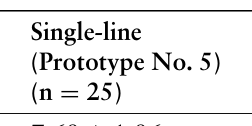
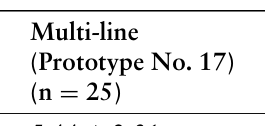
Result 3: Comparing Single-Line vs Multi-Line Crease Configuration The paired t-test revealed that there was a significant difference in mean visibility score between foldable smartphone prototype No. 5 and No. 17 (Table 5). Also, the two prototypes showed a substantial dif- ference in the distribution of participant responses across the adjectives used in the evaluation of perceived goodness (Table 6). The single-line crease configuration was found to be superior to the multi-line crease configuration.
Effects of Crease Features on Crease Visibility and Goodness 239
Table 5. Paired t-test result for comparing the single-line and multi-line crease configurations in crease visibility.
Table available in the original PDF paper.
p-value
Equation reproduced from the original PDF.Equation reproduced from the original PDF.
To support the current effort for improving the foldable smartphone display design, this empirical study 1) investigated possible effects of crease depth and folding radius on crease visibility, 2) developed a foldable display crease goodness grading system, 3) and compared the single-line and the multi-line crease configuration in crease visibility and perceived goodness.
The study results not only enhance the current understanding of human crease perception but also would inform the future foldable smartphone display design for addressing the negative UX impacts of creases. Also, the crease grading system developed in this study would help engineers/designers set goals for future design endeavours.
Some limitations of the current study are noted below along with future research recommendations: first, this study considered only young partici- pants in their 20s and 30s. In future studies, different age groups need to be recruited so that the user population can be better represented. Second, in comparing the single-line and the multi-line crease configurations, this study examined only one prototype for each configuration. For each configuration, more prototypes need to be studied to better generalize the research findings. Finally, the current study examined only the power-off display condition, and, therefore, the study findings may not apply to the power-on display con- dition. Further research studies are warranted to investigate the power-on display condition considering a variety of smartphone usage scenarios.
ACKNOWLEDGMENT
REFERENCES
Bangor, A., Kortum, P. and Miller, J. (2009) ‘Determining what individual SUS scores mean: Adding an adjective rating scale’ Journal of usability studies, vol. 4, no. 3, pp. 114–123. Chung, J. (2022) Effects of Smart Device Form Factors on User Experience:
Focused on Comparing Usability and Satisfaction of Foldable Smartphone and Non-foldable Smart Devices. Master thesis, Hanyang University. Huang, D. Z. (2021) ‘Analysis of the Impact of Foldable Mobile Phones Design on People’s Lives’, In 2021 International Conference on Public Relations and Social Sciences (ICPRSS 2021), Kunming, China, 17–19 September. Atlantis Press, pp. 1155–1160. doi: https://doi.org/10.2991/assehr.k.211020.322 Jang, S. (2021) ‘User Experience Research on Utilization of the Folding Screen on a
Foldable Phone for Privacy Protection’, Archives of Design Research, vol. 34, no. 2, pp. 121–131. Jin, Y. and Yu, E. (2019) ‘An Evaluation of User Experience of Foldable Phones in Terms of Design Attributes and Proposed Future Design Directions’, Journal of Integrated Design Research, vol. 18, no. 4, pp. 63–80. Khaddam, I. et al. (2020) ‘Towards Rapid Prototyping of Foldable Graphical User
Interfaces with Flecto’, Proceedings of the ACM on Human-Computer Interaction, vol. 4, no. ISS, pp. 1–33. Lee, J. et al. (2015) ‘The crease perception in flexible display’, Journal of Information Display, vol. 16, no. 2, pp. 99–104.
LISTED IN THE AHFE DIGITAL BOOKSTORE CATALOGUE
Explore the complete digital volume
Affective and Pleasurable Design
Read this individual research paper free through the original publisher, or explore the full digital proceedings book.
ISBN 978-1-958651-47-6
Explore this ISBN in the AHFE Bookstore ↗Listed in the July 2026 bookstore catalogue; search by ISBN to confirm current availability · Digital book purchase optional