Ziwen Han, Ying Zhao, Hao Yang, Nan Fu, Yifan Han (2022). From the Driver's Point of View of Information Reception: Building a Design Strategy for Aiding Interaction with Novice Drivers. In: Ergonomics In Design. AHFE Open Access, vol. 47, pp. 62–69. https://doi.org/10.54941/ahfe1001920
This paper focuses on the division of driving experience into novice drivers and experienced drivers, with novice drivers considered as the target group. The relationship between the two shows that novice driving is an inevitable process to become experienced driving and shows that the development and formation of driving habits is extraordinarily important. In practice, this is often the case: novice drivers are accompanied by driving instructors. However, the amount of information received by the novice driver is invariably increased. Not only do they have to receive information from the driver's guide, but they also need to be aware of the road conditions and information in the car. This high volume of information leaves the novice driver with a limited attention span and insufficient driving ability. In this research and quantitative analysis, we extract and analyse the needs of novice drivers and the sources of information quality, propose a novice driver information processing model, establish a human-machine model of assisted driving for novice drivers and a novice driver assistance interaction design strategy, with the goal of improving the execution efficiency of novice drivers, developing systematic driving knowledge and forming good driving habits.
According to Xinhua News Agency, Beijing, July 18, 2020, the Traffic Mana- gement Bureau of the Ministry of Public Security recently released data showing that as of June 2020, the number of motorists in China reached 440 million, with 7.28 million newly licensed drivers in the first half of the year. Overall, the number of domestic drivers in China is huge and growing rapidly, and the constant injection of newbies has brought new demand and market.
The accident rate in China is high, and a large part of it is due to inattentive drivers or inexperienced drivers (Jun Ma et al., 2015). Facing the problem of novice drivers, Jun Hua et al. conducted a study on hazard potential perce- ption of novice drivers under different training dimensions to train the hazard perception ability of novice drivers (Jun Hua et al., 2015), and Zhipeng Gu
From the Driver’s Point of View of Information Reception: Building a Design Strategy 63
conducted a study starting from hazard perception of novice drivers to pro- vide a basis for perception ability training (Zhipeng Gu, 2020). Li Na studied the differences in visual search patterns between novice and experienced dri- vers under anxiety conditions (Na Li, 2014). Zuhua Jiang studied driving experience and driving behavior through simulation experiments with the aim of investigating the causes of high novice driving accidents (Zuhua Jiang et al., 2015).
Most of the current domestic research is centered on the perspective of developing novice drivers’ personal abilities, ignoring the fact that novice drivers actually drive in a driving environment that contains mostly novice driving instructors. According to the human information processing system model in Human Factors Engineering (Fu Guo, Shengsan Qian et al., 2018), we specifically analyze the information received by novice drivers and experi- enced drivers, establish the information processing system model about both drivers, and compare the two to uncover the real needs of novice drivers. Novice drivers face complex road conditions and in-vehicle driving infor- mation while facing an instructor. Compared to experienced drivers, novice drivers are a special group of drivers that exist in reality and are required to go through a phase of driving. This study focuses more on the situation that novice drivers receive a lot of information and complexity, and pro- poses a model that matches novice drivers through the human information processing system model and the machine semi-automation model (Fu Guo, Shengsan Qian et al., 2018) to distinguish novice driving from experienced driving. The goal is to provide accurate and systematic information in the actual driving of novice drivers and to develop their habits, thus achieving continuous assistance to novice drivers.
CONTENT AND PROCESS OF THE STUDY FOR NOVICE DRIVERS The research in this paper is divided into the following 4-stage process:
(1) research and quantitative study to determine the main needs of novice drivers and the quality of information received, analysis and data transfor- mation to make a theoretical basis for the proposed interaction scheme of the assistance system; (2) in-depth interviews and construction of a human- computer interaction model for novice drivers; (3) proposed interaction design strategies and establishment of a product design model for the assi- stance system based on the preliminary findings (4) proposed design scheme and reflection to deepen the design.
A Study of Novice Drivers’ Needs and Practical Driving Information The study was mainly carried out through the questionnaire method, with two starting points for novice drivers and instructors, respectively, through a web-based tool. 84 questionnaires were returned, with 82 valid question- naires, and 97, with 91 valid questionnaires. The novice position of this questionnaire was: the first 3 months of actual driving. This questionnaire focuses on the sources of difficulties for novice drivers and the quality of information received by novice drivers. (Hao Yang, Ying Zhao et al., 2020; Hao Yang, Jitao Zhang et al., 2021).
Degree of need Degree of systematicity of learning Pearson correlation .480**
Sig.(two-tailed) .000 Number of cases 91
**Correlation significant at 0.01 level (two-tailed).
The novice driver characteristics were investigated to understand the inte- raction environment of novice drivers in China, which contains novice driver characteristics, gender associations, and the characteristics and bias of instru- ctors of instructional exercises depicted by novice drivers. The content of the questionnaire was derived from reference literature and the experimental sample was selected. The questionnaire contained measures of novice dri- vers themselves and characteristics of novice driver instructors, which were predicted.
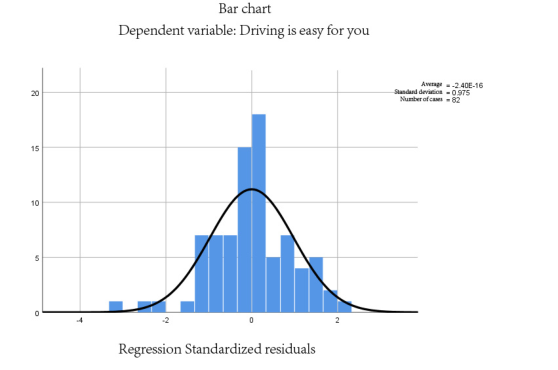
After analysis of the valid data collected by chi-square test, Pearson cor- relation analysis and linear regression analysis, it was concluded that (1) the gender differences between men and women were not significant. In particu- lar, the probability of traffic accidents due to insufficient traffic knowledge and thus accidents during the novice period reached 26.53%, with a male accident rate of 26.7% and a female accident rate of 28.3%, the chi-square test is shown in Table 1. (2) The degree of learning system of the dri- ving instructor during the novice period was significantly correlated with the degree of need for assistance, where the Pearson correlation coefficient r = 0.480. (Table 2) (3) The driving instructor’s degree of patience, clarity of information delivery and complexity of traffic conditions significantly influ- enced the degree of ease of driving for novices. The regression coefficients were 0.569, 0.271, and −0.291, respectively, with R2 = 0.461, p < 0.05, and VIF < 5 for the three independent variables. (Table 3, Figure 1) (4) The main sources of distress during the novice driving period were categorized into two dimensions, namely personal incompetence and traffic conditions. This was derived from the factor analysis (Table 4), where KMO > 0.6 and Barrett < 0.05. (5) During the novice driving period, a mentor existed for the majority of drivers.
From the Driver’s Point of View of Information Reception: Building a Design Strategy 65
Table 3. Linear regression analysis.
Table available in the original PDF paper.
Coefficientsa Model Unstandardised Coefficients
Standardized Coefficient
Covariance Statistics B Standard ToleranceVIF Error Beta t Signifi- cance
.569 .096 .506 5.916 .000 .956 1.046
1 (constant) 1.742 .422 4.132 .000 Patience of driving instructors
.271 .102 .245 2.655 .010 .825 1.212
Clarity of information delivered by driving instructors
−.291 .107 −.290 −2.711 .008 .614 1.630
Complexity of traffic conditions a. Dependent variable: Driving is easy for you
Figure 1: Regression standardize resdiduals.
A STUDY OF INFORMATION PROCESSING SYSTEMS FOR NOVICE DRIVERS Through research and quantitative analysis, the main problem solving of products that assist novice drivers in driving is obtained as follows: (1) infor- mation on traffic road conditions (2) information received by the instructor. According to the research, the main sources of anxiety for novice drivers are driving operations and unexpected road conditions, and unexpected road conditions are force major factors, so this interview focuses on driving for novice drivers and driving instructors. Based on the behaviour of novice drivers and the feedback from the questionnaire, an interview outline was prepared for the interviews and comparisons were made with experienced drivers to find the needs of novice drivers. The number of valid interviews
Table 4. Principal component analysis.
Table available in the original PDF paper.
Component Matrix After Rotationa Component
1 2
12(A. Insufficient technical proficiency) .796 −.054 12(B.Insufficient traffic knowledge base) .639 .161 12(E.Inability to handle unexpected situations) .624 −.218 12(D.Influence of instructor (chaperone)) .501 .418 12(C.Bad road conditions) −.096 .887 Extraction method: Principal component analysis. Rotation method: Kaiser normalised maximum variance method.a
a. Rotation has converged after 3 iterations
was 15, of which 8 were female and 7 male; 11 novice drivers and 4 expe- rienced drivers. Based on the feedback from novice drivers, a comparison chart of the interaction model between novice and experienced drivers was compiled, which in turn illustrated the differences and needs of novice and experienced drivers. (Hao Yang, Yueran Wang, et al., 2022) After the interviews, combined with the driving environment of the experi- enced drivers, the needs during the novice period were concluded as follows: (1) During driving, the human-computer environment of novice driving is more complex and informative, and the accompanying driver’s guide conveys not only operational but also emotional information (2) The driving know- ledge of the accompanying guide is not systematic. As most accompanying drivers are family members, many teach driving practices that are of mixed quality and have an impact on the subsequent behavioural habits of novice drivers. (3) Unexpected road conditions need to be understood and prevented in advance.
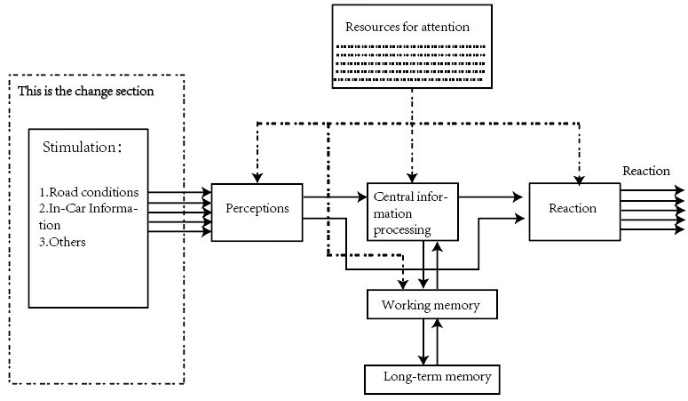
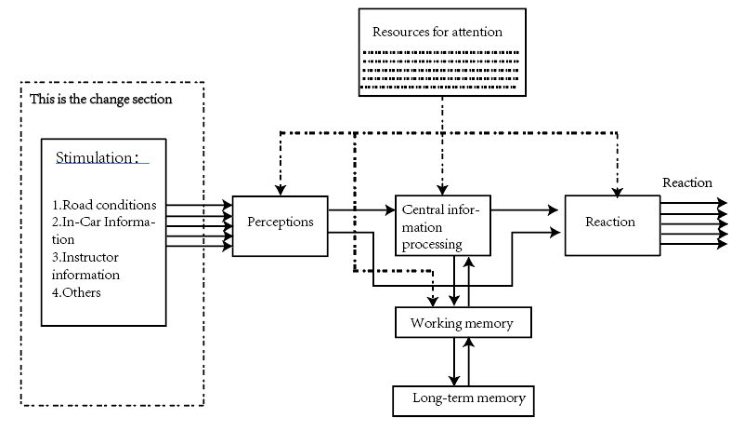
Through the feedback from the interviews, on the basis of the human infor- mation processing system model (Fu Guo, Shengsan Qian et al., 2018), it is proposed (see Figure 2, Figure 3) that the information received while dri- ving by novice and experienced drivers is collated and analysed. In contrast, novice drivers are confronted with more information, and the information from driving instructors is not always precise and easy to understand, so novice drivers need to spend time filtering, filtering and avoiding irrelevant and distracting information. At the same time, the limited attention span of a human being means that novice drivers perform less efficiently than experie- nced drivers, and providing accurate information to novice drivers becomes a key to understanding the problem.
INTERACTION DESIGN STRATEGIES AND MODELS Through the above analysis, an interaction design strategy for a novice assi- sted driving system is proposed. By adding a novice driver instructor machine to create a human-machine model of this special period for novice drivers, the
From the Driver’s Point of View of Information Reception: Building a Design Strategy 67
Figure 2: Driving information processing system model for experienced drivers. (Fu Guo, Shengsan Qian et al., 2018).Figure 3: A model of a driving information processing system for novice drivers when a mentor is present. (Fu Guo, Shengsan Qian et al., 2018).
information environment for novice drivers is simplified to help novice dri- vers drive more safely and provide a better driving experience for novices. The establishment of this conceptual model requires more practical experiments to push and improve it.
Design Purpose: Design Purpose: Novice drivers receive a reduced amount of information, and the assisted information system needs to be able to anticipate the novice driver’s driving ability and present the information in
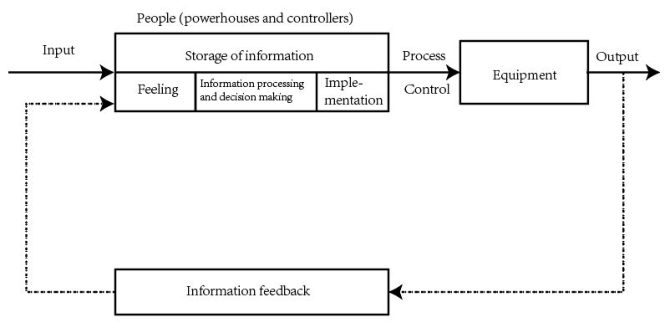
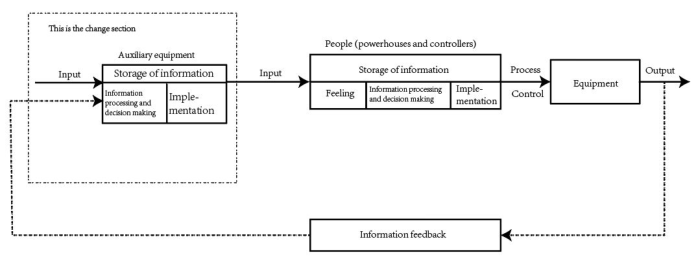
Figure 4: Semi-automated diagram of the experienced driver system. (Fu Guo, Shengsan Qian et al., 2018).Figure 5: Novice driver assistance semi-automated system diagram.
a systematic form. When the assisted driving system delivers information, the novice driver is able to quickly understand and make the appropriate executive action in a timely manner. Novice drivers receive simpler, clea- rer information, which reduces emotional information, helps novice drivers organize some of the complex information, and helps novice drivers establish good driving habits.
Using the degree of automation of the human-machine system as a crite- rion, the human-machine relationship system diagram of the novice driver’s assistive interaction product (Figure 4) was constructed by referring to the semi-automated system model (as Figure 5) (Guo et al., 2018).
By comparing the two, the inclusion of the assistive product enables the user to filter and screen a portion of the information, which makes the novice driver receive less information and thus improves the execution efficiency of the novice driver.
From the Driver’s Point of View of Information Reception: Building a Design Strategy 69
SHORTCOMINGS AND PROSPECTS (1) Due to environmental constraints, the sample size of the driving popu- lation studied in this paper is small and the age differentiation is small. Future research should expand the sample size and use real-world vehicle tests to make the results more accurate. (2) The information in this paper comes from the driver’s perspective of receiving information and lacks information from the instructor. Future research can explore what kind of guidance information the driver assi- stance system needs to provide, what kind of information frequency, and even the form of guidance information, such as auditory, tactile and visual. (3) Whether the pre-processing of planning of driving information can really improve the efficiency of the driver’s execution is currently only in planning and conjecture, and needs to be experimented with and discovered by real driving assistance products.
ACKNOWLEDGMENT
This research was funded by Beijing Urban Governance Research Pro- ject, grant number 21CSZL09; and Scientific Research Program of Beijing Education Commission, grant number KM202010009003.
REFERENCES
Guo Fu, Qian Shangsan.M. (2006) Human Factors Engineering . Human system information processing model.pp. 166–166 & Semi-automated man-machine system. pp. 264–264. Hao Yang, Jitao Zhang, Yueran Wang and Ruoyu Jia. (2021) Exploring relationships
between design features and system usability of intelligent car human–machine interface. Robotics and Autonomous Systems, 143, 103829. Hao Yang, Ying Zhao & Yueran Wang. (2020). Identifying modeling forms of instrument panel system in intelligent shared cars: a study for perceptual preference and in-vehicle behaviors. Environ Sci Pollut Res 27, 1009–1023. Hao Yang, Yueran Wang, Ruoyu Jia. (2022). Dashboard Layout Effects on Dri-
vers’ Searching Performance and Heart Rate: Experimental Investigation and Prediction. Frontiers in Public Health. 813859. Hua Jun, Zhao Junwei, Liu Haoxue & Zhu Tong. (2018). A study on potential hazard perception ability of novice drivers under different training dimensions. Chinese Journal of Safety Science (06), 61–66. doi: 10.16265/j.cnki.issn1003- 3033.2018.06.011. Ma Jun,J. (2012). 基于中国市场特定需求的汽车先进驾驶辅助系统发展趋势研
究. The research based on the specific needs of the Chinese market and advanced driving control system. 50(4): 36–40. Na Li. (2014). 焦虑状态下驾驶员视觉搜索的眼动研究. Eye movement study of visual search in anxious drivers (Master’s thesis, Liaoning Normal Uni- versity). https://kns.cnki.net/KCMS/detail/detail.aspx?dbname=CMFD201501& filename=1014380332.nh Zhipeng Gu. Research on hazard perception testing and training methods for novice
drivers[D]. Chang’an University, 2020. doi: 10.26976/d.cnki.gchau.2020.001718. Zuhua Jiang, Zhang, M. H. & Zhu, H. Y. (2015). A simulation-based study on driving with a car for drivers with different experiences. Human Ergonomics (03), 45–49. doi: 10.13837/j.issn. 1006–8309.2015.03.0010.
LISTED IN THE AHFE DIGITAL BOOKSTORE CATALOGUE
Explore the complete digital volume
Ergonomics In Design
Read this individual research paper free through the original publisher, or explore the full digital proceedings book.
ISBN 978-1-958651-23-0
Explore this ISBN in the AHFE Bookstore ↗Listed in the July 2026 bookstore catalogue; search by ISBN to confirm current availability · Digital book purchase optional